Our lungs are incredible organs, working tirelessly every second of every day to keep us breathing and alive. They play a vital role in our overall health, supplying oxygen to every cell in our body and removing carbon dioxide. Given their non-stop work, doesn’t it make sense to give them the best support possible?
A healthy diet rich in antioxidants and anti-inflammatory compounds can significantly support optimal lung function, helping you breathe better and live a healthier, more energetic life. Let’s dive into the foods and habits that can help you nourish your respiratory system.
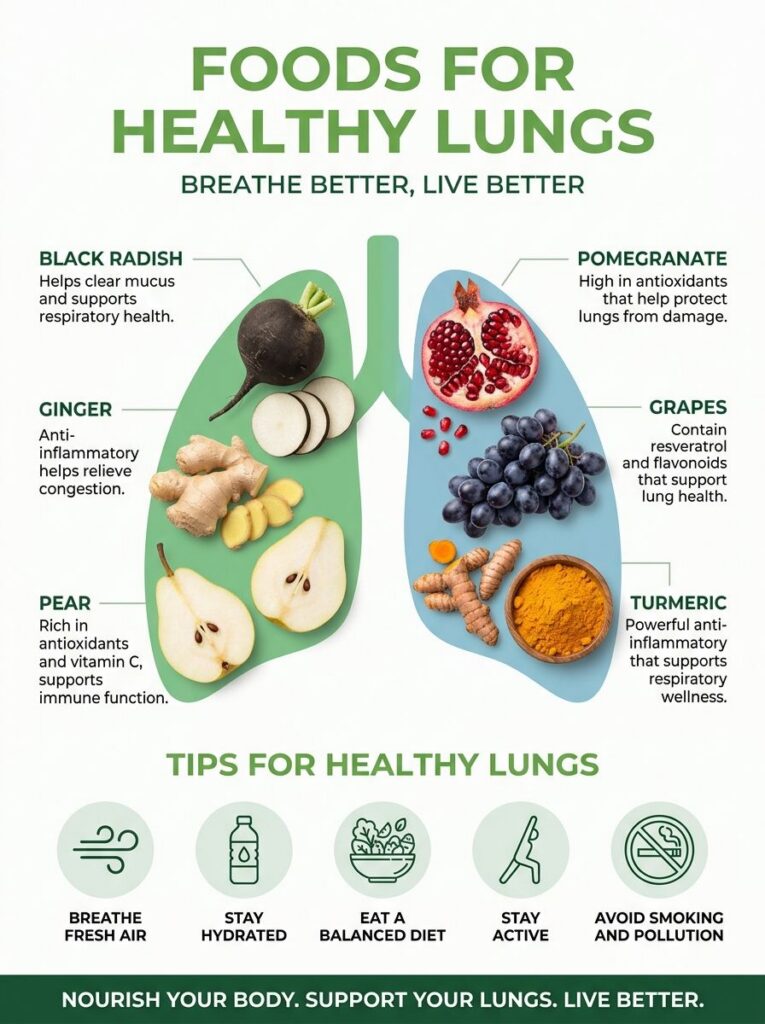
Foods for Healthy Lungs: Your Respiratory Allies
Many everyday foods are packed with nutrients that can help protect your lungs from damage, reduce inflammation, and enhance their overall function. Here are some powerhouses to add to your plate:
Black Radish
- Rich in Sulfur Compounds: Black radish contains unique sulfur compounds that may help cleanse the respiratory tract and alleviate congestion.
- Antioxidant Boost: It’s also a good source of antioxidants, which fight free radicals and protect lung tissue from oxidative stress.
- Immune Support: Helps to strengthen your immune system, making your lungs more resilient against infections.
Ginger
- Powerful Anti-Inflammatory: Gingerol, the main bioactive compound in ginger, has potent anti-inflammatory and antioxidant effects. This can help reduce inflammation in the airways.
- Clears Airways: Known to help clear phlegm and soothe respiratory irritation, making breathing easier.
- Boosts Circulation: Improved blood flow can benefit lung tissue and overall respiratory function.
Pear
- High in Fiber: Pears are an excellent source of dietary fiber, which supports a healthy gut microbiome, indirectly benefiting overall immune and respiratory health.
- Rich in Antioxidants: Contains flavonoids and other antioxidants that protect cells from damage.
- Hydrating: Their high water content contributes to overall hydration, which is crucial for maintaining moist respiratory passages.
Pomegranate
- Exceptional Antioxidant Content: Pomegranates are bursting with antioxidants, especially punicalagins, which are more powerful than those found in green tea or red wine. These protect lung cells from damage caused by pollution and toxins.
- Anti-Inflammatory Properties: Helps reduce inflammation in the lungs and airways, potentially easing symptoms of respiratory conditions.
Grapes
- Resveratrol Power: Especially red and purple grapes, they contain resveratrol, a potent antioxidant with anti-inflammatory benefits that can help protect lung tissue.
- Quercetin Rich: Grapes also provide quercetin, another flavonoid that has been shown to have antihistamine and anti-inflammatory effects, beneficial for respiratory health.
Turmeric
- Curcumin’s Anti-Inflammatory Magic: The active compound curcumin in turmeric is a powerful anti-inflammatory agent. It can help reduce inflammation and oxidative stress in the lungs, making it a valuable addition for respiratory wellness.
- Immune Modulator: Supports a healthy immune response, which is crucial for protecting the lungs from pathogens.
Tips for Healthy Lungs: Daily Habits for Better Breathing
Beyond diet, certain lifestyle habits significantly impact your lung health. Incorporating these into your daily routine can make a big difference:
1. Breathe Fresh Air
Avoid polluted environments whenever possible. Spend time in nature, open windows to ventilate your home, and consider air purifiers to improve indoor air quality. Fresh, clean air is fundamental for optimal lung function.
2. Stay Hydrated
Drinking plenty of water keeps the mucus lining in your airways thin and flowing, making it easier for your lungs to clear out irritants and pathogens. Aim for at least 8 glasses of water daily.
3. Eat a Balanced Diet

While we’ve highlighted specific lung-boosting foods, a diverse diet rich in fruits, vegetables, whole grains, and lean proteins provides a spectrum of vitamins, minerals, and antioxidants necessary for overall health, including respiratory system resilience.
4. Stay Active
Regular physical activity strengthens your lungs and cardiovascular system. When you exercise, your lungs work harder, which improves their capacity and efficiency over time. Even moderate activities like brisk walking, swimming, or cycling can be highly beneficial.
5. Avoid Smoking and Pollution
This is perhaps the most critical step for lung health. Smoking is the leading cause of preventable lung diseases. Minimizing exposure to secondhand smoke, industrial pollutants, and strong chemical fumes is also vital. Wear masks if you must be in high-pollution areas.
Embrace a Healthier Breath, a Healthier Life
Supporting your lungs isn’t just about avoiding illness; it’s about enhancing your vitality, energy, and overall quality of life. By incorporating these nutrient-rich foods and adopting these positive habits, you’re investing in your ability to breathe deeply, live fully, and thrive.
What’s one small change you’re committed to making today to support your lung health?