Why Burnt Grease Sticks So Stubbornly
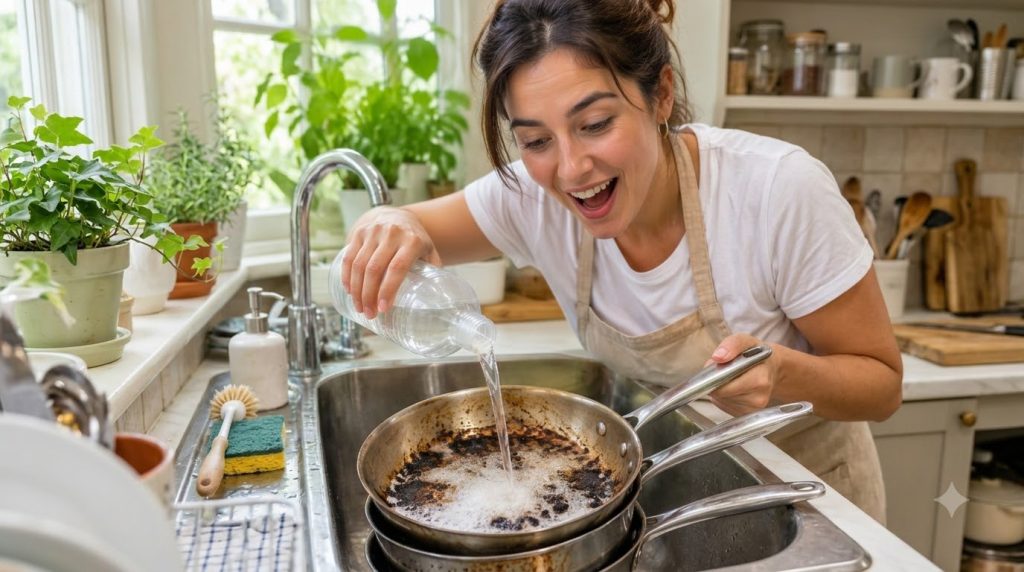
Burnt grease on stainless steel pans is one of the most frustrating kitchen messes. Over time, oil heats past its smoke point, polymerizes, and bakes onto the metal as a dark, sticky crust. Scrubbing with dish soap alone often just smears the grease around, which is why so many homeowners end up reaching for harsh chemical cleaners. A simpler, cheaper approach uses an ingredient already in most kitchens: distilled white vinegar.
What You Need
- Distilled white vinegar (about 1 cup per pan, enough to cover the burnt area)
- Baking soda (2 to 3 tablespoons, optional for extra scrubbing power)
- Dish soap
- A non-abrasive sponge or nylon scrub pad
- Hot water
- A soft microfiber cloth for drying
Step-by-Step: Cleaning Burnt Pans with Vinegar
- Rinse the pan with hot water to remove loose food debris.
- Pour enough distilled white vinegar into the pan to cover the burnt residue, about a quarter inch deep.
- Place the pan on the stove over medium heat and bring the vinegar to a gentle simmer for 5 to 10 minutes. The acid loosens the bonded grease and you will see foam and bubbles lifting the residue.
- Turn off the heat and let the pan cool slightly. Carefully pour out the liquid.
- Sprinkle baking soda over the dark spots if needed, then scrub gently with a nylon pad or sponge.
- Wash with warm water and dish soap, rinse thoroughly, and dry immediately with a microfiber cloth to prevent water spots.
Why the Vinegar Reaction Works
Distilled white vinegar contains acetic acid, which breaks down mineral deposits and helps dissolve the sticky film left behind by burnt oil. Heat speeds up this process, and the fizzing you see is the acid reacting with baking soda or residue on the surface. The result is less scrubbing and less elbow grease.
Safety Tips
- Never mix vinegar with bleach, as this can release harmful fumes.
- Work in a ventilated kitchen, especially while simmering.
- Use caution when handling hot pans, and never leave a heated pan unattended.
- Test on a small area first if your pan has a special coating or finish.
Tips for Keeping Pans Clean
Use medium heat instead of high heat when cooking with oil, and wipe pans lightly after each use. A quick vinegar rinse once a month can prevent heavy buildup from forming in the first place. These small habits make budget home maintenance far easier.
With a little patience and a common pantry staple, your old pans can look much better. Try this method and see how well it works in your own kitchen.