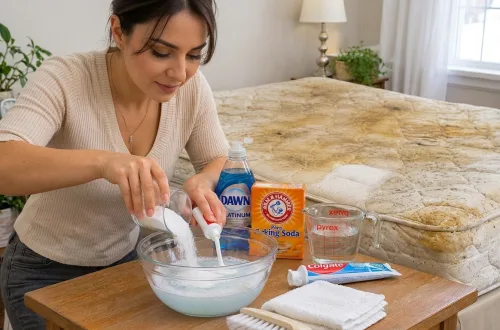
Mattresses collect a lot over the years: sweat, body oils, spilled drinks, and the occasional accident. Before you spend money on a new one or live with a stubborn stain, a simple cleaning method from your pantry and under-sink supplies can often lift everyday buildup and leave your sleeping space feeling fresher.
This DIY uses baking soda, a little mild dish soap, and warm water. It works best on light to moderate surface stains and general odor. It will not remove deep, old stains that have soaked all the way through, so set your expectations accordingly.
What You’ll Need
Cleaning Ingredients
- 1/4 cup baking soda
- 1 teaspoon mild dish soap (a clear or unscented formula is best)
- 1 cup warm water
Tools
- A measuring cup and a small bowl
- A soft-bristled brush or an old toothbrush
- A clean white cloth or sponge
- A dry towel
- A vacuum with an upholstery attachment
Why This DIY Can Be Useful
Baking soda is a gentle, mildly alkaline powder that helps loosen grime and absorb some odors. Dish soap breaks up oily residue that water alone often can’t lift. Warm water helps both ingredients dissolve and spread more easily across the fabric. Together they form a mild, low-cost cleaning paste that is easy to control, which matters on a surface you sleep on every night.
How to Make It
- Vacuum the entire mattress surface first, including the seams and edges, to remove loose dust, crumbs, and pet hair.
- Pour the warm water into the bowl. Add the dish soap and stir gently until it is mixed in and slightly sudsy.
- Add the baking soda to the measuring cup or a separate small bowl. Spoon in a few tablespoons of the soapy water and stir until you have a loose, spreadable paste. Add more baking soda or water as needed to reach that consistency.
- Dip the brush into the paste. The mixture should feel damp, not dripping wet.
How to Use It
- Start in a hidden corner or along the edge to check how the fabric reacts before working on the stain itself.
- Gently work the paste into the stained area using small circular motions with the brush. Keep the pressure light so you do not push the stain deeper into the foam.
- Let the paste sit on the area for about 10 to 15 minutes. Do not let it dry completely into a hard crust, since that makes it harder to remove.
- Dampen the white cloth with plain water, wring it out well, and wipe the area to lift the paste and loosened residue. Rinse and wring the cloth as it picks up dirt.
- Press a dry towel over the treated area to absorb as much moisture as possible.
- Leave the mattress to air dry completely before making the bed. Open a window or run a fan to speed this up. Depending on humidity, drying can take several hours.
- Once dry, sprinkle a thin layer of plain baking soda over the surface if you want extra odor absorption, wait 15 to 30 minutes, and vacuum it up thoroughly.
What to Expect
With light stains and everyday buildup, you should see a noticeable improvement in color and freshness after one careful treatment. Heavier or older stains may fade but not disappear completely, and some may need a second pass. Results also depend on the mattress material and how deeply the stain has set. Keep in mind that this method cleans the surface layer and does not sanitize the mattress.
Helpful Tips
- Use as little liquid as possible. Excess moisture is the main reason a mattress stays damp and develops odor.
- Blot rather than rub harshly, especially on foam or delicate tops.
- Mix a fresh batch for each cleaning session. The soapy water and paste lose their effectiveness as they sit.
- Clean spills as soon as they happen, since fresh stains are much easier to lift than dried ones.
- Vacuum your mattress every few months to keep dust and dead skin cells from building up.
Important Notes / Safety
- Always patch test first. Some fabrics, dyes, and finishes can react to soap or moisture.
- Check the care label before cleaning. If the manufacturer says to use only spot cleaning or specific products, follow those instructions.
- Avoid soaking the mattress. Trapped water can lead to mold and damage the inner materials.
- Never mix baking soda or dish soap with bleach, vinegar, or other cleaning products. Combining cleaners can create irritating fumes or reduce how well each one works.
- Ventilate the room while the mattress dries, and keep pets and children off the surface until it is completely dry.
- Store leftover paste in a sealed container and discard it after a day or two, since it can lose effectiveness and may develop an off smell.