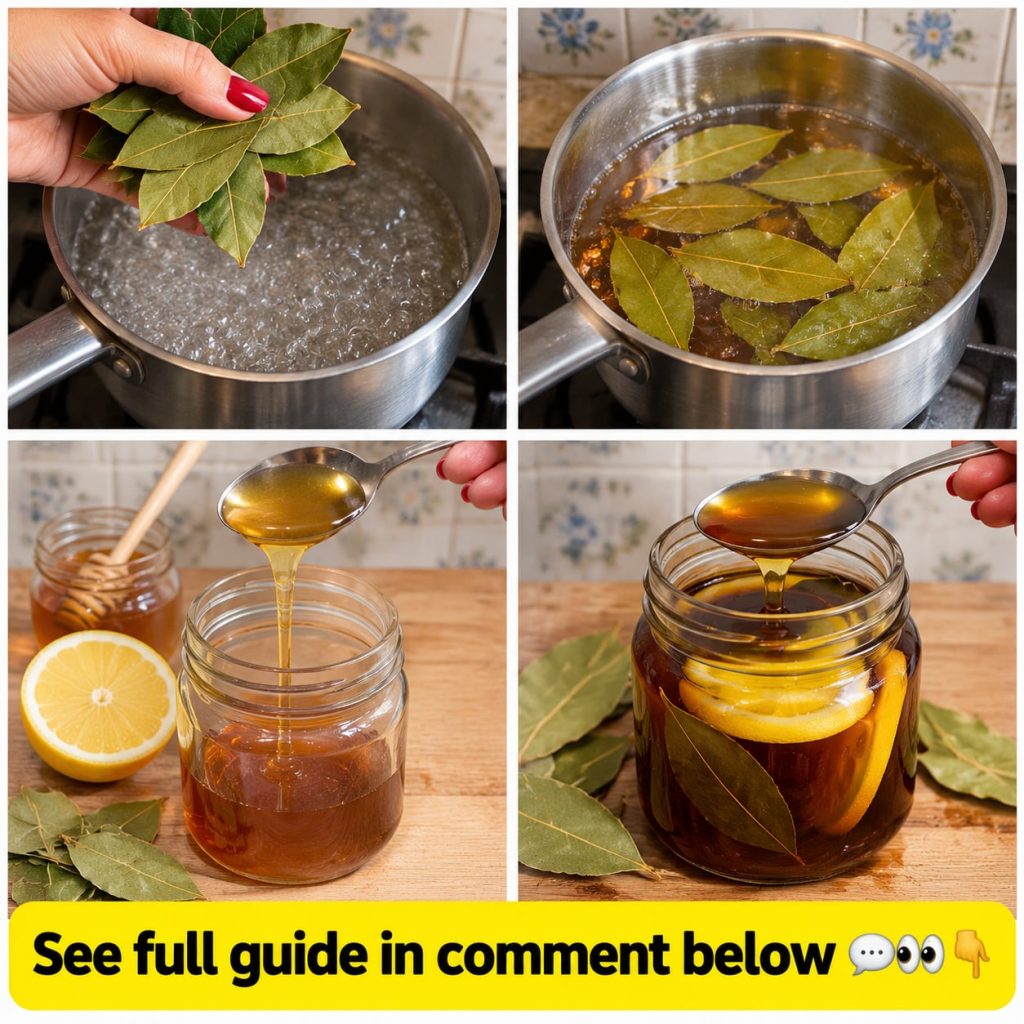
Most people drop a bay leaf into a pot of soup and forget it. That same leaf can become a simple home preparation, but only if you handle it correctly. This guide covers a basic bay leaf tea, a honey-based bay leaf syrup, and the mistakes that quietly ruin both.
What It Is
Bay leaf comes from the bay laurel tree, Laurus nobilis. The culinary type sold in grocery stores is usually dried and whole. At home, the leaves are steeped in hot water for a mild tea, or simmered and mixed with honey or sugar for a thick syrup. Both are traditional household preparations. Treat them as a flavorful drink and a kitchen project, not as a treatment for any health condition.
Ingredients
- 2 to 3 dried bay leaves, or 1 fresh leaf, for tea
- 1 cup (240 ml) filtered water
- Optional: a thin lemon slice or 1 teaspoon raw honey, added after straining
- For syrup: 4 dried bay leaves, 1 cup (240 ml) water, and 1 cup (340 g) raw honey or 3/4 cup (150 g) sugar
- A clean glass jar with a tight lid, and a fine strainer
Approximate Measurements
Small batches are easier to control. Use the table below as a quick reference before you start.
| Version | Base amount | Steep or simmer time | Fridge life |
|---|---|---|---|
| Bay leaf tea (dried) | 2 to 3 leaves per cup | 5 to 8 minutes covered | Best fresh; use within 24 hours |
| Bay leaf tea (fresh) | 1 leaf per cup | 5 minutes covered | Best fresh; use within 24 hours |
| Honey bay leaf syrup | 4 leaves per cup of water | 10 minutes at a gentle simmer | 2 to 3 weeks |
Formula and Recipe
The tea formula is simple: 2 to 3 dried leaves in 1 cup of hot water. The syrup formula is 4 dried leaves, 1 cup of water, and 1 cup of raw honey. Keep the leaf-to-water ratio consistent so the flavor stays mild rather than sharp.
Step-by-Step Method
- For tea, bring water to a near boil, around 90 to 95 degrees C (195 to 200 degrees F). Pour it over the leaves in a cup.
- Cover the cup and steep for 5 to 8 minutes. Covering keeps the aromatic oils in the drink.
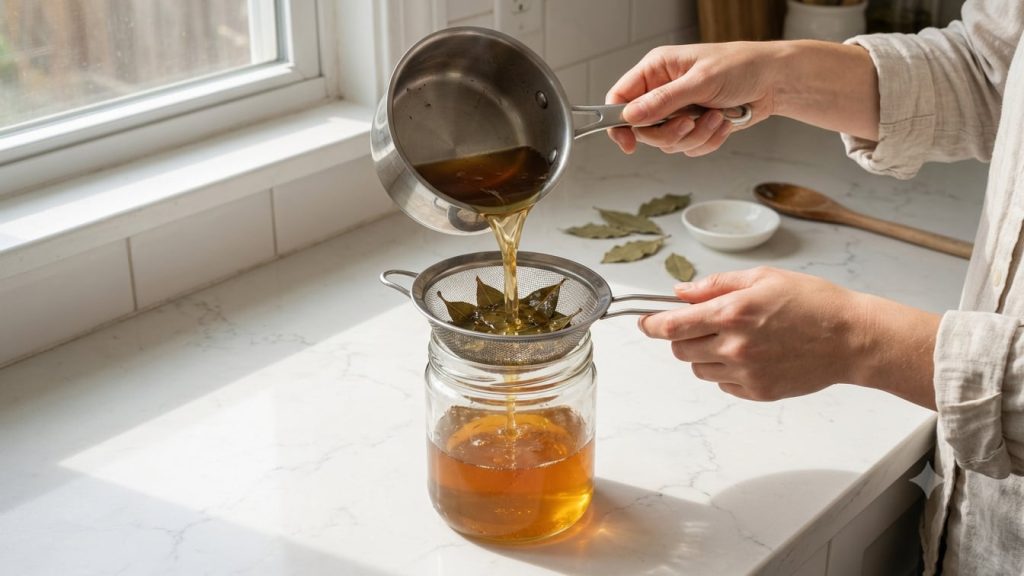
- Strain out every leaf fragment before drinking. Whole leaves are stiff and sharp.
- For syrup, simmer the water and leaves gently, covered, for 10 minutes. Do not allow a hard boil.
- Remove from heat, strain, and let the liquid cool until it is only warm to the touch.
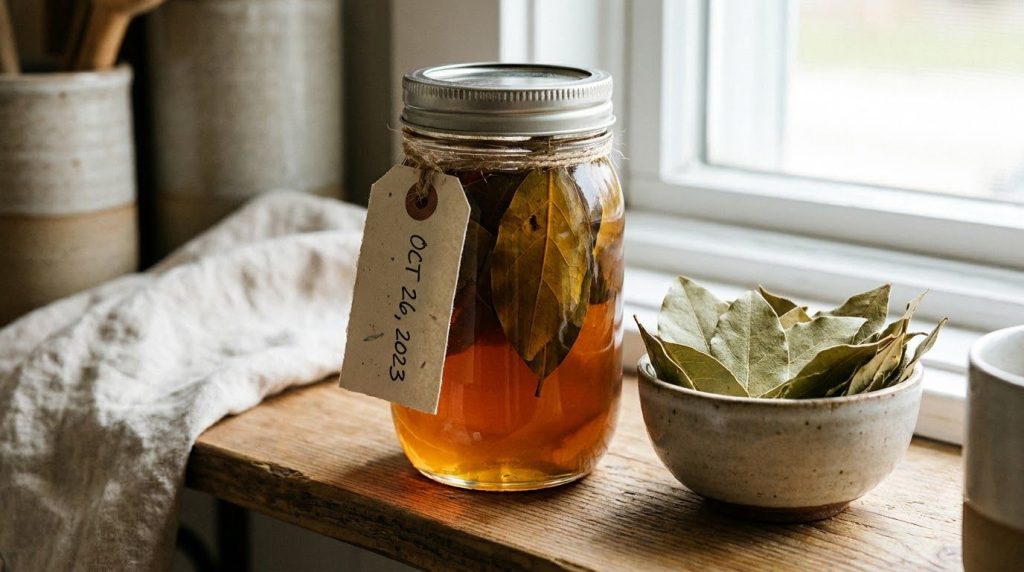
- Stir in the honey until fully dissolved. Pour into a clean, dry glass jar, label it with the date, and refrigerate.
How to Use
For tea, drink it plain or with a small squeeze of lemon. For syrup, stir about 1 teaspoon into a cup of warm water, or add a small spoonful to plain tea. Taste first, since the flavor is strong and slightly herbal.
How Often to Use
Keep it modest. One cup of tea per day is a reasonable limit for most adults who tolerate it well. Limit syrup to 1 teaspoon once or twice a day. If you notice stomach discomfort, nausea, or skin irritation, stop and do not continue.
Quick Tip
Use the same bay leaves for only one tea session. A second steep tends to taste bitter and flat, and the leaves lose their character quickly once wet.
How to Buy and Choose Ingredients
Look for whole dried bay leaves labeled as Turkish or Mediterranean bay. Choose leaves that are green-gray, intact, and aromatic when you crush one gently. Avoid leaves that are brown, dusty, or smell like nothing. California bay (Umbellularia californica) is a different plant with a much stronger flavor, and it is not suitable for drinking. For fresh leaves, choose glossy, unbruised leaves from a plant that you know has not been sprayed with pesticides.
Storage
Keep dried leaves in an airtight jar, away from heat and light. They stay usable for about one to two years, though flavor fades over time. Brewed tea should be refrigerated and used within 24 hours. Syrup keeps in the refrigerator for 2 to 3 weeks. Never store syrup in a jar that is wet inside, because moisture encourages spoilage.
Practical Tips
- Crush the dried leaves slightly before steeping to release more aroma.
- Use a glass or stainless steel pot. Reactive metals can change the taste.
- Label every jar with the preparation date.
- Start with the smaller amount of leaves and adjust after your first batch.
Common Mistakes
- Drinking whole or broken leaves. Always strain thoroughly.
- Boiling the leaves hard for a long time, which produces a bitter result.
- Pouring boiling water over honey, which can alter its taste and texture.
- Storing syrup at room temperature or in an unclean container.
- Using leaves from a garden plant that may have been treated with chemicals.
- Assuming more is better. A stronger brew does not mean a better preparation.
Cautions and Who Should Avoid It
Bay leaf is a food-level herb in culinary amounts, but concentrated home preparations need care. Avoid these preparations if you are pregnant or breastfeeding, if you are caring for a child, or if you have a known allergy to bay or related plants. Honey should never be given to infants under one year old. If you take prescription medication, have a chronic health condition, or are unsure whether a preparation suits you, speak with a qualified healthcare professional first.
Quick Summary
- Best preparation: dried bay leaf tea for daily drinking, honey syrup for a sweeter, longer-lasting option.
- Best use case: a mild, herbal drink in a simple home routine.
- Storage: dry leaves in an airtight jar; tea within 24 hours; syrup up to 3 weeks in the fridge.
- When to use: one cup of tea or 1 teaspoon of syrup per day, with breaks.
- What to avoid: whole leaves, boiling honey, dirty jars, and use during pregnancy or for infants.
FAQ
Can I use fresh or dried bay leaves?
Both work. Dried leaves are more concentrated, so use 2 to 3 for a cup of tea. Use 1 fresh leaf instead.
How long does bay leaf syrup last?
Stored in a sealed glass jar in the refrigerator, it lasts about 2 to 3 weeks. Discard it if it smells sour or looks cloudy.
Can I freeze the syrup?
Freezing is possible in small portions, but thawed syrup may separate slightly. Stir well and use it within a few days after thawing.
Can I reuse the leaves?
It is better not to. A second steep is weak and often bitter. Compost the spent leaves instead.
Which part of the plant is used?
The leaves are the part used in home preparations. Avoid seeds, bark, or berries from the bay tree.
When should I avoid bay leaf tea?
Avoid it if you are pregnant, breastfeeding, caring for young children, allergic to the plant, or taking medication that you have not discussed with a professional.
Can I add bay leaves to other drinks?
Yes, a single leaf can be steeped in plain herbal tea. Keep the total amount small and remove the leaf before serving.
Conclusion
Bay leaf tea and syrup are simple, low-cost home preparations that rely on good technique more than complicated ingredients. Measure carefully, strain thoroughly, store cleanly, and keep portions modest. With those basics in place, the kitchen staple you already own becomes a practical, repeatable drink.
You may also like: Simple Herbal Infusions for Beginners
Read more: How to Store Dried Herbs So They Stay Fragrant
See the full guide: Homemade Honey Syrups: Ratios, Storage, and Safety