For many living with diabetes, there’s a common misconception that fruit is off-limits due to its natural sugar content. But here’s some sweet news: fruits can absolutely be a healthy, delicious part of a diabetes-friendly diet! The key lies in making smart choices and understanding how different fruits impact your blood sugar.
Fruits are packed with essential vitamins, minerals, and antioxidants that support overall health, and their fiber content can actually help manage blood sugar levels. In this comprehensive guide, we’ll debunk the myths and reveal the best fruits for diabetics, along with practical tips to enjoy them without worry.
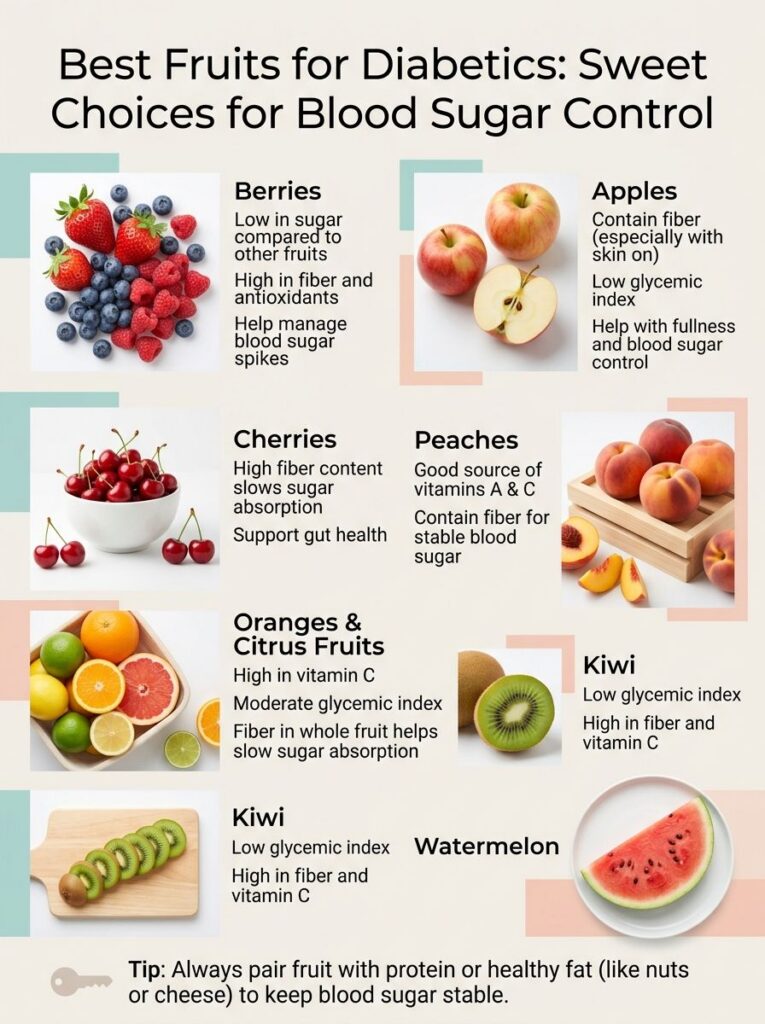
Why Fruit is Good for Diabetics (When Chosen Wisely)
Before we dive into specific fruits, let’s understand why incorporating them into your diet can be beneficial:
- Rich in Fiber: Fiber, especially soluble fiber, helps slow down sugar absorption into the bloodstream, preventing rapid spikes. It also aids in digestion and promotes a feeling of fullness.
- Packed with Nutrients: Fruits are natural sources of vitamins (like Vitamin C and A), minerals (like potassium), and powerful antioxidants that combat inflammation and oxidative stress, which can be higher in individuals with diabetes.
- Natural Sweetness: They satisfy sweet cravings naturally, reducing the need for added sugars found in many processed snacks.
- Hydration: Many fruits have high water content, contributing to daily hydration.
Understanding Glycemic Index (GI) and Glycemic Load (GL)
When selecting fruits, two important concepts to consider are the Glycemic Index (GI) and Glycemic Load (GL).
- Glycemic Index (GI): This ranks carbohydrates on a scale from 0 to 100 based on how quickly they raise blood sugar levels after eating. Foods with a low GI (55 or less) cause a slower, more gradual rise in blood sugar.
- Glycemic Load (GL): This provides a more complete picture, as it takes into account both the GI and the amount of carbohydrate in a typical serving. A low GL (10 or less) is generally preferred.
Focusing on fruits with a lower GI and GL can help you maintain stable blood sugar levels.
Top Fruits for Diabetics: Sweet Choices You Can Trust
1. Berries (Strawberries, Blueberries, Raspberries)
- Why they’re great: Berries are superstars for blood sugar control. They are low in sugar and high in fiber and antioxidants (especially anthocyanins in blueberries).
- Benefits: Helps improve insulin sensitivity, reduces inflammation, and offers a delicious burst of flavor for minimal carb impact.
- Serving suggestion: A handful in your oatmeal, yogurt, or as a standalone snack.
2. Apples
- Why they’re great: An apple a day might not just keep the doctor away, but also help stabilize blood sugar! Apples are rich in fiber (especially pectin) and antioxidants.
- Benefits: Their high fiber content slows sugar absorption, and they have a relatively low GI.
- Serving suggestion: Enjoy a medium apple with the skin on for maximum fiber. Pair it with a small handful of almonds or a tablespoon of peanut butter.
3. Cherries
- Why they’re great: Sweet or tart, cherries are a fantastic choice. They contain anthocyanins, which may help lower blood sugar.
- Benefits: Low GI and rich in antioxidants, contributing to reduced inflammation.
- Serving suggestion: A small bowl of fresh cherries (about 10-12) can be a delightful treat.
4. Peaches
- Why they’re great: Juicy and sweet, peaches offer a good amount of fiber, potassium, and vitamins A and C.
- Benefits: Their fiber content helps manage blood sugar and promotes digestive health.
- Serving suggestion: Enjoy a fresh, medium-sized peach, perhaps sliced into a salad or with a light yogurt.
5. Oranges & Citrus Fruits (Grapefruit, Lemons, Limes)
- Why they’re great: Citrus fruits are known for their Vitamin C content and are generally low in GI.
- Benefits: Oranges provide fiber and are beneficial for heart health, a common concern for diabetics. Grapefruit, in particular, has compounds that may help lower insulin resistance (consult your doctor if you’re on medication, as it can interact).
- Serving suggestion: A whole orange is always better than juice. Enjoy half a grapefruit for breakfast.
6. Kiwi
- Why they’re great: Small but mighty, kiwis are packed with fiber, Vitamin C, and Vitamin K.
- Benefits: Their high fiber content helps regulate blood sugar, and they offer a unique sweet-tart flavor.
- Serving suggestion: Peel and slice a kiwi, or scoop out the flesh with a spoon.
7. Watermelon
- Why they’re great: While watermelon has a higher GI than some other fruits, its high water content means it has a relatively low glycemic load in moderate portions. It’s also rich in vitamins A and C, and lycopene.
- Benefits: Offers hydration and nutrients.
- Serving suggestion: Enjoy a small slice (about 1 cup diced) in moderation, keeping portion sizes in mind.
Smart Tips for Enjoying Fruit with Diabetes
Beyond choosing the right fruits, how you eat them also makes a difference:
-
1. Portion Control is Key
Even healthy fruits contain carbohydrates. Stick to recommended serving sizes, which typically equate to about 15 grams of carbohydrates per serving. For example: a small apple, 1/2 banana, 1 cup of berries, or 1/2 cup of mango.
-
2. Pair with Protein or Healthy Fat
As our infographic highlights, combining fruit with a source of protein (like Greek yogurt, a small amount of cheese, or nuts) or healthy fat (like avocado or almond butter) can further slow down sugar absorption and keep you feeling fuller longer. This helps prevent blood sugar spikes.
-
3. Choose Whole Fruit Over Juice
Fruit juice, even 100% natural, lacks the beneficial fiber found in whole fruit. This means the sugars are absorbed much faster, leading to quicker blood sugar spikes. Always opt for whole, fresh fruit when possible.
-
4. Mind the Timing
Consider when you eat fruit. Eating it as part of a meal or snack can be better than consuming it alone, especially if you’re sensitive to blood sugar fluctuations.
-
5. Monitor Your Blood Sugar
Everyone’s body responds differently. Pay attention to how various fruits affect your blood sugar levels and adjust your choices and portions accordingly. This personalized approach is crucial for effective diabetes management.
-
6. Avoid Dried and Canned Fruits with Added Sugars
Dried fruits are highly concentrated in sugar and lack the water content of fresh fruit, making their impact on blood sugar much higher. Canned fruits often come packed in sugary syrup. If you choose canned, look for