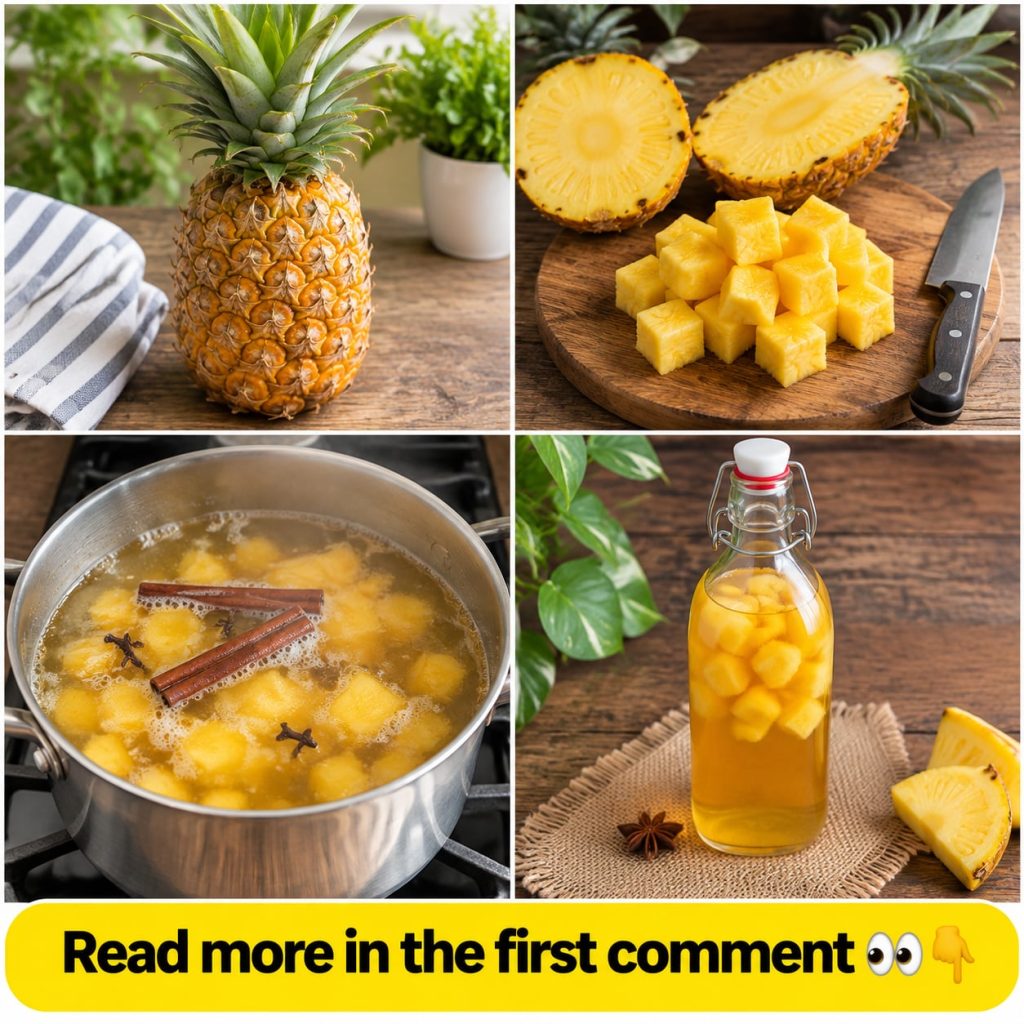
Most people assume wine needs a winery, but a ripe pineapple, sugar, water, and a little patience can produce a bright, golden batch in your own kitchen. The fruit does most of the work. Your job is to keep the process clean, measured, and steady.
What Is Pineapple Wine?
Pineapple wine is a fruit wine made by fermenting pineapple juice with sugar and wine yeast. The yeast converts sugar into alcohol and carbon dioxide. Pineapple is a good choice for beginners because its natural sugars and acidity support a lively, easy-to-manage fermentation.
Ingredients and Approximate Measurements
- 1 ripe pineapple, about 1 kg (2.2 lb) of flesh
- 800 g (about 4 cups) white sugar
- 4 liters (about 1 gallon) filtered water
- 1 sachet wine yeast (champagne or all-purpose wine yeast)
- 1 teaspoon yeast nutrient
- 1 teaspoon pectic enzyme (optional, for clarity)
Method: Step by Step
- Wash the pineapple well, then peel and core it. Chop the flesh into small pieces.
- Place the pineapple and 1 liter of water in a large pot. Warm gently to about 70 C (160 F). Do not boil.
- Stir in the sugar until dissolved, then pour everything into a sanitized fermentation bucket.
- Add the remaining water until the total volume is about 4 liters. Let the mixture cool to around 25 C (77 F).
- Add the yeast nutrient and pectic enzyme, then sprinkle the wine yeast on top and stir gently.
- Cover loosely with a lid or cloth and ferment at room temperature for 5 to 7 days, stirring once daily.
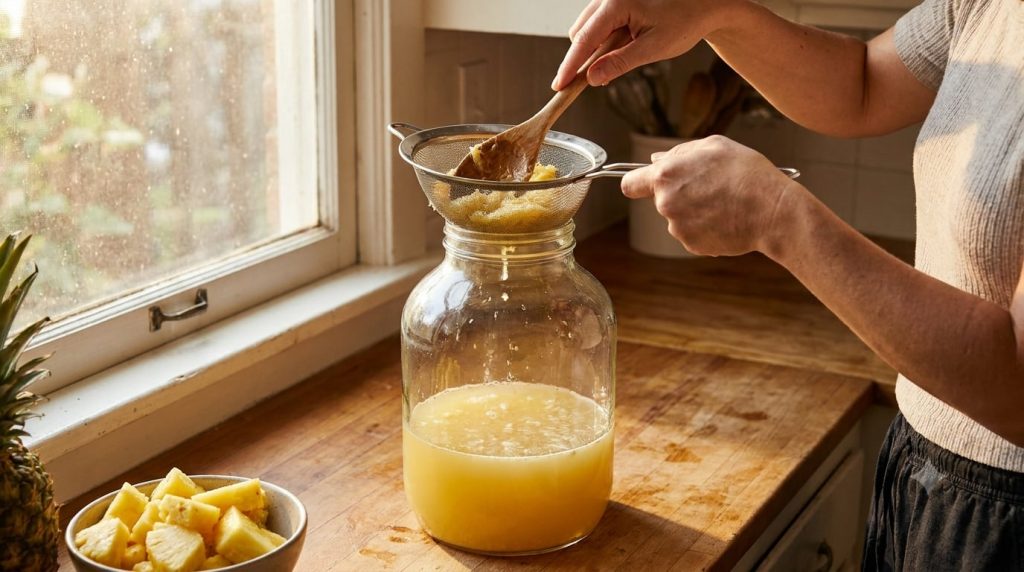
- Strain out the pulp, transfer the liquid to a glass carboy, and fit an airlock.
- Let it ferment for 3 to 4 weeks until bubbling slows down.
Fresh vs Dried Pineapple
| Option | Best For | Notes |
|---|---|---|
| Fresh pineapple | Bright, fruity wine | Use fully ripe fruit with a sweet smell |
| Frozen pineapple | Convenience | Thaw first and include the juice |
| Dried pineapple | Deep, concentrated flavor | Use less fruit and check sugar levels |
How to Choose a Good Pineapple
Look for fruit that smells sweet at the base and yields slightly to pressure. Avoid pineapples with dark soft spots or sour, alcoholic smells before fermentation. Choose fruit that has not been heavily sprayed, and wash the skin thoroughly before cutting.
Storage
Once fermentation finishes, keep the wine in a cool, dark place. Store sealed bottles upright for corks or on their side for screw caps. Plan to drink the wine within 6 to 12 months for the best flavor. Ready-to-drink batches can be refrigerated after they clear.
Read more: how to sanitize brewing equipment at home.
Practical Tips
Keep the fermentation area between 18 and 24 C (65 to 75 F). Warmer rooms ferment faster but can produce off flavors. Taste the wine after 3 months. If it tastes too harsh, let it rest longer. Clear the wine by racking it off the sediment every few weeks.
Common Mistakes
- Using pineapples that are unripe or moldy, which can add sourness or spoilage.
- Boiling the fruit, which can create cooked flavors and damage delicate aromas.
- Skipping sanitation, which allows unwanted bacteria to compete with the yeast.
- Sealing the jar tightly with no airlock, which can build pressure.
- Bottling before fermentation stops, which can cause bottles to burst.
Cautions and Who Should Avoid It
This is an alcoholic beverage. Do not make or drink it if you are under the legal drinking age, pregnant or trying to conceive, recovering from alcohol dependence, or taking medications that interact with alcohol. Speak with a healthcare professional if you have a medical condition. Keep finished wine out of reach of children.
Quick Summary
- Best preparation: Fresh ripe pineapple with sugar, water, and wine yeast.
- Best use case: A light, fruity wine for sharing with friends.
- Storage: Cool, dark place, bottled and sealed, within 6 to 12 months.
- When to drink: After fermentation stops and the wine has cleared.
- What to avoid: Unripe fruit, boiling, poor sanitation, and early bottling.
FAQ
Can I use canned pineapple?
Yes, but choose unsweetened canned pineapple and reduce the added sugar slightly. Check the juice for preservatives that may affect yeast.
Can I use the pineapple skin?
Some brewers add clean skin for extra flavor. Wash it well and remove any brown or damaged areas.
How long does pineapple wine last?
Most homemade batches are best within 6 to 12 months when stored properly.
Can I refrigerate it during fermentation?
No. Refrigeration slows or stops yeast activity. Keep fermentation at room temperature and refrigerate only after the wine has finished and cleared.
Can I freeze pineapple wine?
Freezing is not recommended for finished wine because it can damage the bottle and change the texture.
How do I know fermentation is finished?
The airlock bubbles slowly or stops for several days, and the liquid becomes clearer.
Can I reuse the pineapple pulp?
Once strained, the pulp has lost much of its flavor. It is better to compost it.
Conclusion
Homemade pineapple wine is a practical project when you use ripe fruit, measured sugar, clean equipment, and patient fermentation. Start with a small batch, take notes, and adjust the sweetness on your next brew.
You may also like: a beginner guide to fruit wine fermentation.
See the full guide: choosing the right wine yeast for fruit batches.