Whole orange vs. orange juice is one of the most common fruit comparisons in everyday nutrition, and for good reason. A glass of fresh orange juice feels like an easy way to get a vitamin boost, but the way the fruit is prepared can change what you actually take in. Here is what happens when an orange is squeezed, and how to choose the option that fits your daily routine.
In short, juicing removes much of the fruit’s dietary fiber. That single change can affect how fast the drink is digested and how full you feel afterward.
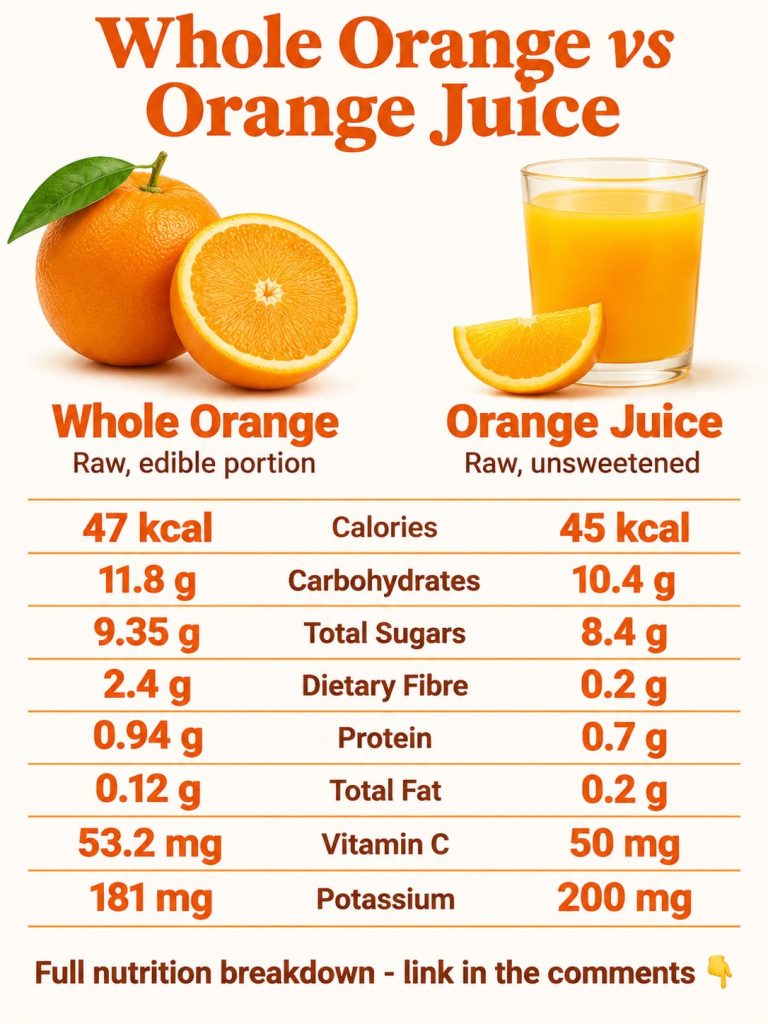
What Happens to the Fiber When You Juice an Orange
Dietary fiber is the part of the fruit that gives it structure. When oranges are squeezed into juice, most of this fiber is left behind in the pulp, so the liquid that reaches your glass contains very little of it.
Whole oranges keep their fiber intact. This is one reason the whole fruit is often described as the more filling option. Fiber is commonly associated with a feeling of fullness, and it can be a helpful part of a balanced eating pattern.
Why Digestion Speed Matters
Without much fiber to slow things down, orange juice tends to digest much faster than a whole orange. Many people notice that a glass of juice leaves them hungry again sooner than a piece of fruit would. The whole fruit takes more time to chew and digest, which may help it feel more satisfying.

Whole Orange vs. Orange Juice at a Glance
- Whole orange: keeps most of its dietary fiber, digests more slowly, and may help you feel full for longer.
- Orange juice: offers a fast, easy source of fruit flavor and vitamins, but contains little of the fiber found in the whole fruit.
How to Choose Wisely
Both options can have a place in your routine. The key is knowing what you are getting from each one.
- Reach for a whole orange when you want a snack that keeps you satisfied.
- Enjoy a glass of juice as a occasional addition rather than a replacement for the whole fruit.
- Pair juice with a meal that includes protein or fiber to help balance how quickly it is digested.
- Use fresh oranges as a simple addition to breakfast, salads, or yogurt bowls.
Practical Tips for Daily Fruit Intake
Making fruit part of your day does not have to be complicated. Keep whole oranges visible on the counter so they are easy to grab, and peel them in advance for a quick grab-and-go option. If you do drink juice, measure a modest serving so it fits comfortably into your overall eating plan.
Frequently Asked Questions
Is orange juice unhealthy?
Orange juice can be part of a balanced diet. It provides vitamins and a pleasant taste, but because it contains little fiber, it is best viewed as a complement to whole fruit rather than a replacement.
Which is better for feeling full?
The whole orange is generally the better choice for feeling full longer, because its fiber slows digestion.
Final Thoughts
When you compare whole orange vs. orange juice, the difference comes down to fiber and digestion speed. Eating the whole fruit keeps more of its natural structure and may help you feel satisfied for longer, while juice offers a quick and refreshing option. Choosing wisely and enjoying each in moderation can help you get more from your daily fruit intake.
Medical Disclaimer: This article is for general educational purposes only and is not a substitute for professional medical advice. If you have a medical condition or dietary concerns, please consult a qualified healthcare professional.