Homemade beauty trends come and go, but one simple idea keeps catching attention: a basic homemade cream mixture that many people say leaves skin looking smoother and more refreshed. If you have seen the DIY collagen cream secret floating around social media, you may be wondering what it is really about and whether it is worth trying. This guide walks through the idea in a clear, practical way, so you can decide if it fits your routine.
What Is the DIY Collagen Cream Idea?
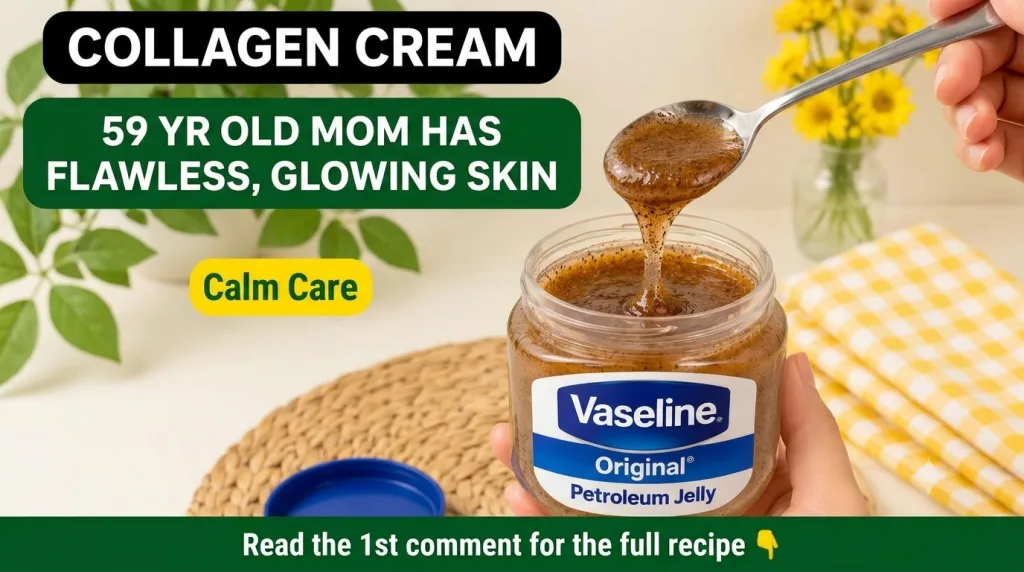
The idea is built around a simple, affordable base that most households already have. In the image that inspired this article, the mixture looks thick, glossy, and slightly textured, with small dark flecks throughout. That texture suggests a soft, spreadable blend rather than a runny liquid. Keep in mind that a photo can show appearance but not the exact ingredients or proportions, so it is wise to research any recipe carefully before you make it.
Why Texture Matters for Skin
When people talk about skin texture, they usually mean how smooth, even, and supple the surface feels. Dryness can make fine lines look more noticeable, and rough patches can make skin appear dull. A rich, occlusive product helps seal in moisture, which can temporarily make skin look plumper and softer. This is one reason petroleum jelly has been a trusted staple in many homes for generations.
Understanding Collagen and Topical Products
Collagen is a protein that gives skin its structure. As we age, natural collagen production slows down, and that is why anti-aging routines often focus on hydration and protection. It is important to know that most collagen molecules are too large to be absorbed deeply through the skin when applied topically. A cream labeled as collagen-inspired usually works on the surface by hydrating and softening, rather than rebuilding collagen beneath the skin. Collagen supplements taken by mouth are a different topic and should be discussed with a healthcare professional if you are considering them.
Simple Steps for Trying a Homemade Cream Safely
-
Choose a clean, dry jar and a clean spoon to avoid introducing bacteria into your product.
-
Start with a small amount so you can judge the texture and how your skin responds.
-
Do a patch test on a small area of your inner arm or behind your ear for at least 24 hours before using it on your face.
-
Apply a thin layer to clean, slightly damp skin, preferably in the evening.
-
Store your mixture in a cool place and discard it if it smells off, changes color, or develops mold.
Tips for Getting the Best Results
Consistency matters more than any single ingredient. Many people notice that skin feels softer after a few weeks of gentle, regular care, paired with sunscreen during the day and enough sleep and water. Pair your evening cream with a gentle cleanser and avoid harsh scrubbing, which can irritate the skin barrier. If you have sensitive skin, acne-prone skin, or a medical skin condition, speak with a dermatologist before adding new products.
Who Should Be Careful
Petroleum jelly can feel heavy on oily or acne-prone skin and may clog pores for some people. Anyone with allergies, eczema, rosacea, or open wounds should avoid experimenting with homemade mixtures without professional advice. Children and anyone who is pregnant should also check with a doctor before trying new topical products.
The Bottom Line
The DIY collagen cream secret is a fun, budget-friendly idea that focuses on softening and hydrating skin. It is not a miracle fix, and it will not replace proven skincare or medical treatment. If you enjoy hands-on beauty projects, approach it with curiosity, test carefully, and keep your expectations realistic. Your skin will thank you for the gentle, consistent care.