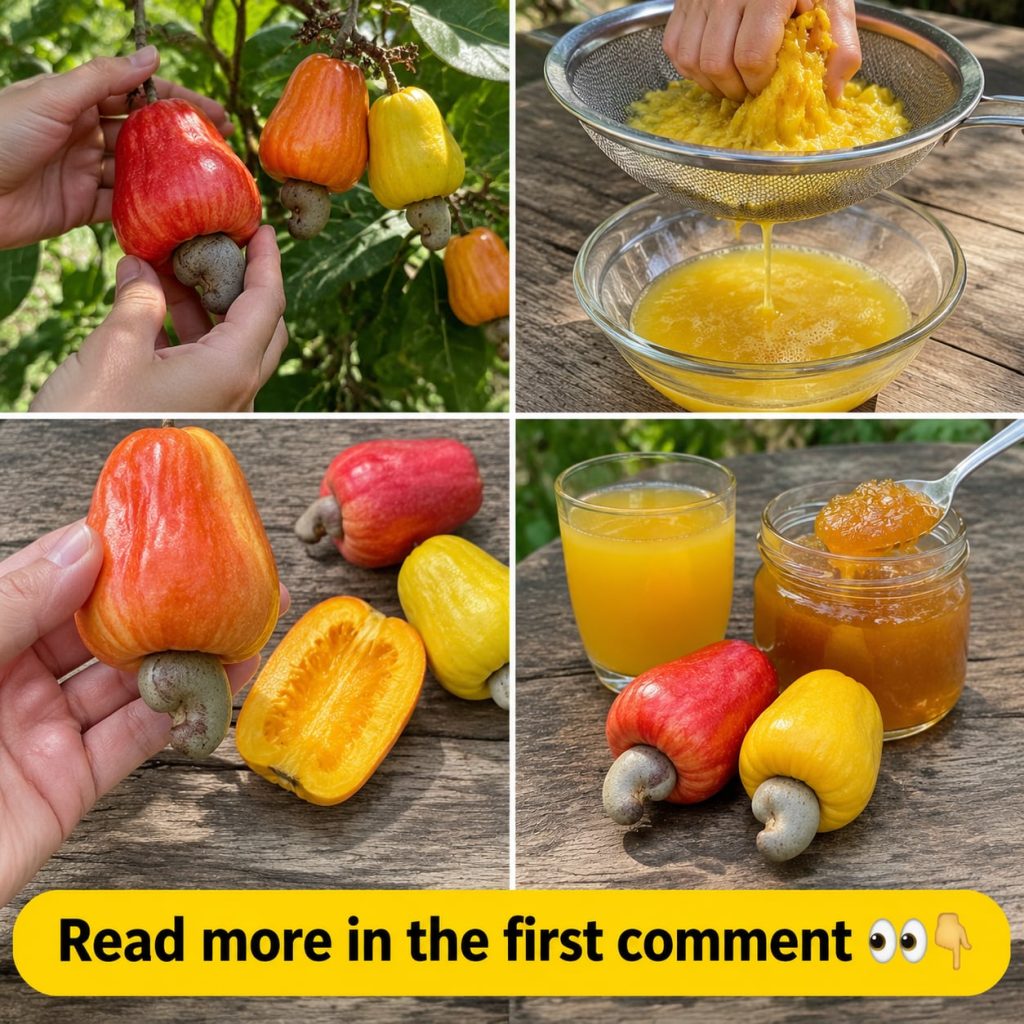
Most people never see the cashew apple. The nut gets packaged and sold, while the bright, juicy fruit attached to it is usually left to rot under the tree. That is a missed opportunity, because cashew apple makes a sharp, tropical juice and a surprisingly good jam when it is handled correctly.
What Is the Cashew Apple?
The cashew apple is the swollen stalk, or pseudofruit, that grows from the cashew tree. The true fruit is the kidney-shaped nut that hangs from its tip. The apple itself is juicy, fragrant, and tangy-sweet, with a slightly astringent finish. It spoils quickly after picking, which is why most of it never leaves the growing regions in fresh form.
Ingredients You Need
- Ripe cashew apples, firm and fully colored, without soft or dark spots
- Clean drinking water (for juice only)
- Sugar or honey, optional, to balance tartness
- Fresh lemon or lime juice, about 1 tablespoon per cup of juice
- For jam: 1 cup of sugar, 1 tablespoon of lemon juice, and optional pectin
Approximate Measurements
For a small batch, plan on about 1 kilogram of ripe cashew apples. This typically yields 3 to 4 cups of juice or about 2 cups of jam, depending on how juicy the fruit is.
Recipe: Fresh Cashew Apple Juice
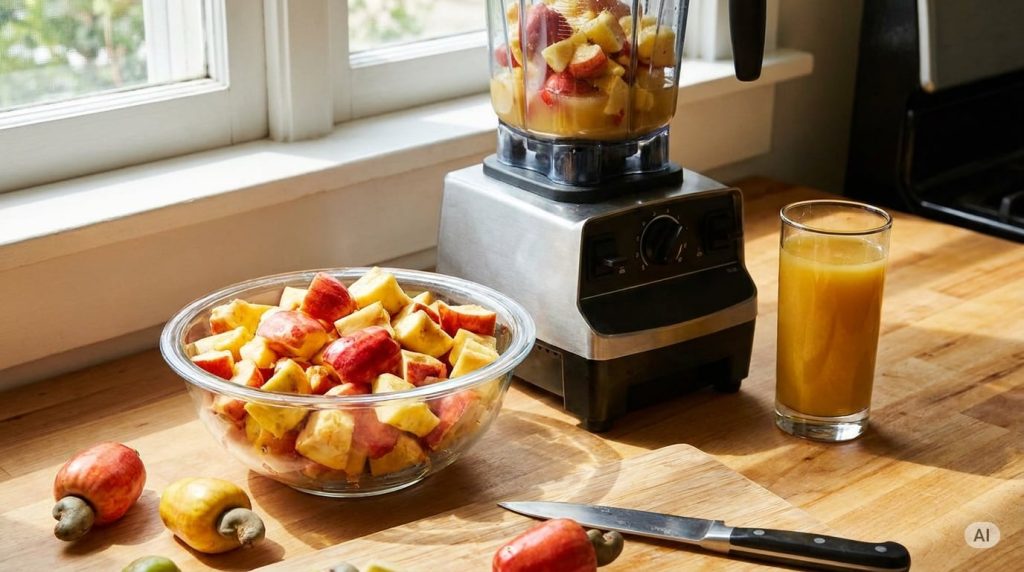
Wash the apples thoroughly. Cut them into chunks, discarding any bruised parts. Blend the chunks with a little water, about 1 cup per 2 cups of fruit, until smooth. Strain through a fine mesh or cheesecloth. Add sugar or honey to taste and a squeeze of lemon. Chill before serving.
Step-by-Step Method
- Remove the cashew nut from each apple. Handle raw nuts with care, because the shell contains a caustic oil.
- Wash the apples in cool water and cut away any damaged areas.
- Blend the flesh with water in short pulses, so the juice stays fresh-tasting.
- Strain, sweeten lightly, and chill.
- For jam, simmer the blended pulp with sugar and lemon juice over medium heat for 20 to 30 minutes, stirring often, until thickened.
- Test the jam by spooning a little onto a cold plate. If it wrinkles when pushed, it is ready.
How to Use Cashew Apple Juice and Jam
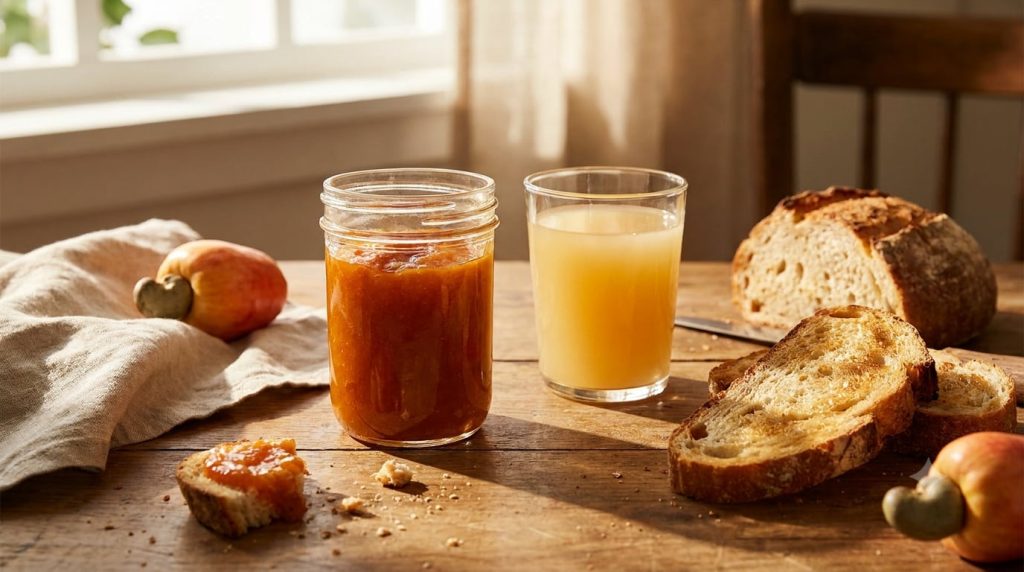
Serve the juice chilled, diluted with water or sparkling water. It also works in smoothies with mango or pineapple. Spread the jam on toast, stir it into yogurt, or use it as a glaze for grilled chicken or pork.
How Often to Use It
Enjoy a small glass of juice a few times a week as part of a balanced diet. Keep jam to a spoonful or two at a time, since both versions contain natural sugars.
How to Choose and Buy Cashew Apples
Fresh cashew apples are mainly sold in tropical markets. Look for fruit that is firm, fragrant, and evenly colored, with no mold near the stem. Frozen cashew apple pulp and canned juice are easier to find in specialty stores and are good options if fresh fruit is not available nearby.
Fresh vs Frozen vs Canned: Quick Reference
| Form | Best For | Shelf Life | Flavor Notes |
|---|---|---|---|
| Fresh apples | Juice and jam from scratch | 1 to 2 days refrigerated | Bright, tart, aromatic |
| Frozen pulp | Smoothies and quick juice | Up to 6 months frozen | Mellow, slightly sweeter |
| Canned juice | Drinks without preparation | Per label, after opening 5 to 7 days | Mild, often sweetened |
Storage
Refrigerate fresh cashew apples and use them within 1 to 2 days. Store fresh juice in a sealed glass bottle in the fridge for up to 24 hours. Freeze the extra pulp in portions. Keep jam in sterilized jars in the refrigerator for up to 3 weeks, or process it in a water bath for longer shelf life.
Practical Tips
Blend the fruit as soon as possible after picking. Add lemon juice to slow browning. If the juice tastes too astringent, add a little more sugar rather than more water. For a smoother jam, strain the pulp before cooking.
Common Mistakes
- Using bruised or overripe apples, which ferment quickly and taste sour
- Boiling the juice for too long, which dulls its bright flavor
- Storing juice in unsealed containers, which speeds spoilage
- Handling raw nuts without gloves, which can irritate the skin
- Overcooking jam, which makes it hard and sticky
Cautions and Who Should Avoid It
Raw cashew nut shells contain irritating compounds, so never crack or roast them at home without proper processing. Cashew belongs to the same plant family as poison ivy and mango, so people with known sensitivities to these plants or to cashews should avoid the fruit. Anyone with diabetes or who is managing blood sugar should limit sweetened juice and jam and check with a healthcare professional first. Pregnant or breastfeeding women should talk to their doctor before adding new fruit preparations.
Quick Summary
Best preparation: fresh cashew apple juice, blended and strained, or simple jam cooked with sugar and lemon. Best use: breakfast spreads, smoothies, and chilled drinks. Storage: refrigerate fresh fruit briefly, keep juice up to 24 hours, and keep jam up to 3 weeks. Avoid: bruised fruit, raw nut shells, and overcooking.
Frequently Asked Questions
Can I use fresh or dried cashew apple?
Fresh is best for juice and jam. Dried cashew apple is uncommon and has a very different texture, so it is not suitable for this recipe.
How long does cashew apple juice last?
Fresh juice stays good for up to 24 hours in the refrigerator. Frozen juice keeps for several months.
Can I refrigerate the fruit before juicing?
Yes, but only for one to two days. Cold storage slows spoilage, though the fruit is delicate and should be processed quickly.
Can I freeze cashew apple pulp?
Yes. Freeze pulp in small portions in airtight bags or containers, and thaw in the refrigerator before use.
Which part is best to use?
The fleshy apple is the part most people use for juice and jam. The nut requires special processing and is not used in these recipes.
How often can I drink the juice?
A small glass a few times a week is a reasonable serving for most adults. Adjust based on your personal health needs.
When should I avoid it?
Avoid it if you have a cashew or poison ivy sensitivity, or if you have been advised to limit sugary fruit drinks.
Final Thoughts
The cashew apple is far more useful than its reputation suggests. With fresh fruit, a blender, and a simple method, you can turn it into a bright juice or a jam worth keeping. Start with a small batch and learn how your fruit tastes before scaling up.
You may also like: Read more about tropical fruit preserves
Related remedy: See the full guide to homemade fruit syrups
Continue with: Learn how to make a simple fruit smoothie base