Lime peels usually end up in the trash after you squeeze the juice, but they still carry citrus oils that help cut through kitchen grease. This simple lime peel project turns that leftover into a practical, everyday cleaner for stovetops, backsplashes, and range hoods.
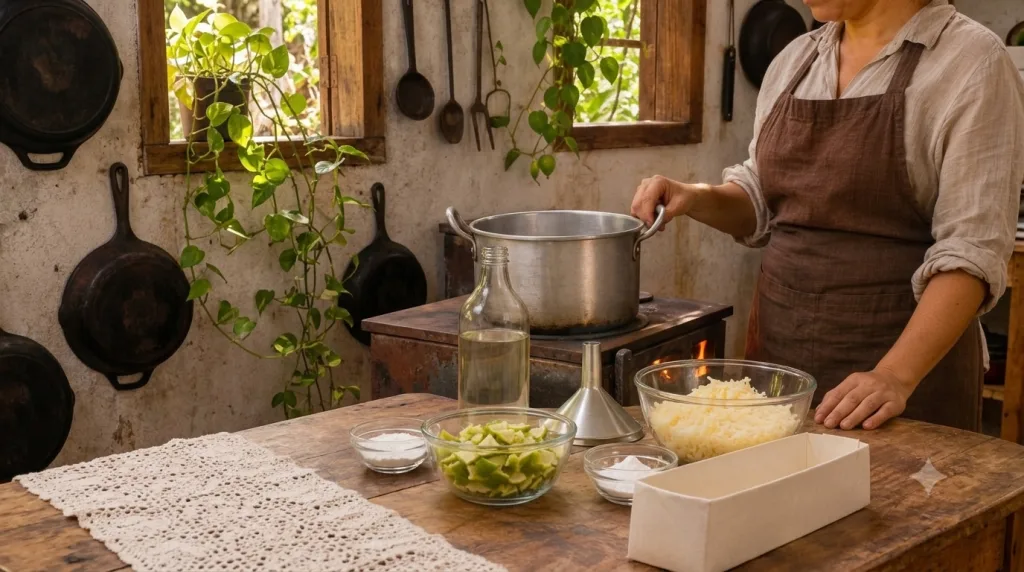
The full recipe for this video was shared in the comments rather than in the post itself, so the steps below describe a safe, practical version using common supplies. Think of it as a reliable starting point, and adjust the amounts to fit the size of your bottle.
Keep in mind that this is a liquid lime-infused cleaner rather than a bar of soap. Making true soap requires lye, which calls for extra safety gear and careful handling, so this guide sticks to the easier method.
What You’ll Need
Ingredients
- Peels from 2 to 3 fresh limes, washed and dried
- 1 cup white vinegar
- 1/2 cup unscented liquid castile soap or mild unscented dish soap
- 1/2 cup warm water (optional, for a lighter mix)
Tools
- A clean glass jar with a tight-fitting lid
- Vegetable peeler or small paring knife
- Fine-mesh strainer and funnel
- Clean spray bottle or pump bottle
- Label and marker
Why This DIY Can Be Useful
Citrus peels contain natural oils, and limonene, a common citrus compound, is often associated with helping break down greasy residue. The vinegar gives the mix a mild acidic base that works well on light mineral film and everyday kitchen grime. The castile or dish soap helps lift grease so it can be wiped away more easily.
This combination is best for regular upkeep, not for heavy, baked-on messes that need a stronger approach.
How to Make It
- Wash the limes well and pat them dry. Use a peeler to remove the colored zest in strips, and try to avoid the white pith underneath, since it can taste bitter and add little cleaning value.
- Place the peels in a clean glass jar and pour the white vinegar over them. Make sure the peels are fully submerged.
- Seal the jar and store it in a cool, dark spot for 1 to 2 weeks. Give it a gentle shake every day or two.
- When the vinegar has taken on a strong citrus scent, strain out the peels with a fine-mesh strainer and pour the infused vinegar into a clean bottle.
- Add the castile or dish soap to the infused vinegar. If you want a lighter spray, stir in the warm water as well.
- Swirl the bottle gently to combine. Avoid shaking it hard, since that can create too many suds.
- Label the bottle with the date you made it.
How to Use It
Spray the mixture onto greasy areas such as the stovetop, range hood, cabinet fronts near the cooktop, or a backsplash. Let it sit for about 1 to 2 minutes so it can loosen the grease, then wipe with a damp microfiber cloth.
For stubborn spots, spray again and gently scrub with a soft sponge. Rinse the cloth often and wipe the surface with clean water to remove any soap film. Dry the area with a clean towel so it doesn’t look streaky.
What to Expect
This cleaner works best on light to moderate grease that builds up during everyday cooking. Surfaces that are greasy but not heavily caked will usually look noticeably cleaner after one or two passes.
Very thick, baked-on residue may need several applications and more scrubbing. This mixture is also not a disinfectant, so it is meant for cleaning rather than killing germs.
Helpful Tips
- Use fresh limes for the brightest scent, and make a new batch when you have leftover peels.
- Store the finished cleaner in the refrigerator and use it within a few weeks. Cloudiness can be normal, but a sour smell or mold means it should be thrown out.
- Use a microfiber cloth instead of a paper towel for better grease pickup and less lint.
- Keep the bottle away from direct sunlight to help preserve the scent.
Important Notes / Safety
- Patch test on a small, hidden area first, especially on painted surfaces, wood, or any finish you are unsure about.
- Avoid using vinegar-based cleaners on natural stone such as marble or granite, unsealed grout, or waxed wood, since acid can dull or etch these surfaces.
- Never mix this cleaner with bleach or other cleaning products. Combining chemicals can release harmful fumes.
- Wear gloves if your skin is sensitive, and avoid spraying near your eyes. Rinse thoroughly if you get any in them.
- Keep the bottle clearly labeled and out of reach of children and pets.
- Open a window or run the range hood while cleaning to keep the air fresh and comfortable.