Store-bought seasoning packets are convenient, but they often include fillers, extra salt, and flavors you may not need. Making your own spice blends takes only a few minutes, and once you have a small collection of jars on the shelf, you can season almost anything in seconds. Here are 12 homemade spice blends that work well in everyday cooking.
Why Make Your Own Spice Blends?
- You control the salt. Most homemade blends let you decide how much salt goes in, which is helpful if you cook for a family with different preferences.
- Fresher flavor. Whole and ground spices lose their aroma over time, so mixing small batches keeps your seasonings tasting bright.
- Less waste. You only buy the spices you actually use, and you can scale each blend up or down.
- Easy to customize. Once you know the basic formula, you can add more heat, sweetness, or herbs to suit your taste.
12 Homemade Spice Blends for Everyday Cooking
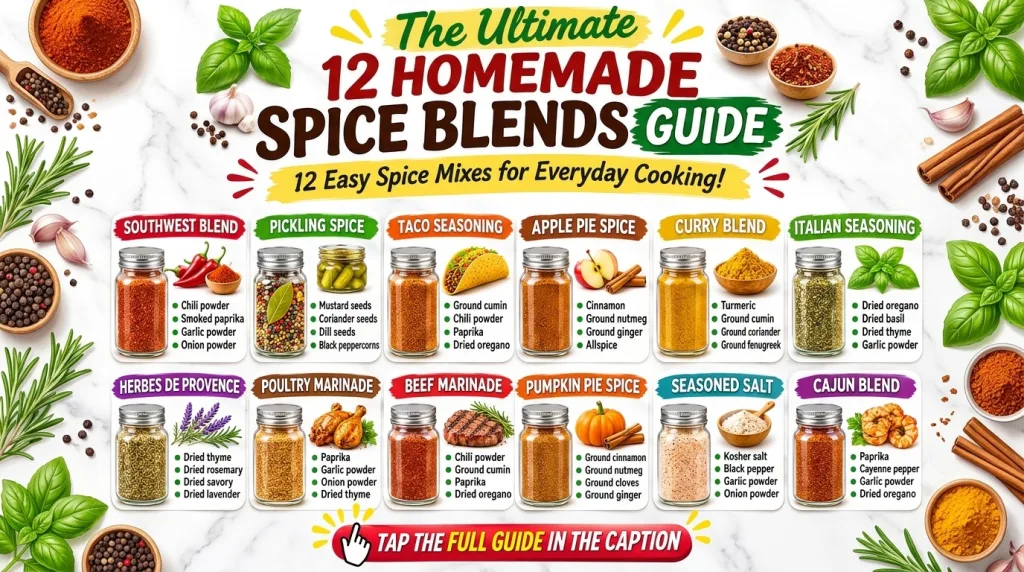
Each blend below uses common pantry spices. Amounts are flexible, so start with the proportions as a guide and adjust to your taste.
1. Southwest Blend
Chili powder, cumin, smoked paprika, garlic powder, dried oregano, and salt. Try it on grilled chicken, roasted corn, or scrambled eggs.
2. Pickling Spice
Mustard seeds, coriander seeds, dill seed, black peppercorns, allspice berries, bay leaves, and red pepper flakes. Use it when pickling cucumbers, carrots, or green beans.
3. Taco Seasoning
Chili powder, cumin, paprika, garlic powder, onion powder, dried oregano, salt, and black pepper. Stir it into ground beef or turkey with a splash of water for an easy taco filling.
4. Apple Pie Spice
Ground cinnamon, nutmeg, allspice, ginger, and a small pinch of cloves. Sprinkle it on oatmeal, apples, muffins, or warm cider.
5. Curry Blend
Turmeric, ground cumin, ground coriander, ginger, and cayenne, with optional fenugreek or black pepper. Use it in lentil soup, chickpea dishes, or roasted vegetables.
6. Italian Seasoning
Dried basil, oregano, thyme, rosemary, marjoram, and garlic powder. This is a classic for pasta sauce, pizza, and roasted potatoes.
7. Herbes de Provence
Dried thyme, rosemary, savory, marjoram, and fennel seed, with lavender if you like its floral note. Rub it on chicken, fish, or roasted vegetables.
8. Poultry Marinade Blend
Paprika, garlic powder, dried thyme, dried sage, black pepper, and a little brown sugar for browning. Use it on chicken thighs, drumsticks, or whole chicken before roasting or grilling.
9. Beef Marinade Blend
Black pepper, garlic powder, onion powder, paprika, dried rosemary, and brown sugar. Rub it onto steak or roast before cooking.
10. Pumpkin Pie Spice
Ground cinnamon, ginger, nutmeg, cloves, and allspice. Stir it into pumpkin bread, pancakes, or coffee.
11. Seasoned Salt
Fine salt, garlic powder, onion powder, paprika, and black pepper, with celery seed if you have it. Use it on fries, popcorn, eggs, or sliced tomatoes.
12. Cajun Blend
Paprika, garlic powder, onion powder, cayenne, dried thyme, dried oregano, and black pepper. It works well on shrimp, fish, and chicken.
How to Store Homemade Spice Blends
Keep your blends in airtight glass jars away from the stove, oven, and direct sunlight. Heat and light fade flavor quickly. Label each jar with the name and date so you know when to refresh it. Most blends are best used within several months for the strongest flavor.
How to Use Them Every Day
Keep three or four blends within reach, such as Italian seasoning, taco seasoning, seasoned salt, and a poultry blend. Those cover most weeknight meals. Use about one to two teaspoons per pound of meat or vegetables as a starting point, then taste and adjust.
Frequently Asked Questions
Can I make these blends in large batches?
Yes. Mix a larger batch and store it in an airtight jar in a cool, dry cabinet. Smaller batches keep their flavor longer, so make only what you expect to use within a few months.
Do I need to use fresh spices?
Fresh spices give the best flavor. If a jar has been open for a long time or has lost its scent, replace it before mixing a new blend.
Can I reduce the salt?
Yes. Most of these blends work well without salt, so add salt separately when you cook. This is especially helpful for seasoned salt, taco seasoning, and marinade blends.
Which of these spice mixes do you use the most in your kitchen? Let us know in the comments below!