Master Authentic Italian Stuffed Pasta at Home
Italian stuffed pasta is one of the most rewarding dishes to make from scratch. Tender sheets of egg pasta wrap around savory fillings like ricotta and spinach, meat ragù, or aged cheese, then get finished with a simple butter sauce or a rich tomato sauce. Ravioli and tortellini are the two shapes most people know, but many regional Italian kitchens have their own versions.
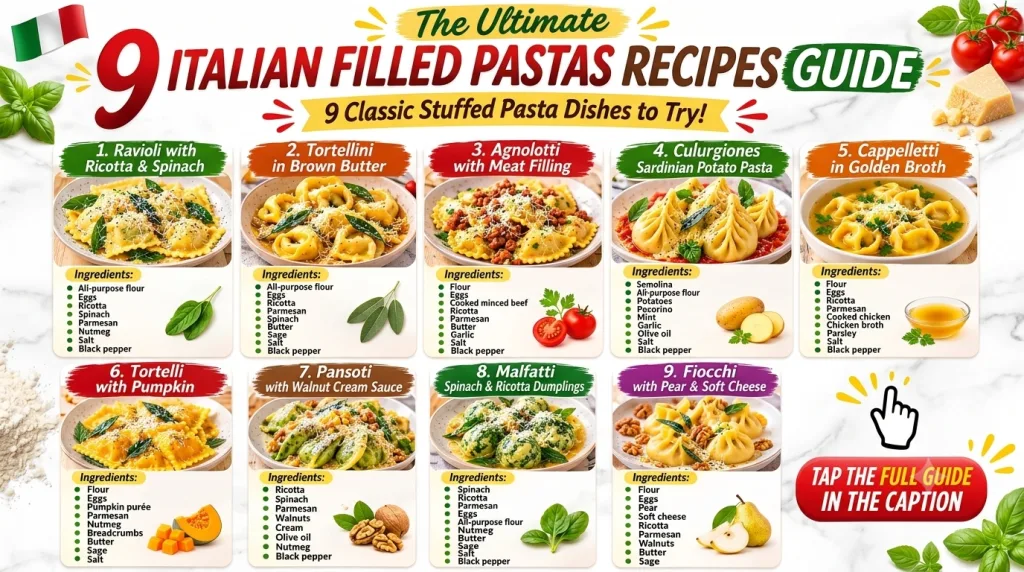
Why You’ll Love Making Stuffed Pasta
- Fills your kitchen with a comforting aroma. Fresh pasta and a warm filling make a dish that feels special for family dinners.
- Flexible fillings. You can make classic cheese or spinach, or adapt the filling to what you have on hand.
- Great for sharing. Shaping pasta is a fun group project that works well with family or friends.
- Freezes well. Uncooked shaped pasta can be frozen for later, so one batch can serve more than one meal.
Ingredients for Basic Egg Pasta Dough
- 2 cups (250 g) all-purpose or “00” flour, plus extra for dusting
- 2 large eggs
- 1 tbsp (15 ml) olive oil
- 1/2 tsp (3 g) fine salt
- 1 to 2 tbsp (15 to 30 ml) water, only if the dough is too dry
Ingredients for Classic Ricotta and Spinach Filling
- 1 cup (250 g) whole-milk ricotta, drained for 20 to 30 minutes
- 1 cup (about 30 g) fresh spinach, cooked and squeezed very dry
- 1/4 cup (25 g) grated Parmesan cheese
- 1 large egg yolk
- 1/4 tsp (1 g) ground nutmeg
- Salt and black pepper to taste
Equipment You’ll Need
- Large mixing bowl or clean work surface
- Rolling pin or pasta machine
- Sharp knife, pizza cutter, or round cutter
- Large pot for boiling pasta
- Slotted spoon
How to Make Stuffed Pasta, Step by Step
- Make the dough. Mix the flour and salt on a clean surface and make a well in the center. Add the eggs and oil, then gradually mix in the flour with a fork until a shaggy dough forms. Knead for 8 to 10 minutes until smooth and springy. It should spring back slowly when you press it with your finger.
- Rest the dough. Wrap the dough tightly in plastic wrap and let it rest at room temperature for at least 30 minutes. This makes it easier to roll thin.
- Make the filling. Stir the drained ricotta, spinach, Parmesan, egg yolk, nutmeg, salt, and pepper together until evenly combined. Taste a small spoonful and adjust the seasoning. The filling should hold its shape on a spoon without being watery.
- Roll the dough. Divide the dough into 4 pieces. Keep unused pieces covered. Roll one piece into a thin sheet, about 1/16 inch (1.5 mm) thick. You should be able to see the outline of your hand through it. A pasta machine works well for this, starting at the widest setting and working down.
- Fill the pasta. Place small spoonfuls of filling about 2 inches (5 cm) apart on half of the sheet. Lightly brush water around the mounds, fold the sheet over, and press out any air pockets with your fingers. Seal firmly around each mound.
- Cut the shapes. Use a round cutter or knife to cut ravioli, or a fluted cutter for a neat edge. For tortellini, cut circles, place a small amount of filling in the center, fold into a half-moon, and wrap the ends around your finger.
- Cook the pasta. Bring a large pot of salted water to a rolling boil. Add the pasta in batches and cook for about 3 to 5 minutes, until the pasta floats and is tender when you bite one piece. Lift out with a slotted spoon.
- Serve. Toss the pasta in melted butter with sage, a simple tomato sauce, or a drizzle of olive oil and grated Parmesan. Serve right away while warm.
Pro Tips for Better Stuffed Pasta
- Squeeze spinach very dry. Any extra water will soften the dough and make the filling runny.
- Keep the dough covered while you work so it does not dry out and crack.
- Use a light hand with the filling. Overstuffed pasta can burst while cooking.
- Dust your shaped pasta lightly with semolina or flour and arrange it in a single layer so the pieces do not stick together.
- Taste your filling before you shape anything. Seasoning is easy to fix at this stage.
Common Mistakes to Avoid
- Dough that is too dry or too wet. Add water only a teaspoon at a time. The dough should feel smooth, not sticky.
- Air trapped inside the pasta. Press firmly around the filling to push out air. Trapped air can cause pasta to split in the pot.
- Filling that is too loose. Drain ricotta well before mixing so the filling does not leak during cooking.
- Overcooking. Fresh pasta cooks quickly. Start checking early and remove it as soon as it is tender.
Variations to Try
- Meat filling. Use cooked ground beef or pork with onion, garlic, and Parmesan for a hearty ravioli.
- Pumpkin or squash filling. Mix roasted squash with ricotta, Parmesan, and a pinch of nutmeg.
- Whole wheat dough. Replace up to half the flour with whole wheat flour for a more rustic texture.
- Different sauces. Try a basic tomato sauce, brown butter with sage, or a light cream sauce.
Serving Suggestions
Serve stuffed pasta with a simple salad of arugula and lemon, crusty bread for soaking up sauce, or roasted vegetables. A glass of light red wine or sparkling water with lemon pairs well with most fillings.
Storage and Reheating
Uncooked stuffed pasta can be refrigerated for up to 1 day or frozen for up to 2 months. Arrange shaped pasta on a floured tray in a single layer, freeze until firm, then move it to a freezer bag. Cook frozen pasta directly in boiling water, adding about 1 to 2 minutes to the cooking time. Cooked leftovers can be refrigerated in an airtight container for 2 to 3 days. Reheat gently in a skillet with a splash of water or sauce until warm.
Frequently Asked Questions
Can I make stuffed pasta ahead of time?
Yes. You can make the filling a day ahead and keep it covered in the refrigerator. You can also shape the pasta and freeze it before cooking.
What is the difference between ravioli and tortellini?
Ravioli are usually square or round and are sealed with a flat top layer. Tortellini are small, ring-shaped pieces folded around the filling.
Why did my pasta split while cooking?
Splitting usually happens when there is too much filling or trapped air. Use less filling and press out air firmly before sealing.
Can I use store-bought wonton wrappers?
Yes, for a faster version. Wonton wrappers are thinner and cook more quickly, so check them early.
How do I know when the pasta is done?
Fresh stuffed pasta is done when it floats and the dough is tender when you bite a piece. The filling should be hot all the way through.
What filling is your favorite? Tell us in the comments below.