Store-bought salad dressings are convenient, but many of them are loaded with preservatives, added sugar, and flavors that taste the same no matter which bottle you grab. Making your own dressing at home is simpler than most people expect, and it takes only a few minutes with ingredients you probably already have in the kitchen.
Once you start mixing your own, you get to control the flavor, the thickness, and the freshness. A good dressing can turn a plain bowl of greens into a meal you actually look forward to eating. Below is a practical guide to the kinds of dressings you can make, how to put them together, and how to keep them tasting good.
What You’ll Need
Basic Tools
- A small mixing bowl or a clean jar with a tight-fitting lid
- A whisk or a fork
- Measuring spoons and a measuring cup
- A microplane or fine grater, if using garlic or citrus zest
- A spoon for tasting and adjusting
Common Pantry Ingredients
- Extra-virgin olive oil
- Vinegar, such as balsamic, apple cider, or red wine vinegar
- Fresh lemon juice
- Dijon mustard
- Garlic, fresh or powdered
- Honey or maple syrup, optional
- Salt and freshly ground black pepper
- Fresh or dried herbs, such as parsley, dill, chives, or oregano
- Plain Greek yogurt or mayonnaise, for creamy styles
Why Homemade Dressing Works Well
Most dressings are built on a simple balance: fat, acid, and seasoning. Oil carries flavor and creates a smooth texture, while vinegar or citrus brightens everything up. Mustard helps oil and vinegar blend and stay together longer, which is why many vinaigrette recipes include it. Creamy dressings use yogurt or mayonnaise as the base, and fresh herbs add flavor without extra salt or sugar.
How to Make Them
- Choose the style you want to make. Vinaigrettes are usually oil and acid based, while creamy dressings start with yogurt or mayonnaise.
- Finely chop or grate any garlic and fresh herbs so they blend evenly into the dressing.
- For a vinaigrette, whisk the vinegar or lemon juice with mustard, salt, pepper, and any sweetener first. Then slowly whisk in the olive oil until the mixture looks slightly thickened and smooth.
- For a creamy dressing, stir the yogurt or mayonnaise with lemon juice, garlic, herbs, and seasoning until fully combined. Thin with a splash of water or milk if it feels too thick.
- Taste the dressing on a piece of lettuce or a cucumber slice and adjust the salt, acid, or sweetness as needed.
- Transfer the dressing to a clean jar, seal it, and refrigerate until you are ready to serve.
How to Use It
Start with about 1 to 2 tablespoons of dressing per serving of greens, then add more as needed. Toss the dressing with the salad just before eating, rather than drenching the greens ahead of time, so the leaves stay crisp. Shake vinaigrettes well before each use, since the oil and vinegar will separate as they rest.
What to Expect
Homemade dressings usually taste brighter and fresher than bottled versions, and you can adjust them to suit your taste. Keep in mind that they do not contain the stabilizers found in commercial products, so texture and flavor will change over time. Creamy dressings may thicken slightly in the fridge, and fresh herbs will gradually lose their color and aroma.
Helpful Tips
- Taste as you go. Small changes in salt or acid make a big difference.
- Use a jar with a lid to shake vinaigrettes. It is the fastest way to emulsify them.
- Add delicate herbs like dill or chives at the end, not during long cooking or storage, for the best flavor.
- Make a double batch on Sunday to use through the week.
Important Notes and Safety
- Refrigerate dressings made with fresh garlic, yogurt, mayonnaise, or fresh herbs, and use them within about one week.
- Do not leave creamy dressings sitting out at room temperature for long periods.
- Label jars with the date so you know when they were made.
- If a dressing smells sour, looks moldy, or tastes off, throw it out.
- Honey should not be given to infants under one year old, so keep that in mind if you share dressings with very young children.
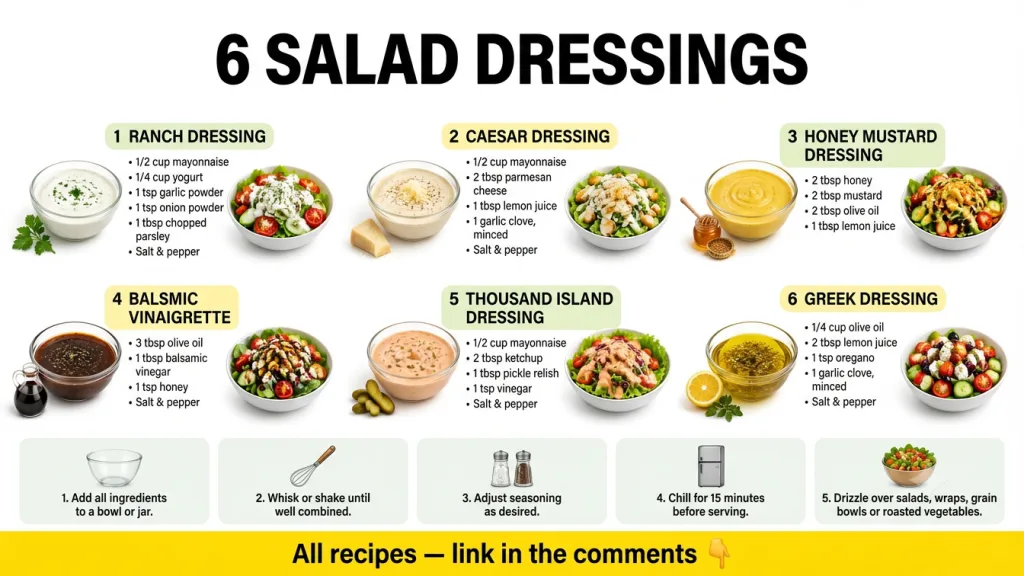
With a few basic pantry staples, you can skip the bottled versions and make dressings that suit your taste exactly. Start with one simple vinaigrette and one creamy herb dressing, then build from there.