Most people eat the same green salad week after week, often without realizing how many other combinations are possible. A salad can be built around crisp leafy greens, colorful vegetables, fresh fruit, lean meat, and a dressing that ties everything together. Mastering the art of salads is less about memorizing recipes and more about understanding how these pieces work as a team.
Why Variety Matters in a Salad
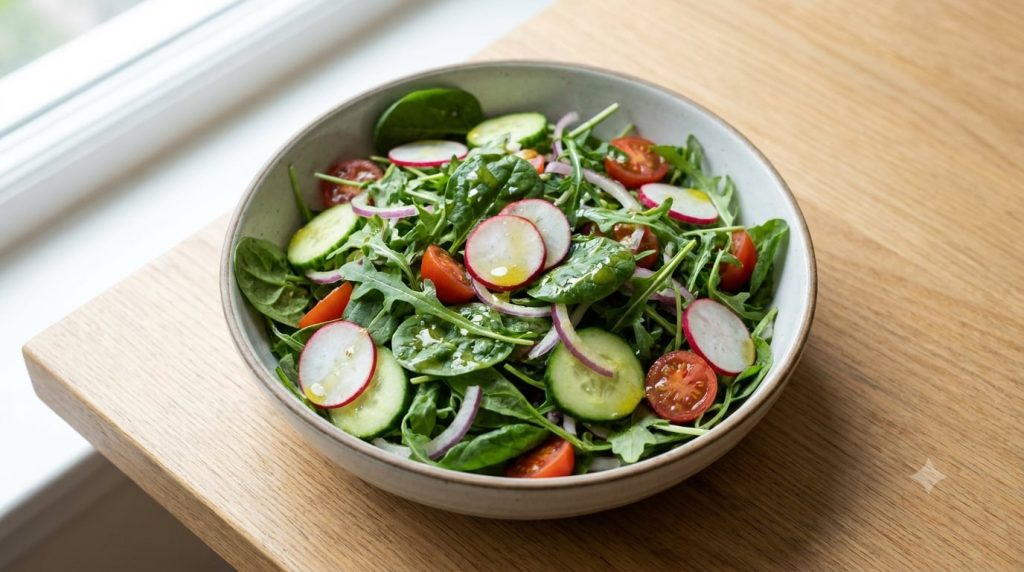
A plain green salad can be a good starting point, but building a salad from different food groups can make it more satisfying and more interesting to eat. Each ingredient brings its own texture and flavor. Crunchy vegetables add bite, fruit adds natural sweetness, and protein can make the bowl feel more filling.
Variety also tends to make healthy eating easier to maintain. When meals taste good and feel different from one day to the next, it can be easier to stick with them over time.
The Building Blocks of a Balanced Salad
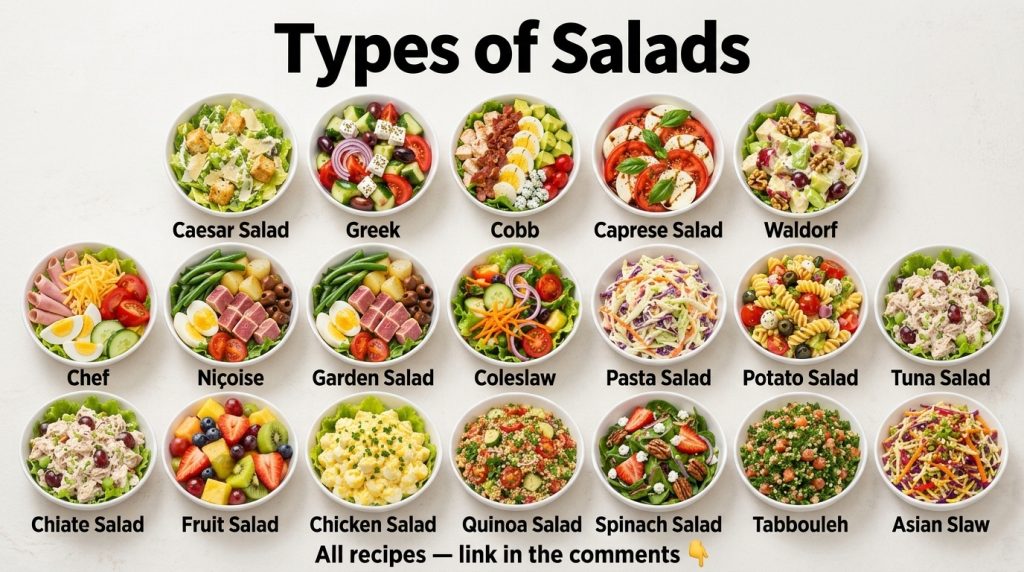
The twenty bowls in this reference guide follow a few familiar patterns. Most salads can be understood by looking at five components:
- Leafy greens: The base, such as romaine, spinach, or mixed greens, provides volume and a light, fresh texture.
- Vegetables: Raw or roasted vegetables add color, crunch, and a range of nutrients.
- Fruits: Fresh fruit can add sweetness and contrast with savory dressings.
- Protein: Meats or other proteins help make a salad more filling, especially when it is served as a main meal.
- Dressing: A dressing brings the components together. Using a measured amount, often one to two tablespoons, can help keep the calorie count in check.
Simple Ways to Mix and Match
Once you understand these building blocks, it becomes easy to create new combinations. Try pairing a dark leafy green with a fruit and a simple vinaigrette, or combining roasted vegetables with a protein and a creamy dressing. Choosing one item from each group is often enough to create a complete bowl.
Tips for Making Salads a Regular Habit
- Prepare greens and chopped vegetables in advance and store them in airtight containers in the refrigerator.
- Keep dressings separate until serving to help leafy greens stay crisp.
- Rotate between three or four favorite combinations so meals do not feel repetitive.
- Add a source of protein if you want a salad to function as a full meal.
Frequently Asked Questions
Can a salad be a complete meal?
It can be, especially when it includes leafy greens, vegetables, a source of protein, and a modest amount of dressing. A balanced salad can contribute to a satisfying meal when it is part of an overall balanced diet.
How can I keep salads from getting soggy?
Store dressing separately, dry greens thoroughly before storing them, and add delicate toppings just before serving.
Are meat-based salads safe to prepare ahead?
Cooked meats should be cooled promptly and refrigerated in a covered container. Food safety guidance generally recommends consuming refrigerated leftovers within a few days. If you have specific dietary needs or health conditions, consider speaking with a qualified healthcare professional or registered dietitian.
Final Thoughts
Mastering salads does not require a complicated kitchen or a long list of rare ingredients. By understanding how greens, vegetables, fruit, protein, and dressing work together, you can move beyond the same plain green bowl and build meals that feel fresh and enjoyable. Which of these combinations would you try first? Share your favorite in the comments below.