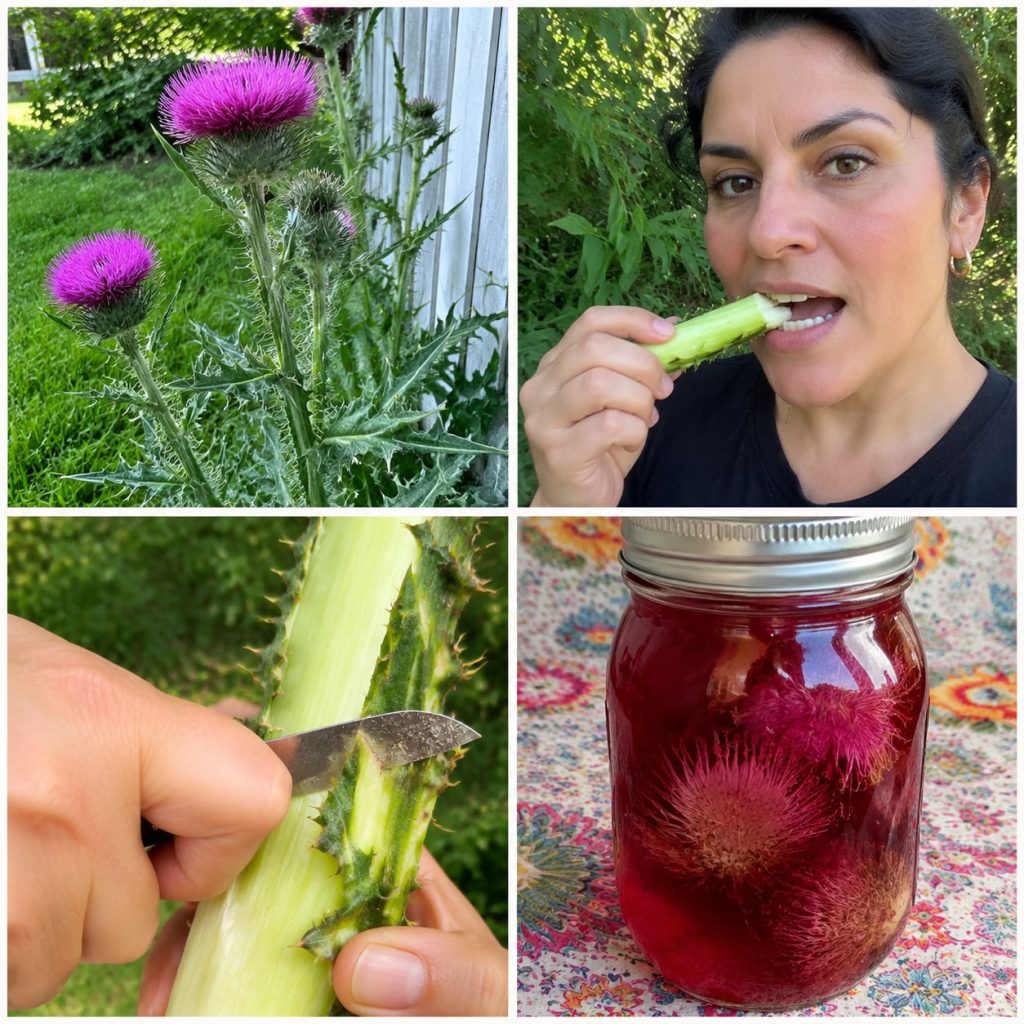
Many spiky backyard plants look like thistles, but the only safe starting point for any wild plant is a confident identification, and the stem preparation promoted in this image cannot be verified from what is shown. This guide explains what to check, what is generally known about traditional thistle use, and why you should not eat or apply a wild plant based on a social media post alone.
Quick Overview
This is not a verified recipe. The source does not list ingredients, measurements, a preparation method, or a plant species name, so no home preparation is provided here.
Prep time: not applicable until the plant is identified by an expert.
Best for: general interest in backyard plants and herbal traditions.
Use type: none recommended from this source.
Identify the Plant Before Anything Else
Thistles belong to several plant groups, and many look similar at a glance. Some are harmless garden weeds, some are prickly but not edible, and some lookalikes can be toxic. Check the leaf shape, flower head, spine pattern, and growth habit, and compare them with a regional plant identification guide or a local extension service.
If you are not certain, do not taste, chew, or prepare the plant. Wear gloves when handling it, since spines can cause skin irritation and puncture wounds.
What the Claim Does and Does Not Establish
The post states that a traditional preparation exists in the stem, but it does not name the species, the part used, the method, or the historical source. Traditional use in one region does not mean a plant is safe for everyone, and it does not mean the plant works for any specific health or beauty purpose.
Plants in the same family can differ widely in their chemical makeup, and the amount of a plant part also affects safety. Without verified details, any preparation would be guesswork.
General Background on Traditional Thistle Use
Some thistle species have a long history in herbal traditions, and people have used certain parts of them in home remedies. Because preparation methods vary widely and are not always well documented, modern guidance for wild plants generally emphasizes expert identification, cautious sourcing, and avoiding unverified internal use.
If you are interested in herbal traditions, a good next step is to read reputable botanical references or speak with a qualified herbalist or healthcare provider.
Safety Notes
- Do not eat, drink, or apply any wild plant unless it has been positively identified by a knowledgeable expert.
- Avoid harvesting from roadsides, treated lawns, or areas where pesticides or herbicides may have been used.
- Wear gloves and eye protection when cutting spiny plants.
- If you have allergies, a sensitive stomach, or a skin condition, avoid any new plant preparation without medical advice.
- Pregnant or breastfeeding women, children, and anyone taking medication should speak with a healthcare professional before trying any herbal preparation.
- Seek medical help promptly if you experience swelling, breathing difficulty, vomiting, or any unusual reaction after contact with or ingestion of a plant.
What to Do Instead
If you want to explore backyard plants safely, start by photographing the plant and identifying it with a reliable regional resource. Then decide whether it is a weed to remove, a plant to observe, or one to study further through verified botanical sources.
FAQ
Can I safely eat a wild thistle from my backyard?
Not without a confirmed identification and expert guidance. Many thistle-like plants are not appropriate for eating, and some lookalikes can cause harm.
Is the stem preparation shown in the post proven?
The post does not provide enough verified detail to confirm it. Traditional use alone does not establish safety or results.
How should I handle a spiny wild plant?
Wear thick gloves, cut stems carefully, and dispose of plant material responsibly, especially if children or pets have access to the yard.
Final Thoughts
Backyard plants can be interesting to learn about, but the safest approach is careful identification and verified information. If you want more practical plant guidance, explore our Green Wellness and Garden articles on this site for safer, well-sourced topics.