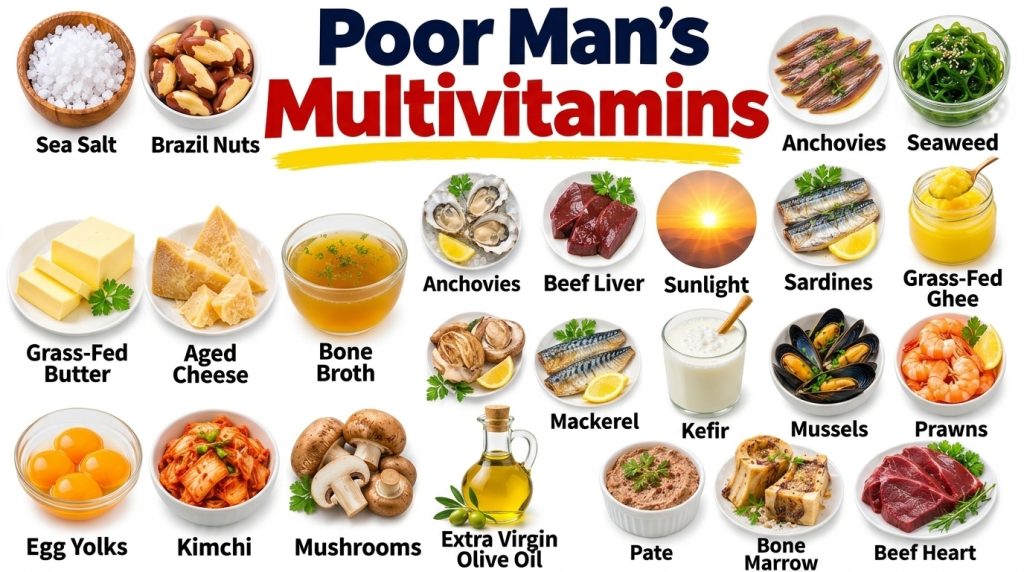
Many people reach for a bottle of synthetic supplements when they want more vitamins and minerals. Yet some of the most nutrient-dense foods are also some of the most affordable. Informally known as ‘poor man’s multivitamins,’ these everyday whole foods deliver vitamins, minerals, and healthy fats in simple, budget-friendly ingredients.
What Makes a Food Nutrient-Dense?
A nutrient-dense food provides a high amount of vitamins, minerals, and other beneficial compounds relative to its calories. Instead of focusing on a single nutrient, these foods offer a combination of nutrients that work together within a balanced diet.
Many of the foods highlighted in this guide are whole or minimally processed. Choosing them more often can help you cover your needs naturally, while still fitting into a realistic grocery budget.
Affordable Whole Foods to Add to Your Week
Sardines and Mackerel
Small oily fish such as sardines and mackerel are rich in omega-3 fatty acids, vitamin D, and vitamin B12. Canned sardines are shelf-stable and inexpensive, and when you eat the soft bones, they also provide calcium.
Egg Yolks
Eggs are one of the most versatile budget foods. The yolk contains vitamin D, choline, and vitamin A, along with protein. Eating eggs as part of a varied diet is a practical way to add nutrients to breakfast.
Beef Liver
Beef liver is among the richest natural sources of vitamin A, vitamin B12, iron, and folate. Because it is so concentrated, a small portion of about 3 ounces once or twice a week is typically enough for most adults.
Oysters and Mussels
Shellfish like oysters and mussels are excellent sources of zinc, iron, and vitamin B12. Mussels are often one of the most affordable seafood options at the market.
Brazil Nuts
Brazil nuts are a well-known source of selenium, a mineral involved in normal immune and thyroid function. Because they are very high in selenium, one or two nuts a day is generally considered enough.
Seaweed and Sea Salt
Seaweed can provide iodine, which supports healthy thyroid function. Sea salt, used in moderation, can help you get sodium and trace minerals, though it is not a significant source of nutrients on its own.
Fermented Foods: Kimchi and Kefir
Kimchi, kefir, and other fermented foods contain beneficial bacteria and are part of many traditional diets. They can be a flavorful addition to meals and may support digestive health as part of a balanced eating pattern.
Whole Foods vs. Synthetic Supplements
Whole foods provide a complex mix of nutrients, fiber, and natural compounds that work together. Supplements can be useful in certain situations, but they are not designed to replace a varied diet.
- Whole foods supply fiber, protein, and healthy fats alongside vitamins and minerals.
- Nutrients in food are often easier to combine into balanced meals.
- Supplements may be helpful when a clinician identifies a specific deficiency.
- Food costs are often lower per nutrient than many premium supplement blends.
Simple Recipes to Try
Sardine Toast
- 1 can (3.75 ounces) sardines in olive oil, drained
- 2 slices whole-grain bread, toasted
- 1/2 tablespoon extra virgin olive oil
- 1 teaspoon lemon juice
- Fresh parsley, chopped
Mash the sardines onto the toast, drizzle with olive oil and lemon juice, and top with parsley. This makes a quick lunch with protein and omega-3 fats.
Egg and Greens Breakfast Bowl
- 2 eggs
- 1 cup baby spinach
- 1/4 cup cooked mushrooms
- 1 teaspoon olive oil
Sauté the mushrooms and spinach in olive oil, then add the eggs and cook until set. Serve warm for a simple, budget-friendly breakfast.
Safety Tips for Eating Nutrient-Dense Foods
- Pregnant people should check with a healthcare provider before eating beef liver, since it is high in vitamin A.
- Keep Brazil nut portions small to avoid getting too much selenium.
- Seaweed can be high in iodine, so variety and moderation are important.
- Choose fresh or properly canned seafood and follow food safety guidelines.
- Get safe sun exposure for vitamin D, and use sun protection when needed.
Keep Exploring
Ready to build a healthier grocery list? Explore our other guides on meal prep strategies, fiber-rich foods, and protein sources to create balanced meals that fit your budget. Small, consistent changes to what you eat can make a meaningful difference over time.