Magnesium is one of the most important minerals in the body, yet many adults do not get enough of it from their everyday meals. It takes part in more than 300 enzyme reactions that support muscle function, nerve signaling, blood sugar balance, bone health and healthy blood pressure. The good news is that you can raise your intake naturally by adding a few nutrient-dense foods to your routine.
Why Magnesium Matters for Daily Health
Your body cannot make magnesium on its own, so it must come from food or supplements. Many people fall short because refined grains, processed snacks and low-fiber meals tend to be low in this mineral. Getting enough magnesium may help support steady energy, restful sleep, relaxed muscles and a healthy heart rhythm.
Most adult guidelines suggest roughly 310 to 420 mg per day, depending on age and sex. Spreading your intake across several meals and snacks is often easier than trying to meet your needs in one sitting.
The Top Magnesium-Rich Foods
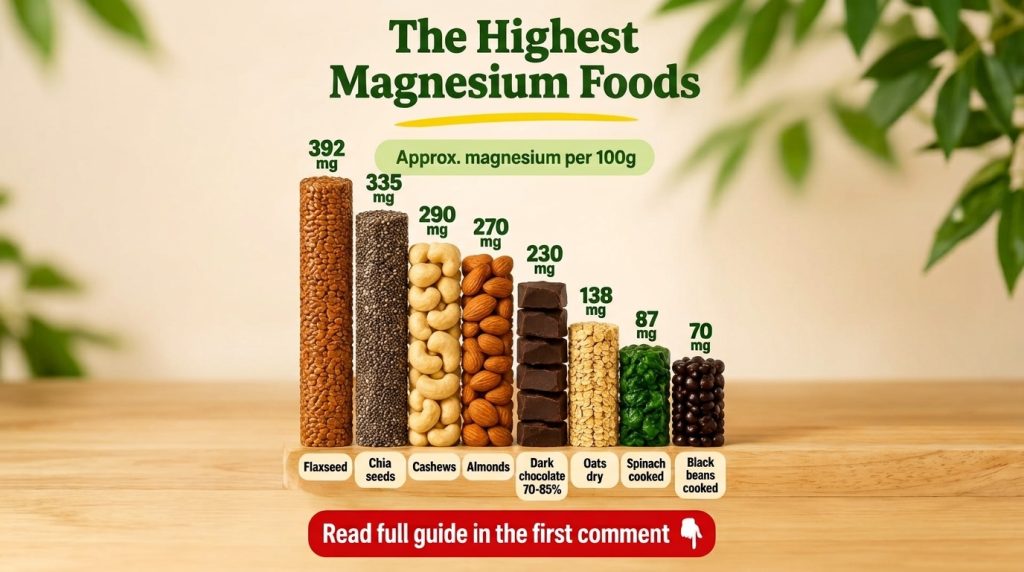
The values below are approximate amounts per 100 grams, based on commonly published nutrition data. Portion sizes will vary, but this ranking gives you a helpful starting point.
- Flaxseed (about 392 mg): Ground flaxseed is one of the most concentrated plant sources of magnesium. It also provides fiber and omega-3 fats, which makes it a smart addition to smoothies, oatmeal or yogurt.
- Chia seeds (about 335 mg): These tiny seeds absorb liquid and form a gel, making them great for puddings and overnight oats. They are also rich in fiber and plant-based protein.
- Cashews (about 290 mg): Cashews make a satisfying snack and can be blended into creamy sauces. Choose unsalted varieties to keep sodium in check.
- Almonds (about 270 mg): Almonds are easy to carry and pair well with fruit. A small handful can contribute a meaningful amount of magnesium along with vitamin E.
- Dark chocolate, 70 to 85% cacao (about 230 mg): Higher-cacao dark chocolate contains more magnesium and less added sugar than milk chocolate. Enjoy it in small amounts as part of a balanced diet.
- Dry oats (about 138 mg): Oats are an affordable whole grain that supports digestive health. Choosing rolled or steel-cut oats over instant varieties helps you keep more fiber.
- Cooked spinach (about 87 mg): Leafy greens offer magnesium along with iron, folate and vitamin K. Cooking spinach reduces its volume, so you can eat more of it in one serving.
- Cooked black beans (about 70 mg): Beans are a budget-friendly source of magnesium, fiber and plant protein. They fit easily into soups, salads and grain bowls.
Simple Ways to Add More Magnesium to Your Day
- Sprinkle a tablespoon of ground flaxseed or chia seeds over breakfast bowls.
- Keep a small container of unsalted almonds or cashews at your desk for an easy snack.
- Swap refined white bread for whole-grain options when possible.
- Add cooked spinach or black beans to lunch and dinner for extra fiber and minerals.
- Choose 70% or higher dark chocolate for an occasional treat.
Build Consistency, Not Perfection
No single food will meet all your needs, so variety is the key. Eating a range of these foods across the week supports a well-rounded diet and helps you enjoy magnesium naturally. If you have kidney concerns or take medications that affect mineral levels, speak with your healthcare provider before making major dietary changes.
Start with one or two swaps this week, notice how you feel, and build from there. Small, consistent habits are often the most sustainable path to better health.