Stains on a quilted mattress are frustrating. They sit deep in the stitched channels, they spread into the padding, and they often look worse the more you rub at them. The good news is that a gentle, blot-first spot cleaning routine can lift many everyday stains without soaking the mattress or damaging the fabric. This DIY is meant for fresh and moderate stains that are localized, not for wide flood damage or heavy mold.
What You’ll Need
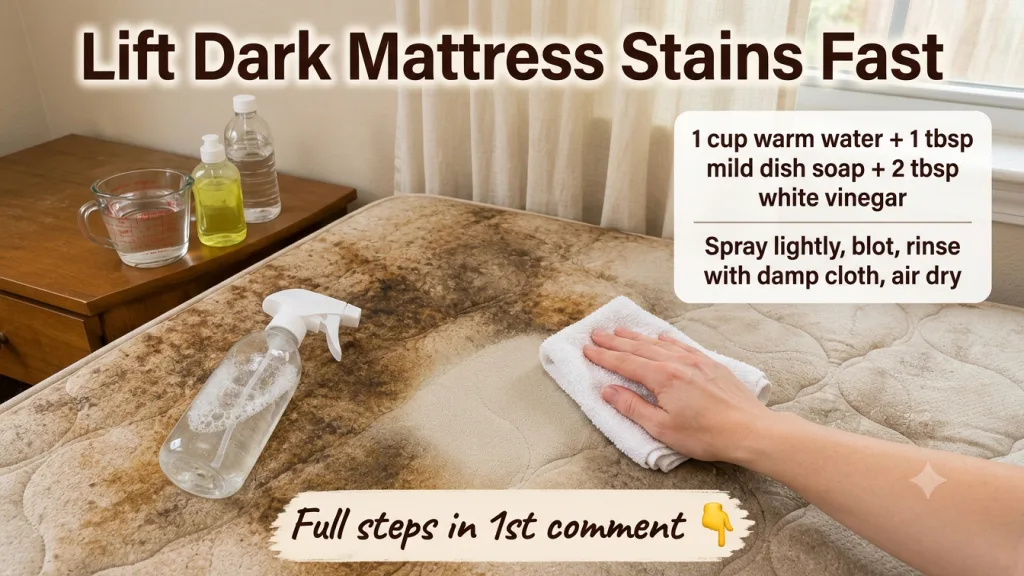
Cleaning Solution
- 1 teaspoon mild liquid dish soap (clear or unscented works best)
- 1 cup cool or lukewarm water
- Optional: 1 tablespoon white vinegar for stubborn water-based stains
Tools
- Clean white cotton cloths or towels (white avoids transferring dye)
- A small bowl or spray bottle
- A soft-bristled brush (optional, for dried residue)
- A hair dryer or fan
- Baking soda for odor control after drying (optional)
Why This DIY Can Be Useful
Mild dish soap is designed to lift oils and everyday grime from fabric, so it works well on many body oil, food, and drink marks. Cool water helps prevent stains from setting further, while white cloths let you see when the stain is coming off. Vinegar can help with some water-based and sugary stains, but it should be used sparingly and tested first, since too much moisture can leave residue in the padding.
How to Make It
- Fill a small bowl or spray bottle with 1 cup of cool or lukewarm water.
- Add 1 teaspoon of mild liquid dish soap and stir gently until it is mixed. Avoid making it sudsy, since excess foam is hard to rinse out of the fabric.
- If you are using vinegar, add 1 tablespoon and stir again. Skip this step for oil-based stains or if you are unsure.
- Test the solution on a hidden area, such as the underside edge or a seam allowance, and let it sit for a few minutes. Blot with a white cloth and check for color transfer before continuing.
How to Use It
- Remove any loose debris first with a dry cloth or soft brush. Do not rub the stain, since that pushes it deeper into the quilting.
- Lightly dampen a clean white cloth with the solution. It should be damp, not dripping.
- Press and dab the stain from the outside edge toward the center. This keeps the stain from spreading across the surface.
- Switch to a clean section of the cloth as it picks up color. Repeat until the stain stops transferring.
- Dampen a fresh cloth with plain cool water and blot the area to rinse out soap residue.
- Press a dry towel firmly over the area to absorb as much moisture as possible.
- Dry the spot completely with a hair dryer on a cool setting or a fan. Keep air moving across the area for several hours so moisture does not get trapped in the padding.
What to Expect
Fresh stains often lift in one or two rounds, while older or darker stains may only fade or become lighter. Some discoloration, especially from deep-set body oils or long-term moisture, may never fully disappear. A realistic goal is a cleaner, more even surface that looks refreshed, rather than a brand-new mattress. Full drying can take several hours, so plan your cleaning for a time when the bed will not be needed right away.
Helpful Tips
- Work in small sections and let each area dry before moving to the next one. Overlapping wet areas can cause ring marks.
- Always use the least amount of liquid you can get away with. Overwetting is one of the most common mistakes with mattress cleaning.
- Sprinkle dry baking soda over the cleaned spot after it is fully dry, let it sit for about 15 minutes, then vacuum it off to reduce lingering odors.
- Vacuum the entire mattress surface before spot cleaning so loose dust and dirt do not turn into mud when moistened.
Important Notes / Safety
- Patch test every cleaning solution on a hidden area before treating a visible stain, since some fabrics can fade or change texture.
- Never mix bleach with vinegar or ammonia-based cleaners. Stick to the simple dish soap solution described here for mattress fabric.
- Avoid soaking the mattress. Excess water can soak into the foam or inner padding and encourage mildew.
- Check the manufacturer’s care label before using any cleaner, and avoid harsh solvents or strong chemical products on the fabric.
- If stains keep returning, smell musty, or cover a large area, consider a professional mattress cleaning service instead of repeated home treatments.
- Store leftover solution in a labeled container and use it within a day, since it is not meant for long-term storage.