30 Salad Dressings You Need to Try
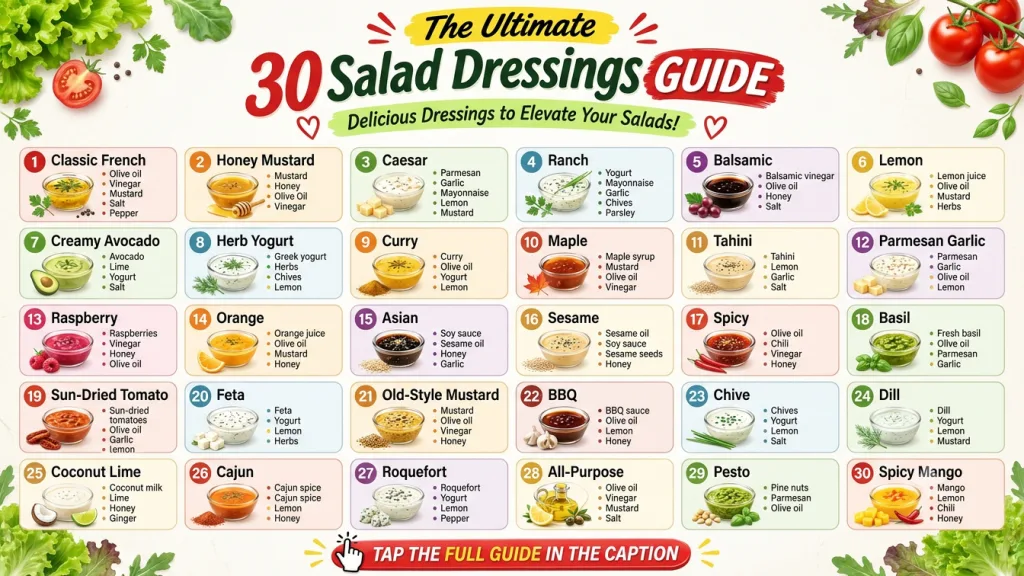
Store-bought bottles are convenient, but a homemade salad dressing takes only a few minutes and lets you control the sweetness, salt, and acidity. Once you have a few reliable formulas, plain greens turn into a real meal. This guide walks through five easy dressings to start with, along with the basic method that works for most of the 30 dressings in the full collection.
Why Make Your Own Salad Dressing
- Simple ingredients: Most dressings use oil, an acid, and a few pantry seasonings.
- Fresh flavor: Lemon juice, fresh herbs, and ripe fruit taste brighter than many bottled versions.
- Easy to adjust: You can make it sweeter, tangier, or spicier in seconds.
- Quick cleanup: A jar with a lid is all you need for mixing and storing.
The Basic Ratio for Vinaigrettes
Most oil-based vinaigrettes follow a simple starting point of about 3 parts oil to 1 part acid, such as vinegar or citrus juice. Add a small spoonful of mustard or honey to help the dressing stay blended, then season with salt and pepper. Taste before you finish, because acidic ingredients vary in strength.
Five Dressings to Start With
Classic French Vinaigrette
- 1/3 cup (80 ml) extra-virgin olive oil
- 2 tbsp (30 ml) red wine vinegar
- 1 tsp (5 g) Dijon mustard
- 1/2 small garlic clove, finely minced (optional)
- Pinch of salt and black pepper
Whisk the vinegar, mustard, garlic, salt, and pepper in a small bowl. Slowly drizzle in the oil while whisking until the mixture looks slightly thickened and cloudy. This makes about 1/2 cup (120 ml).
Honey Mustard Dressing
- 3 tbsp (45 ml) olive oil
- 2 tbsp (30 g) Dijon mustard
- 1 tbsp (15 ml) honey
- 1 tbsp (15 ml) apple cider vinegar
- Pinch of salt
Whisk the mustard, honey, and vinegar first. Then add the oil slowly until the dressing is smooth and evenly blended. This makes about 1/2 cup (120 ml).
Lemon Herb Dressing
- 1/3 cup (80 ml) olive oil
- 2 tbsp (30 ml) fresh lemon juice, from about 1 lemon
- 1 tbsp (4 g) finely chopped fresh parsley
- 1 tsp (2 g) finely chopped chives or basil
- Salt and pepper to taste
Shake everything in a jar until combined. The herbs will look bright green and flecked throughout the oil. Use it right away for the freshest flavor.
Raspberry Vinaigrette
- 1/2 cup (60 g) fresh raspberries
- 3 tbsp (45 ml) olive oil
- 1 tbsp (15 ml) white wine vinegar
- 1 tsp (7 g) honey
- Pinch of salt
Mash the raspberries with a fork, then press the pulp through a fine-mesh strainer to remove the seeds. Whisk the strained raspberry juice with the vinegar, honey, and salt, then slowly add the oil. This makes about 1/2 cup (120 ml).
Spicy Mango Dressing
- 1/2 cup (about 80 g) diced ripe mango
- 2 tbsp (30 ml) fresh lime juice
- 2 tbsp (30 ml) olive oil
- 1 tsp (7 g) honey
- Pinch of red pepper flakes or a small amount of finely chopped fresh chili
- Pinch of salt
Blend all ingredients until smooth, about 30 seconds. Taste and add more lime juice or chili if you want more brightness or heat. This makes about 3/4 cup (180 ml).
How to Make Any of These Dressings
- Choose a clean jar with a tight-fitting lid, or a small bowl for whisking.
- Add the acid, seasonings, and any fruit or fresh herbs first so they have a chance to blend.
- Add the oil slowly while whisking or shaking. The dressing is ready when it looks uniform and no longer separates quickly.
- Taste with a clean spoon or a lettuce leaf. Adjust salt, acid, or sweetness in small amounts.
- Toss a small amount over greens right before serving to keep leaves crisp and flavors fresh.
Common Mistakes to Avoid
- Using too much acid: Start with less vinegar or lemon juice and add more after tasting.
- Skipping salt: Salt makes the other flavors stand out, so season the dressing before tossing.
- Dressing salad too early: Wait until just before serving so the greens stay crisp.
- Using overripe fruit: Very soft mango or raspberries can make the dressing thin and dull.
Storage Tips
Store dressings in a clean, airtight jar in the refrigerator. Dressings made with fresh herbs, garlic, or fruit are best eaten within about 3 to 5 days, while simple oil and vinegar dressings may keep for about a week. These are practical estimates, so check for off smells, mold, or any change in appearance before using. Shake well before serving, since oil and vinegar naturally separate. Olive oil may firm up when chilled, so let the jar sit at room temperature for a few minutes before shaking.
Frequently Asked Questions
Can I make salad dressing ahead of time?
Yes. Most vinaigrettes can be made a few days ahead. Dressings with fresh herbs or fruit are best made within a few days of serving for the brightest flavor.
Why did my dressing separate?
Oil and vinegar naturally separate over time. Shake the jar well before each use. A small amount of mustard or honey helps it stay blended a little longer.
Can I use bottled lemon juice?
You can, but fresh lemon juice usually has a brighter flavor. If you use bottled juice, start with a slightly smaller amount and taste as you go.
The full 30-dressing guide offers more ideas to try, and these five recipes give you a reliable starting point for building your own favorites.