Most people pull this plant out of the lawn without a second thought. The leaves, though, are what many home herbalists keep, and they are easy to prepare with basic kitchen tools.
What It Is
Dandelion (Taraxacum officinale) is a low-growing perennial in the daisy family. Every part of the plant can be used, but this guide focuses on the leaves and, briefly, the roots. The leaves have a slightly bitter taste that works well in tea, salads, and simple infused oils.
Ingredients
- Fresh dandelion leaves, about 1 cup loosely packed
- Filtered water, about 2 cups
- Optional: 1 teaspoon dried dandelion root for a deeper flavor
- Optional: a slice of lemon or a small piece of fresh ginger
Approximate Measurements
For one mug of tea, use about 1 heaping teaspoon of dried leaves or 1 tablespoon of finely chopped fresh leaves. For a jar of infused oil, use leaves and petals to fill the jar about two-thirds full, then top with oil.
Formula and Recipe: Simple Dandelion Leaf Tea
Combine the ingredients above in a small pot. Bring the water to a gentle simmer, add the leaves, and let them steep for 8 to 10 minutes with the lid on. Strain and drink warm or chilled.
Step-by-Step Method
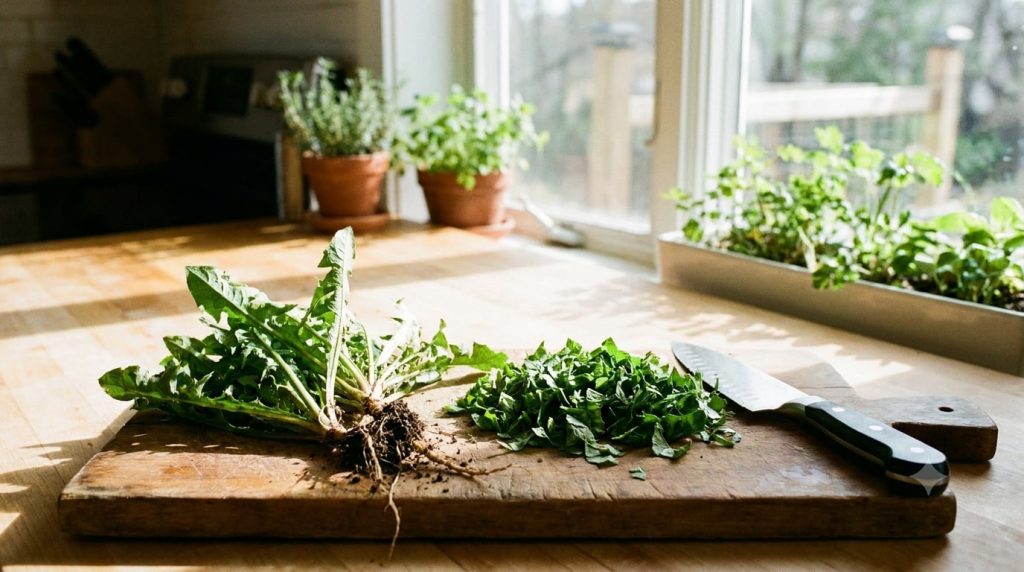
- Identify the plant. Look for deeply toothed leaves that grow in a rosette at the base and a hollow flower stem that releases milky sap when broken.
- Harvest from an area you know has not been sprayed with herbicides or pesticides, and avoid roadsides.
- Rinse the leaves gently in cool water and pat them dry with a clean towel.
- For tea, chop the leaves and steep as described above. For oil, dry the leaves for 12 to 24 hours on a clean rack, then pack them into a clean jar.
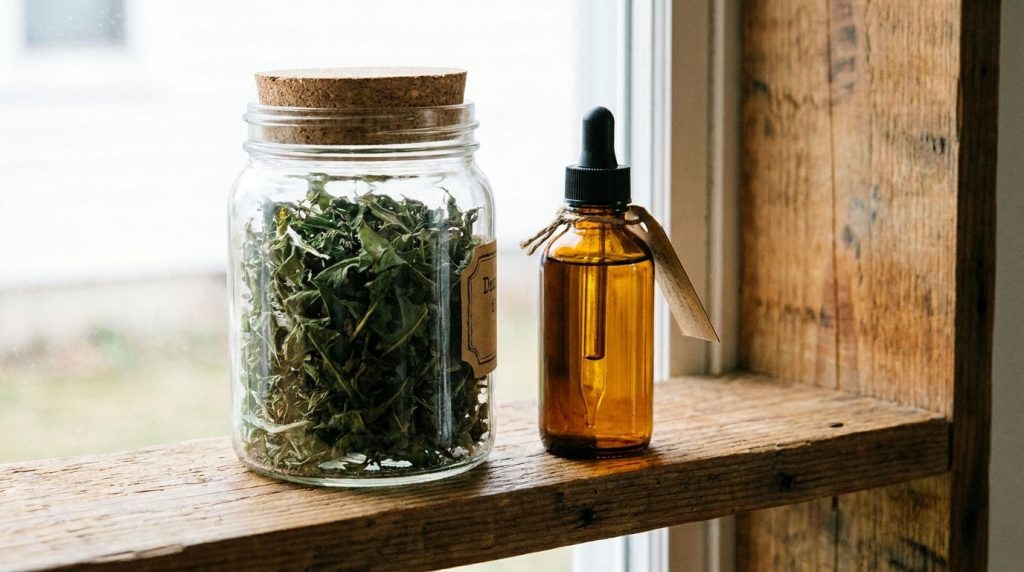
- Cover with a neutral oil such as olive or sunflower oil, seal, and store in a cool, dark place for 2 to 4 weeks, shaking the jar every few days.
- Strain through a fine cloth into a clean, dry glass bottle.
Fresh vs Dried
| Feature | Fresh Leaves | Dried Leaves |
|---|---|---|
| Best for | Salads, quick tea | Tea blends, storage |
| Flavor | Sharper, greener | Milder, more concentrated |
| Shelf life | 2 to 3 days refrigerated | 6 to 12 months sealed |
| Best storage | Wrapped in a paper towel in the fridge | Airtight glass jar away from light |
How to Use It
Drink one cup of tea once or twice a day with meals. Add the leaves to a salad with olive oil and lemon, or use the infused oil as a base for a simple homemade salve when you want a gentle skin preparation.
How Often to Use It
Most people use the tea a few times a week rather than daily. Start with one small cup to see how your body responds, and take a break of a week or more between periods of regular use.
How to Buy or Choose Ingredients
If you buy dried dandelion leaf, look for bright green or olive-green pieces with a fresh herbal smell. Avoid packages with dust, mold, or a flat, musty odor. Choose products from suppliers who list their sourcing and testing practices.
Storage
Keep dried leaves in an airtight glass jar away from heat and sunlight. Store infused oil in a dark bottle in a cool cupboard, and refrigerate it if you add any fresh ingredients. Always discard oil that smells sour or rancid.
Practical Tips
Quick Tip: Harvest in the morning after dew has dried, when leaves are crisp and full. Quick Tip: Pick younger leaves from the center of the rosette, which tend to be less bitter.
Did You Know?
The roots are often roasted and ground as a coffee-style drink, while the leaves are used fresh or dried. Each preparation has a different taste and strength.
Common Mistakes
- Harvesting from lawns treated with chemicals or from busy roadsides.
- Using wilted or yellowed leaves, which lose flavor and can develop mold.
- Storing damp leaves in a sealed jar, which encourages mold growth.
- Boiling the tea hard for a long time, which can make it taste harsh.
- Using water in oil infusions, which can shorten shelf life.
Cautions and Who Should Avoid It
Dandelion belongs to the daisy family, so avoid it if you are allergic to ragweed, chrysanthemums, marigolds, or related plants. Because dandelion may act on fluids and digestion, check with a healthcare professional before use if you are pregnant or breastfeeding, have gallbladder or bile duct problems, take diuretics, or take blood thinners or medicines for diabetes or blood pressure. Stop using it if you notice itching, swelling, or stomach discomfort.
Quick Summary
- Best preparation: dried leaves for tea, fresh leaves for salads.
- Best use case: a simple, occasional tea or a base for homemade salve.
- Storage: airtight glass jar for dried leaves, dark bottle for oil.
- When to use: a few times a week, with breaks.
- What to avoid: sprayed plants, damp storage, and use if you have a daisy-family allergy.
Frequently Asked Questions
Can I use fresh or dried dandelion leaves?
Both work. Fresh leaves are better for salads, while dried leaves are better for tea and storage.
How long does dandelion leaf tea last?
Brewed tea is best used within 24 hours when refrigerated in a sealed container.
Can I refrigerate dried leaves?
Refrigeration is not necessary. A cool, dry, dark cupboard is usually better, because moisture is the main risk.
Can I freeze fresh dandelion leaves?
You can freeze chopped leaves in a sealed bag, though they lose some texture and are best used in cooked dishes or tea.
What part of the plant is best?
Young leaves are the most common choice for tea and salads. Roots are used separately, usually roasted.
Can I reuse the leaves?
Most people use leaves once. Reusing them usually produces a weak, flat tea.
When should I avoid it?
Avoid it if you have a daisy-family allergy, are pregnant, or take medicines that may interact, and check with a professional first.
Short Conclusion
A common backyard plant can become a useful home preparation when you identify it correctly, harvest it cleanly, and store it properly. Start with a simple tea, keep your batches small, and read more about related preparations below.
You may also like: Read more about homemade herbal tea storage in our full guide.
Continue with: See the full guide to simple infused oils for beginners.
Related remedy: Learn how to make a gentle homemade salve with a short, practical method.