Vertical Strawberry Gutters: How to Grow Sweet Berries on a Sunny Fence Without Constant Dry-Out
Few garden ideas look as striking as a row of ripening strawberries climbing a sunny fence. Vertical gutter planters promise a lot of fruit from very little ground space, which is wonderful if you have a small yard, a patio wall, or a fence line that has been sitting empty. The catch is that those shallow channels dry out faster than most people expect, and they can struggle through cold winters. In this guide, you will learn how to set up a gutter strawberry system that actually works, how to water it without guesswork, and how to decide whether to treat it as a productive annual or a longer-term planting.
The Core Principle: Small Soil Volume Means Fast Changes
Every container holds a limited amount of soil, and the shallower the container, the less water and nutrition it can store. Strawberry roots are fairly shallow, which makes them a good match for gutters, but the same shallow root zone also means the soil can swing from soggy to bone-dry within a single hot afternoon. Your job is to keep moisture steady rather than letting the planting cycle between extremes.
Choosing and Setting Up Your Gutters
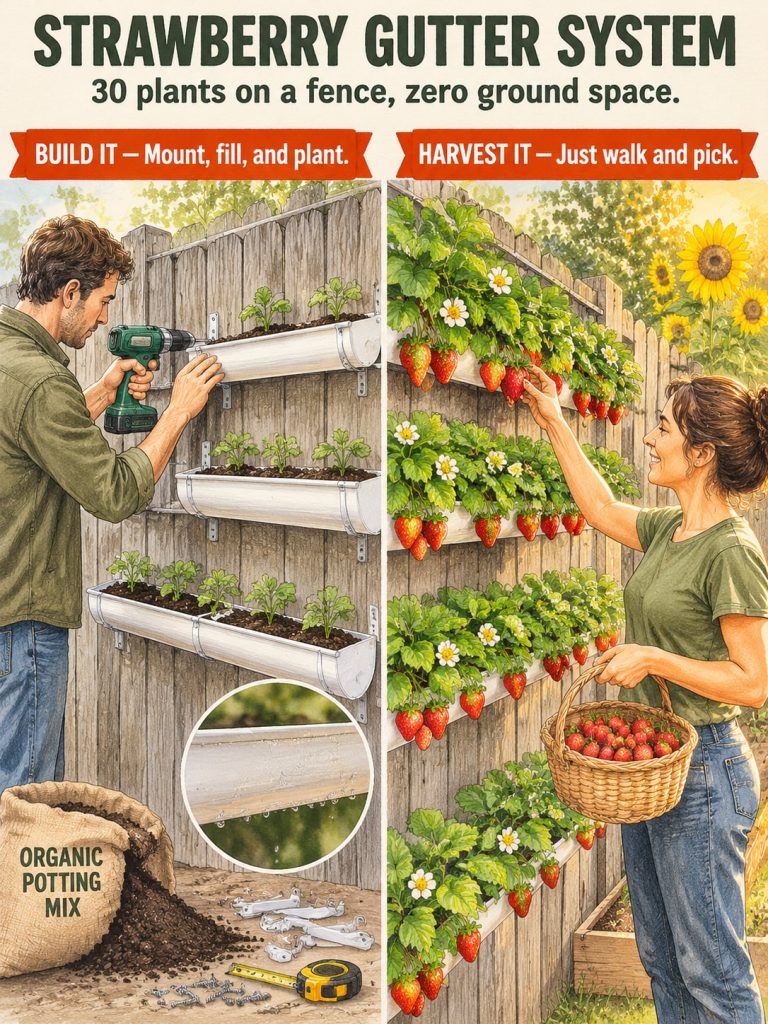
Look for gutters or troughs at least 4 to 6 inches deep and 4 to 5 inches wide, with a lip or bracket system that holds them firmly to the fence. Make sure each channel has drainage holes spaced every 6 to 8 inches along the bottom, and mount them with a slight downward tilt so excess water can exit rather than pooling at the end. Fill with a light, well-draining potting mix blended with some compost, not garden soil, which compacts quickly in narrow containers.
Planting Step by Step
Plant bare-root or potted strawberry transplants so the crown, the thick part where leaves emerge, sits level with the soil surface. Burying the crown can cause rot, while setting it too high can let roots dry out. Space plants about 8 to 10 inches apart within each gutter section. Water thoroughly right after planting so the mix settles around the roots, then check again the next morning.
Watering Without Guesswork
Shallow containers need checking every day during hot weather. Push a finger about an inch into the mix. If it feels dry, water until liquid runs freely from the drainage holes. In peak summer, many gutter setups need daily watering, and sometimes twice a day on very hot, windy days. Overwatering is also a risk in poorly drained gutters, so look for yellowing leaves, a sour smell, or soggy soil that stays wet for more than a day as signs to ease off.
Feeding and Sunlight
Strawberries need at least six to eight hours of direct sun for good fruiting. Because nutrients leach out quickly from small containers, feed regularly with a balanced organic fertilizer or diluted liquid feed every two to three weeks during active growth. Stop heavy feeding once fruiting slows.
Winter Reality and USDA Zones
Garden strawberries are generally hardy in USDA zones 3 through 9, depending on variety, but a shallow gutter offers far less root insulation than ground soil. Roots in exposed gutters can freeze solid in colder zones, so in zones 3 to 6 many growers treat gutter strawberries as productive annuals, replanting each spring with fresh transplants. In zones 7 to 9, plants may survive winter if you move gutters against a sheltered wall or cover them during hard freezes. Cold, wet winters can also cause crown rot, so good drainage remains important. Local extension services can tell you which varieties perform best in your area.
Common Mistakes to Avoid
- Using garden soil that compacts and drains poorly in narrow channels.
- Letting gutters go dry for even a single hot day, which stresses plants and reduces berry size.
- Burying crowns during planting, which invites rot.
- Ignoring the bottom of the fence, where runoff and reflected heat can change moisture levels.
- Expecting one planting to produce heavy yields for many years without replacing aging plants.
Making It Work All Season
Start by choosing a sunny, sheltered fence, install gutters with drainage, and set a daily watering habit tied to a visible routine, such as checking plants with your morning coffee. Track how quickly the soil dries for one week and adjust your schedule. With steady attention, a vertical strawberry wall can give you a generous harvest and a beautiful feature for your garden. Pick one section this weekend, plant it, and watch how your gutter garden grows.