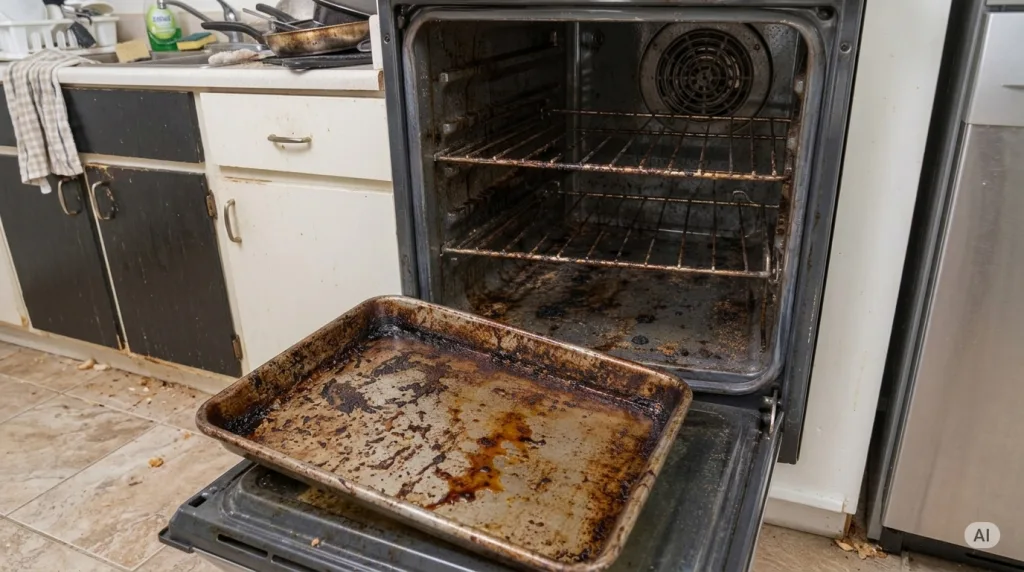
Few household chores feel as discouraging as facing a greasy oven. Baked-on spatters, dark drips on the door glass and carbonized crumbs along the racks can build up over months until the oven looks beyond saving. The good news is that you do not need harsh chemicals to make real progress. This simple homemade oven cleaner paste, made from baking soda and water, is an affordable home cleaning hack that loosens stubborn grease and leaves a noticeably cleaner finish.
Why Baking Soda Works on Oven Grease
Baking soda is a mild alkaline powder. Grease is fatty and does not dissolve easily in water, but alkaline compounds help break down fat molecules so they can be wiped away. Because baking soda is also slightly abrasive, it lifts burnt-on residue without scratching most oven surfaces when used gently. It is inexpensive, safe to keep at home and works well as a first step before any stronger treatment.
What You Will Need
- 1/2 cup (about 110 g) baking soda
- 2 to 3 tablespoons warm water
- 1 teaspoon liquid dish soap (optional, for extra degreasing)
- A plastic or silicone spatula
- Non-scratch scrub pad or soft sponge
- Microfiber cloths
- White vinegar in a spray bottle
- Rubber gloves
Step-by-Step: Making and Using the Paste
- Make sure the oven is completely cool. Remove the racks and the baking tray, then set them aside to soak in hot soapy water.
- Mix the paste. Combine the baking soda with the warm water, adding a little dish soap if you have heavy grease. Stir until the mixture has the consistency of thick toothpaste. Add water a few drops at a time if it is too dry, or more baking soda if it runs.
- Apply it to the greasiest areas. Using a sponge or your gloved fingers, spread an even layer over the door glass, the oven walls and the floor. Focus on dark spots and drips, and avoid the heating elements and any exposed gas burner parts.
- Let it sit. Leave the paste on for at least 12 hours, or overnight for very heavy build-up. The alkaline mixture needs time to soften the grease.
- Spray with vinegar. The next day, lightly mist the dried paste with white vinegar. It will fizz slightly as it reacts with the baking soda, which helps loosen the residue further.
- Scrub gently. Use a non-scratch pad to work in small circles. Keep the strokes gentle on glass and enamel, and reapply paste to any stubborn spots.
- Wipe and rinse. Remove the residue with a damp microfiber cloth, rinsing the cloth often. Repeat with clean water until no white powder remains, then dry the interior fully.
Tips for Stubborn Spots and Door Glass
- For caked-on drips, let the paste sit a second night rather than scrubbing harder.
- Clean the oven door glass with a small amount of the paste and a soft cloth, then wipe with a vinegar-dampened cloth for a streak-free shine.
- Soak racks in hot water with dish soap and a cup of baking soda in a large tub or bathtub for easier removal of baked-on grease.
- Regular light cleaning after each heavy bake keeps the paste method quick and easy.
Safety Notes
- Wear rubber gloves and keep the room ventilated, especially when using vinegar.
- Never mix baking soda or vinegar with commercial oven cleaners or bleach, as this can create hazardous fumes.
- Keep paste away from heating elements, sensors and gas burners, and check your oven manual before cleaning any special coatings.
- Do not use steel wool or abrasive powders on glass or coated surfaces, as they can cause permanent scratches.
Final Thoughts
This budget-friendly oven cleaner trick proves that effective home cleaning does not require expensive products. With a little patience, a few pantry staples and gentle scrubbing, you can turn a greasy oven into a much cleaner appliance. Try it on your next deep-clean day and notice how much easier the job becomes when the work is done by a paste that does the heavy lifting for you.