Crayon marks on a painted wall are one of those small messes that can make a whole room look worse. The good news is that you often do not need harsh chemicals or a stiff brush to deal with them. A damp cloth and a little baking soda, used in gentle circles, can lift the pigment off while keeping the paint in good shape.
Why Crayon Is Tricky on Painted Walls
Crayon wax and pigment can sit on the surface of paint and smear into the texture. If you reach for a strong scrubbing product or scour hard, you risk dulling the finish or leaving a shiny patch. That is why a gentle approach is usually the better choice, even if it takes a little more patience.
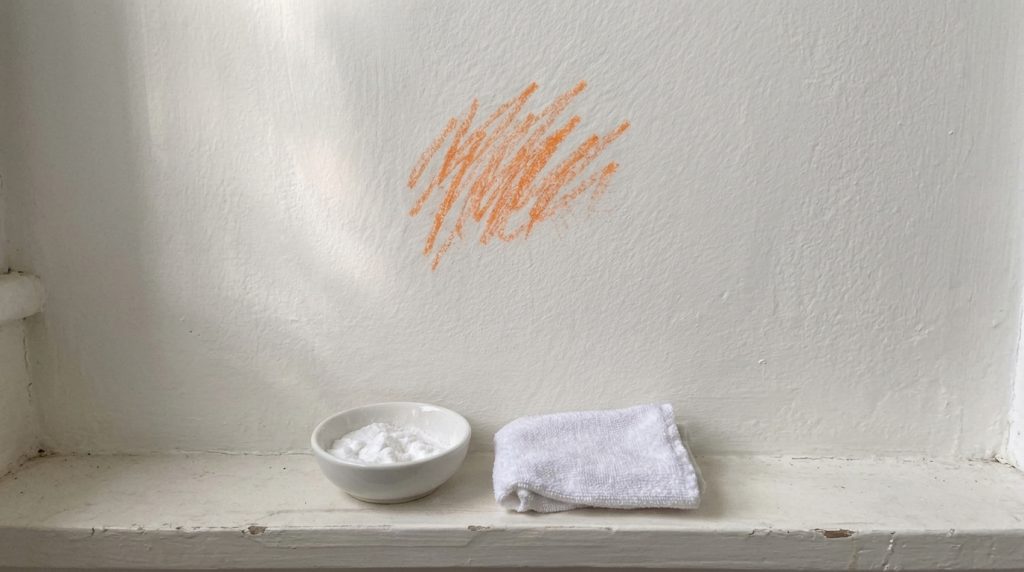
Baking soda is a mild abrasive. When it is mixed with a little water on a damp cloth, it loosens the crayon without tearing into the paint. It is also an inexpensive pantry staple, which makes it a practical option for budget-minded homes.
What You Need
- A small dish of baking soda
- A clean white or light cotton cloth
- A bowl or cup of water
- A dry cloth for finishing
Step-by-Step Method
-
Dampen the cloth with water and wring it out so it is wet but not dripping.
-
Dip one corner of the cloth into the baking soda so that a light coating sticks to the fabric.
-
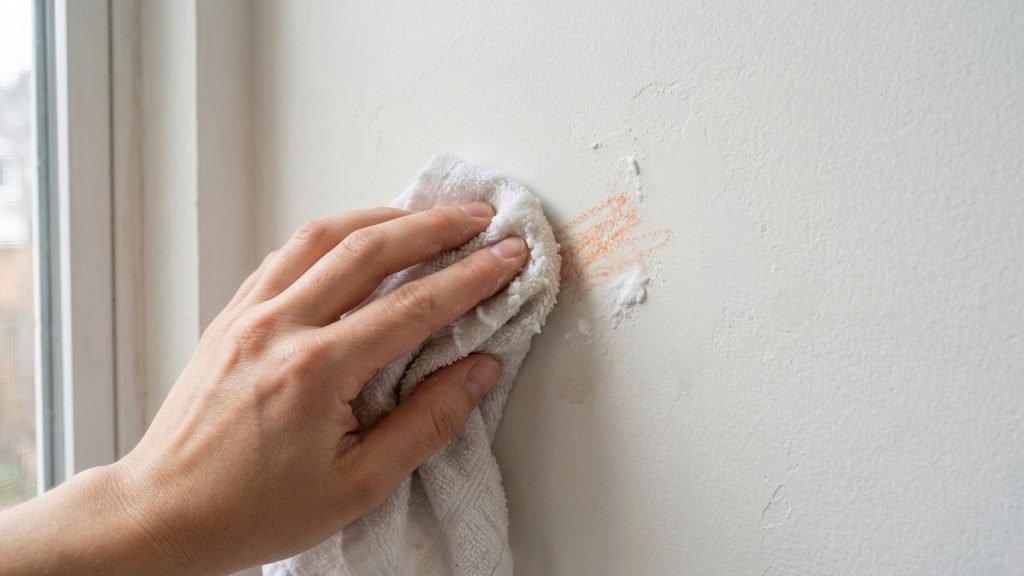
Rub the crayon mark in small, gentle circles. Use light pressure and let the baking soda do the lifting.
-
Keep going until the color starts to lift off the wall. You may see a faint haze at first, which is normal.
-
Turn the cloth to a clean, damp section and wipe the area once in a long stroke to remove any leftover residue.
-
Dry the area with a clean cloth and check the result in good light.
Test a Hidden Spot First
Not every paint behaves the same way. Flat, matte, and older paints can mark or dull more easily than a durable satin or semi-gloss finish. Before you work on the visible mark, try the method on a hidden area, such as a corner behind a door or a spot behind furniture. Wait until it dries and check that the color and sheen are unchanged.
Tips for Better Results
- Use a small amount of baking soda. Too much can leave a gritty film.
- Work in small areas so you can control the pressure and the moisture.
- Change to a clean section of the cloth often so you do not spread the pigment.
- Avoid soaking the wall. Excess water can soften some paints and leave water marks.
- Stop if the paint starts to feel rough, sticky, or lifts from the surface.
When to Try a Different Approach
If the crayon has been on the wall for a long time, or if it has sunk deep into a textured surface, you may need several gentle passes rather than one long scrub. For glossy or specialty finishes, or if the paint is peeling, it is wise to pause and seek advice from the paint manufacturer before continuing.
Keep the Wall Looking Its Best
Regular dusting and a quick wipe-down can help prevent crayon and pencil marks from setting into the surface. Keeping a small dish of baking soda and a clean cloth handy in a utility cupboard makes it easy to act quickly when a child or visitor leaves a mark. A little care now can save you from bigger touch-ups later.