Cooked rice is a staple in many kitchens, and a small change in how you cool and reheat it can affect the way its starch behaves. Here is a clear, practical look at what happens and how to handle leftover rice with confidence.
What Happens to Rice as It Cools
Starch is the main carbohydrate in rice. When rice is cooked, its starch granules swell and soften. As the rice cools, especially after a period in the refrigerator, some of that starch rearranges into a more tightly packed form. Nutrition researchers call the portion that resists digestion in the small intestine resistant starch.
Resistant starch behaves in some ways like fiber. It passes further through the digestive system, where it can be fermented by bacteria in the large intestine. This is one reason it is studied as part of a healthy diet.
Why Resistant Starch Matters for Everyday Eating
Fiber intake is important for digestive health, and many adults do not eat as much as they need. Resistant starch is one of several ways to add a fiber-like component to meals without changing the basic foods you already enjoy. It is not a replacement for vegetables, whole grains, beans, or fruit, but it can be a useful addition to a balanced plate.
The amount of resistant starch that forms depends on the type of rice, how it was cooked, and how long it was chilled. Results vary from person to person, so think of it as a helpful habit rather than a precise tool.
A Simple Way to Cool Rice Safely
Good food safety matters as much as good nutrition. Cooked rice should not sit out at room temperature for long, because it can harbor bacteria that survive cooking. A practical approach looks like this:
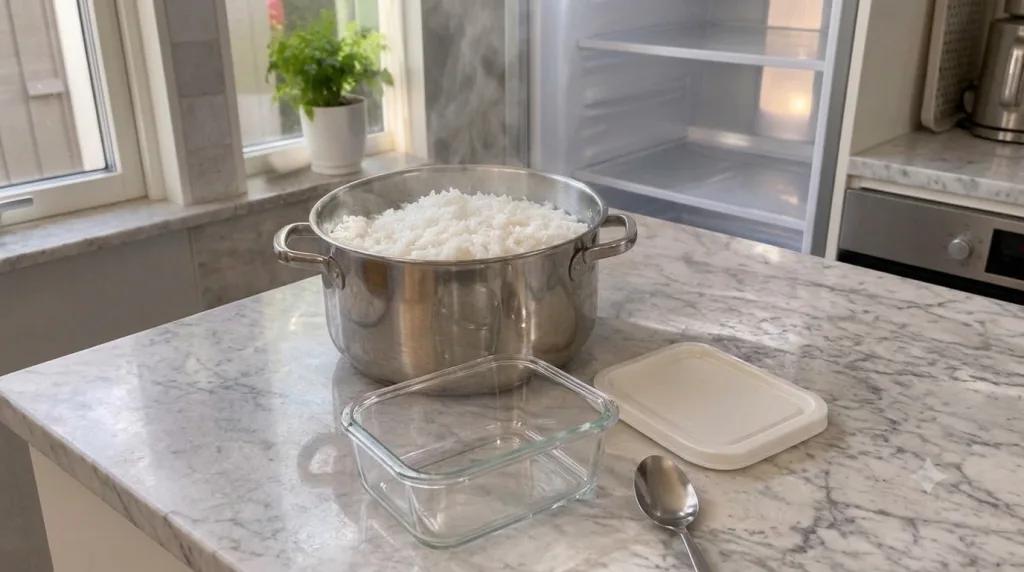
- Spoon the hot rice into a clean, shallow glass container so it spreads out.
- Spread it flat with the back of a spoon so the heat can escape quickly.
- Place the lid on once the steam has eased, then refrigerate it within about an hour of cooking.
- Use the leftovers within about a day, and follow your local food safety guidelines.
Shallow containers cool faster than deep piles of rice, which is why spreading the grains makes a real difference.
Reheating Leftover Rice Correctly
Reheating is the final and most important step. Heat the rice until it is steaming hot all the way through. Reheating does not remove all of the resistant starch that formed during chilling, but it does keep the rice safe to eat. Add a splash of water if the grains look dry, cover the container, and stir halfway through heating for even warmth.
Once rice has been reheated, eat it promptly and do not return it to the refrigerator for a second time.
Fitting This Habit Into Your Week
If you cook rice for several meals, make a batch in the morning or the evening, cool it properly, and store it in the refrigerator for the next day. This works well for busy office workers, parents packing lunches, and anyone who likes simple meal prep. Pair the rice with vegetables, a source of protein, and a little healthy fat for a balanced plate that is easy to put together.
Small kitchen routines like this one add up over time. Cooling rice thoughtfully, storing it safely, and reheating it until it is hot is a straightforward way to make everyday meals a little more nourishing.