Most people reach for the garden fork the moment this plant shows up in the lawn. The leaves look ordinary, the roots run deep, and it seems to return no matter what you do. Yet the same plant has been prepared as a simple herbal tea, a leaf salad, and a root decoction for generations. Before you pull it again, here is how to harvest it, prepare it, and decide whether it fits your routine.
What It Is
Common dandelion (Taraxacum officinale) is a perennial plant with serrated leaves, bright yellow flowers, and a long taproot. Every part of the plant can be used, but the leaves, flowers, and roots are the three parts most often prepared at home. Each one behaves differently, so the method you choose matters.
Ingredients
- Fresh young dandelion leaves
- Dandelion flowers (optional, for tea or infused oil)
- Dried or fresh roots (for a decoction)
- Filtered water
- Optional: lemon slice or raw honey for flavor
Approximate Measurements
For a simple leaf tea, use about 1 cup of loosely packed fresh leaves or 1 to 2 teaspoons of dried leaves per 1 cup of hot water. For a root decoction, use about 1 tablespoon of chopped dried root per cup of water. These are starting points, so adjust to taste.
Formula and Recipe
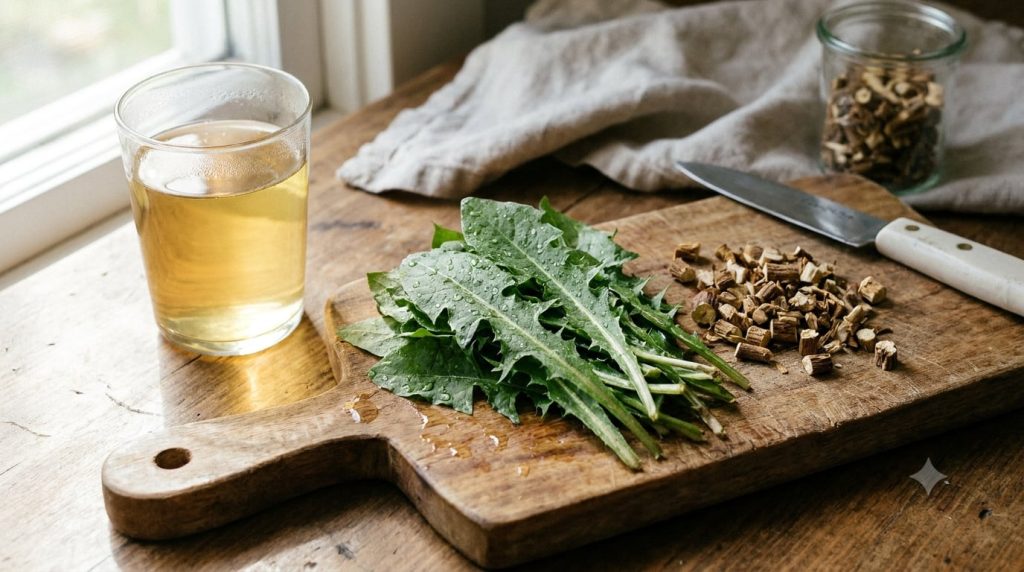
The simplest home preparation is a mild leaf tea. Combine 1 cup of fresh leaves or 1 to 2 teaspoons of dried leaves with 1 cup of hot water. Steep for 5 to 10 minutes, strain, and drink warm or cool.
Step-by-Step Method
- Harvest young leaves from an area you know has not been sprayed with herbicides or pesticides.
- Rinse the leaves under cool running water and pat them dry.
- For tea, chop the leaves roughly and place them in a heat-safe cup or jar.
- Pour hot but not boiling water over the leaves and cover the cup so the aroma stays in.
- Steep for 5 to 10 minutes, then strain.
- For roots, wash and chop the root, simmer it gently in water for 10 to 15 minutes, then strain.
How to Use
Drink one cup of leaf tea with a meal or in the afternoon. Root decoctions are usually taken in smaller amounts, such as a half cup at a time, because they are more concentrated. Start with a small serving to see how your body responds.
How Often to Use
Many people keep dandelion tea to a few cups per week rather than daily. Taking breaks is a sensible habit with any herbal preparation. If you notice stomach upset or any unusual reaction, stop and seek advice.
Fresh vs Dried: Quick Reference
| Version | Best Use | Shelf Life | Notes |
|---|---|---|---|
| Fresh leaves | Salads, quick tea | 2 to 3 days refrigerated | Most tender, wash just before use |
| Dried leaves | Tea blends | 6 to 12 months in airtight jar | Keep away from light and moisture |
| Dried root | Simmered decoction | 6 to 12 months | Roast lightly for a coffee-like flavor |
| Flowers | Tea or infused oil | Use within a few days fresh | Remove green sepals to reduce bitterness |
How to Choose Good Ingredients
Pick young leaves with a bright green color and no yellowing. Older leaves become bitter. Avoid plants near roadsides, dog areas, or lawns that are treated with chemicals. If you buy dried leaves, look for a clean, grassy smell and no mold.
Storage
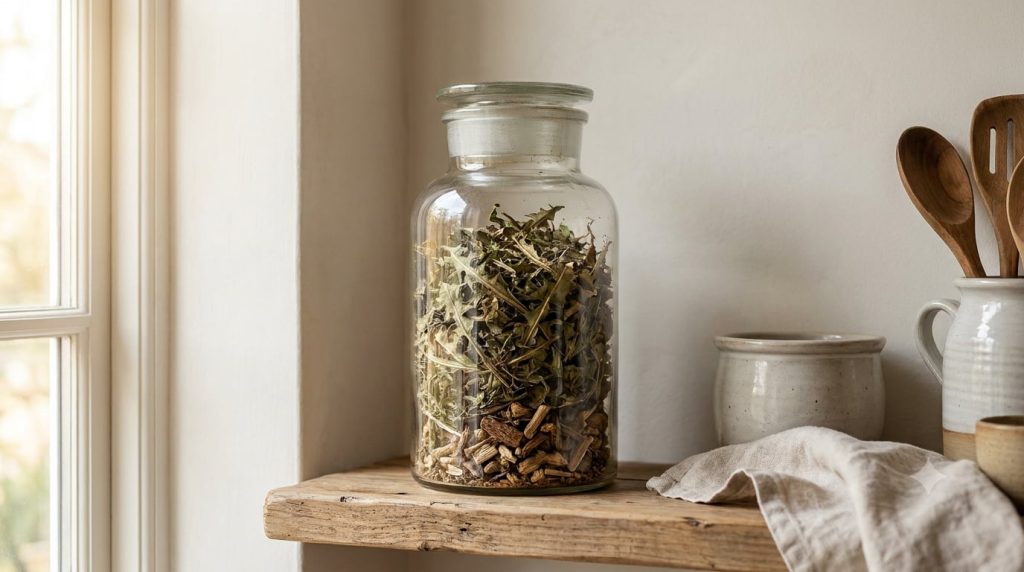
Store fresh leaves wrapped loosely in a paper towel inside a sealed container in the refrigerator. Use them within two to three days. Dry leaves and roots completely before storing, then keep them in an airtight glass jar away from heat and sunlight.
Practical Tips
- Harvest on a dry morning, after dew has evaporated.
- Dry leaves on a rack in a shaded, airy spot rather than in direct sun.
- Use a lid when steeping so the volatile aromas stay in the cup.
- Label jars with the harvest date.
Common Mistakes
- Using sprayed or roadside plants.
- Boiling leaf tea, which makes it taste harsh.
- Storing damp leaves, which invites mold.
- Harvesting flowers that are already past bloom.
- Assuming more is better. Stronger brews are not safer.
Cautions and Who Should Avoid It
Dandelion belongs to the daisy family, so people with ragweed, chrysanthemum, or other daisy-family allergies should be careful. Because dandelion can act as a mild diuretic, people taking lithium or diuretic medicines should check with a healthcare professional first. Anyone with gallbladder or bile duct issues, a blood clotting condition, or who is pregnant or breastfeeding should speak with a doctor before use. Herbal preparations are not a substitute for medical care.
Here is the part most people skip: a quick test patch is wise before drinking large amounts, especially if you have never tried the plant before.
Quick Summary
- Best preparation: mild leaf tea for beginners, root decoction for a richer drink.
- Best use case: an occasional warm cup as part of a simple home routine.
- Storage: fresh leaves last 2 to 3 days; dried material lasts 6 to 12 months in an airtight jar.
- When to use: young leaves in spring, dried leaves all year.
- What to avoid: sprayed plants, damp storage, and overly strong brews.
Frequently Asked Questions
Can I use fresh or dried dandelion?
Yes. Fresh leaves give a lighter flavor, while dried leaves store longer and are easier to keep on hand.
How long does dandelion tea last?
Brewed tea is best consumed within 24 hours and kept refrigerated in the meantime.
Can I refrigerate dandelion tea?
Yes, in a sealed container for up to one day. Fresh leaves can also be kept in the refrigerator for a few days.
Can I freeze dandelion leaves?
You can freeze leaves after blanching briefly, but they lose some texture. Drying is usually the better option.
Which part of the plant is best?
Young leaves are best for tea and salads. Roots are better for longer simmered preparations.
Can I reuse the leaves?
Leaves used for tea are generally used once. Roots can sometimes be simmered a second time for a lighter brew.
When should I avoid it?
Avoid it if you have a daisy-family allergy, are pregnant or breastfeeding without medical advice, or take medicines that interact with diuretics.
Conclusion
The plant you have been pulling may be more useful than it looks. Harvest young leaves from a clean area, prepare them gently, store them properly, and keep your intake modest. Read more: how to build a simple herbal tea shelf. You may also like: a beginner guide to safe wild herb harvesting. See the full guide: growing your own herb patch.