Few things make a bathroom or kitchen wall look worn out faster than a few crayon scribbles on glossy tile. The good news is that crayon wax often lifts off with a gentle homemade paste and a bit of patience, so you may not need harsh chemicals for a quick fix.
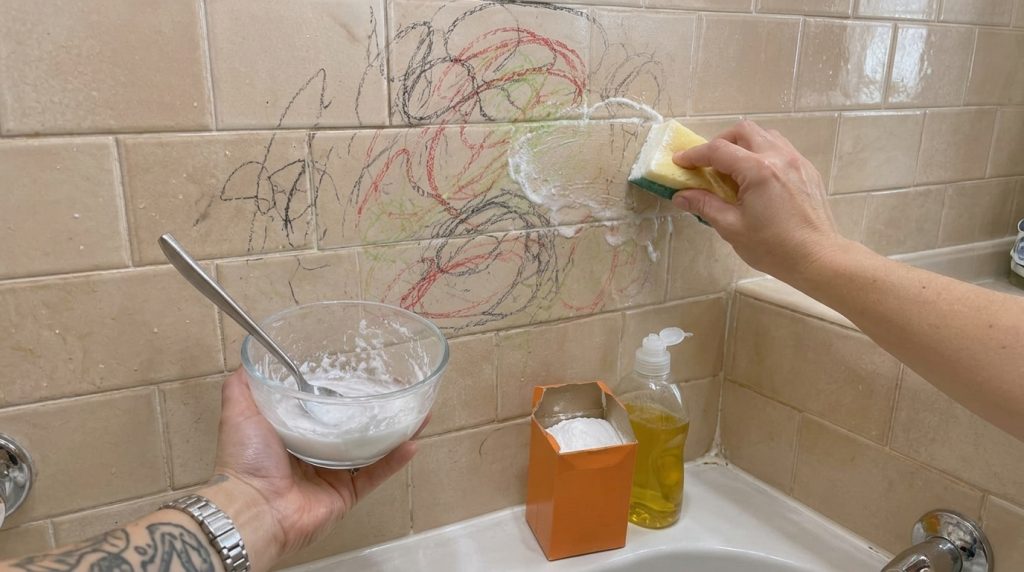
The short version: make a simple baking soda paste, work it onto the marks with a soft sponge, rinse, and check the results. The source video does not list exact amounts, so the quantities below are a practical starting point that you can adjust.
What You’ll Need
Cleaning Paste
- 2 tablespoons baking soda
- About 1 to 2 teaspoons water, added slowly until the mixture is thick and spreadable
Tools
- A clear glass or small mixing bowl
- A spoon for mixing
- A non-scratch sponge with a soft scrubbing side (like the white and yellow sponge shown in the video)
- A clean white cloth or microfiber cloth
- A bucket or bowl of warm water for rinsing
- A dry towel for the final wipe
Why This Method May Work
Baking soda is a mild abrasive, which means it has a fine grit that helps lift residue from hard surfaces without being as aggressive as heavy scouring powders. Mixed with a little water, it becomes a paste that stays where you put it, so it can work on the marks long enough to loosen them. The gentle scrubbing action is what lifts the wax from the glaze.
How to Make the Paste
- Add 2 tablespoons of baking soda to a small bowl.
- Add water one teaspoon at a time, stirring after each addition.
- Stop when the mixture looks like a thick, spreadable paste, similar to toothpaste. If it runs off the sponge, add a tiny bit more baking soda. If it is too dry and crumbly, add a few drops more water.
- Make only as much as you need for the area you are cleaning, since it is best used fresh.
How to Use It
- Test the paste first on a small, hidden tile or a corner near the grout. Wipe it off after one minute and check the glaze for dulling or scratches.
- Dampen the sponge slightly with warm water so the paste spreads more easily.
- Apply a thin layer of paste over a small section of crayon marks, about the size of your hand.
- Let it sit for 2 to 5 minutes so the wax can soften a little.
- Scrub gently in small circles, using light to moderate pressure. Stop and check your progress every few passes.
- Rinse the sponge often and wipe the area with a clean damp cloth to remove the loosened wax and paste.
- Repeat on remaining marks, working in sections rather than covering the whole wall at once.
- Rinse the entire tiled area with clean warm water, then dry it with a towel so no paste residue is left behind on the grout or glaze.
What to Expect
On glossy, sealed tile, many fresh or lightly set crayon marks should lift with a few rounds of gentle scrubbing. Older, heavily pressed-in marks may need more time and several passes, and a faint shadow can remain on grout lines. Results depend on the tile surface, how long the marks have been there, and how hard you scrub, so it is wise not to expect a perfect, instant finish every time.
Helpful Tips
- Start with the lightest pressure that works. Heavy scrubbing can dull glossy glaze or wear down grout over time.
- Work in small sections so the paste does not dry out before you wipe it.
- Clean the grout last, using a slightly stiffer brush only if the sponge does not remove the marks.
- Keep a dry cloth nearby to check the progress and remove wax residue as you go.
Important Notes and Safety
- Do not mix baking soda paste with bleach, ammonia-based cleaners, or other chemical cleaners. Mixing cleaning products can create hazardous fumes or reactions.
- If you use a store-bought cleaner on the same wall, rinse the area thoroughly with water between products and never combine them in the same bowl or spray.
- Vinegar is a common cleaning product, but do not mix it into the paste or spray it onto fresh baking soda, since the two can fizz and cancel each other out.
- Ventilate the room while cleaning, especially if you are using any additional cleaning products.
- Be cautious with natural stone, unsealed grout, matte or textured tiles, and delicate finishes. Test in a hidden spot first and avoid aggressive scrubbing.
- Keep the paste and cleaning products out of reach of children and pets, and store leftover baking soda in a dry, sealed container.
Practical Takeaway
For most glossy ceramic tile, a simple baking soda and water paste, applied with a soft sponge and rinsed well, is a reasonable first step for removing crayon marks. Start with a small test spot, work gently, and clean in sections for the best results.
Disclaimer: This article is for general information only. Results vary depending on your tile, grout, and sealant, so always test first and follow the manufacturer instructions for any cleaning products you use.