Most people toss jackfruit seeds straight into the trash, yet the seeds are one of the most practical parts of the fruit. Once you know how to prepare them, they become a filling, low-waste ingredient you can add to snacks, curries, and simple side dishes.
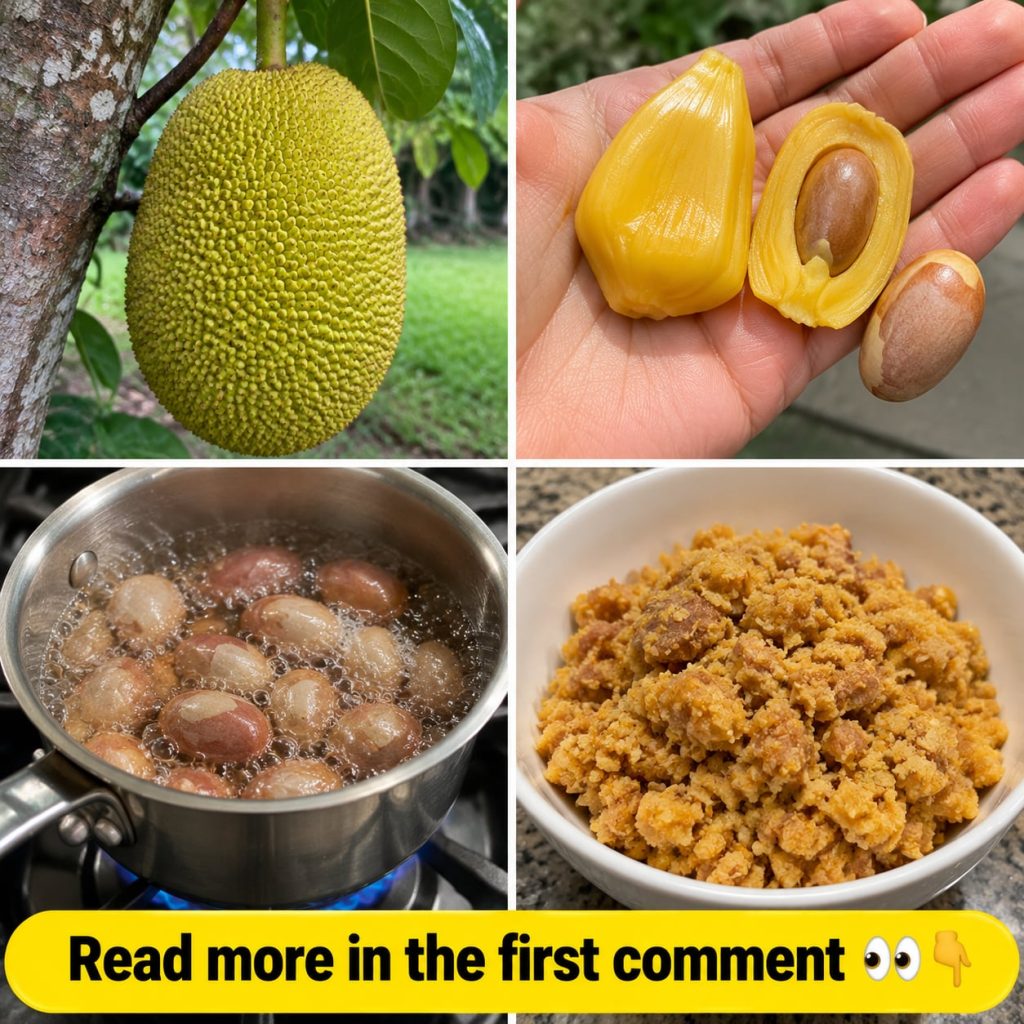
What Jackfruit Seeds Are
Jackfruit seeds are the pale, oval seeds found inside the fruit’s bulbs. They have a mild, slightly starchy taste and a firm texture when cooked. They should never be eaten raw, because heat is needed to soften them and make them comfortable to digest.
Ingredients
- Fresh jackfruit seeds, about 1 cup (roughly 15 to 20 seeds)
- Water, about 1 liter for boiling
- Salt, 1/2 teaspoon
- Optional: 1 tablespoon olive or coconut oil
- Optional: 1 clove garlic, lightly crushed
- Optional: 1/4 teaspoon black pepper or chili flakes
Formula and Simple Recipe
The basic formula is simple: 1 cup of seeds, 1 liter of water, and 1/2 teaspoon of salt. This makes a versatile base you can season later. Boiling is the most reliable first method because it makes the seeds soft and easy to peel.
Step-by-Step Method
- Rinse the seeds under cool water to remove the fibrous white pulp.
- Place the seeds in a pot with enough water to cover them by about 2 cm.
- Bring to a boil, then simmer for 15 to 20 minutes until a knife slides in easily.
- Drain and let them cool for 5 minutes.
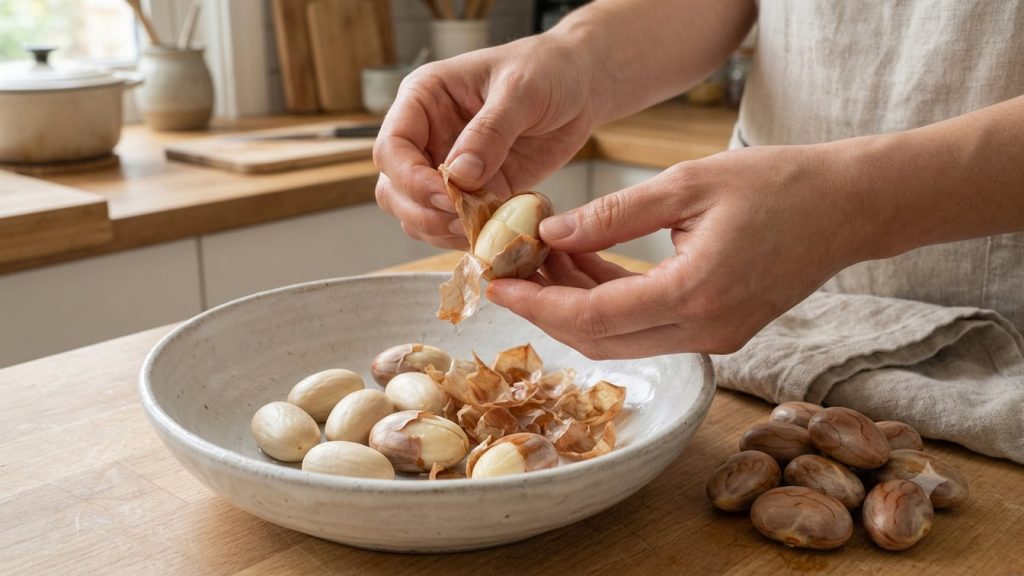
- Peel off the thin brown skin with your fingers or a small knife.
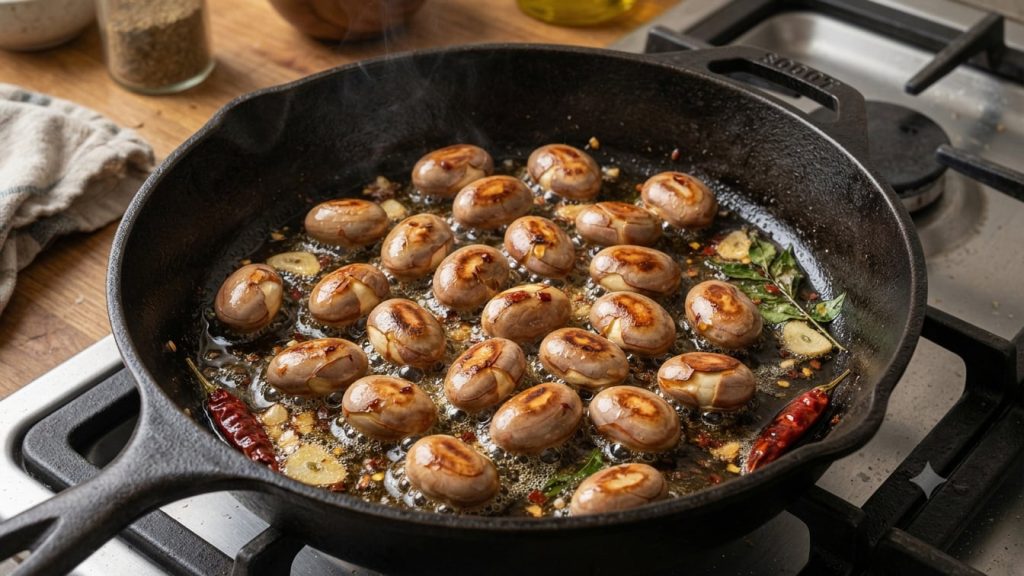
- Season while warm with salt, or heat a little oil with garlic and toss the seeds in the pan for 2 minutes.
Before You Cook
Do not skip the rinse. Leftover pulp can make the seeds taste sticky and reduce their clean flavor.
Preparation Comparison Table
| Method | Texture | Best Use | Fridge Life |
|---|---|---|---|
| Boiled and salted | Soft and mild | Snacks, salads, mashed dishes | 3 to 4 days |
| Boiled then pan-fried | Slightly crisp outside | Side dish or topping | 2 to 3 days |
| Simmered in curry | Tender and absorbent | Vegetable curries and stews | 3 to 4 days |
How to Use Them
Cooked seeds work well mashed with onion and spices, sliced into stir-fries, or added to coconut-based curries. You can also roast boiled seeds in the oven at 200 C for 10 to 15 minutes for a firmer bite.
How Often to Use Them
Treat them as a regular food rather than a daily supplement. Using them once or twice a week as part of a balanced meal is a practical way to add variety to your cooking.
How to Choose Good Seeds
Choose seeds from a fruit that smells fresh and has no dark, slimy patches. Plump, firm seeds with a clean white or cream color are the best choice. Avoid seeds that feel soft, sour, or moldy.
Storage
Keep boiled and peeled seeds in a sealed container in the refrigerator for 3 to 4 days. For longer storage, freeze them in a freezer bag for up to 2 months. Thaw in the refrigerator overnight before cooking again.
Practical Tips
- Quick Tip: Cook a larger batch and freeze portions for busy weeks.
- Did You Know? Seeds absorb flavor well, so they work nicely in spiced sauces.
- Best Time to Use It: Use them within a day or two of opening the fruit for the cleanest taste.
Common Mistakes
- Eating the seeds raw or undercooked.
- Boiling for too short a time, which leaves them firm and hard to peel.
- Skipping the rinse, which leaves sticky pulp on the seeds.
- Storing warm seeds in a sealed container, which creates moisture and spoilage.
- Using seeds that already smell sour or look slimy.
Cautions and Who Should Avoid Them
Always cook seeds thoroughly. People with known allergies to jackfruit, or those who react to latex-related foods, should avoid trying them. If you have kidney, digestive, or other medical concerns, check with a qualified healthcare professional before adding new foods regularly. Children and pregnant women should also keep portions moderate and well cooked.
Quick Summary
- Best preparation: Boil for 15 to 20 minutes, then peel.
- Best use case: Curries, stir-fries, and simple snacks.
- Storage: 3 to 4 days in the fridge or up to 2 months frozen.
- When to use: As a practical, occasional ingredient in meals.
- What to avoid: Raw seeds, damaged seeds, and wet storage containers.
Frequently Asked Questions
Can I use fresh or dried seeds?
Fresh seeds give the best texture. Dried seeds need longer soaking and cooking before they soften.
How long do cooked seeds last?
They keep for 3 to 4 days in the refrigerator when stored in a sealed container.
Can I freeze them?
Yes. Peeled, cooled seeds freeze well for up to 2 months.
Can I eat the seeds raw?
No. Raw seeds are hard to digest, so always cook them first.
Which part is best to use?
The seeds themselves are the edible part. Discard the hard outer shell and any spoiled pieces.
Can I reuse the cooking water?
It is best to discard it, since it can carry starch and pulp from the seeds.
How often should I eat them?
Once or twice a week in cooked meals is a sensible approach for most people.
When should I avoid them?
Avoid them if you have a known allergy or sensitivity, or if the seeds smell or look spoiled.
Conclusion
Jackfruit seeds are easy to prepare once you know the basics: rinse, boil until tender, peel, and season. Used this way, they turn a common kitchen waste item into a useful ingredient for everyday meals.
Read More
You may also like: Read more about simple zero-waste kitchen habits in our full guide. Continue with: our related recipe ideas for vegetable curries and stir-fries.