Cleaning up after a painting session can turn a fun evening into a messy chore. Paint drips, water splashes across the table, and brushes end up half-clean no matter how carefully you rinse them. If you have ever wished for a more tidy way to finish a craft session, a simple brush rinse cup might be the small kitchen-style helper you have been looking for.
This article shares why a dedicated rinse cup can make painting nights easier, what to look for when choosing one, and a few practical habits that keep brushes in good shape for the next session.
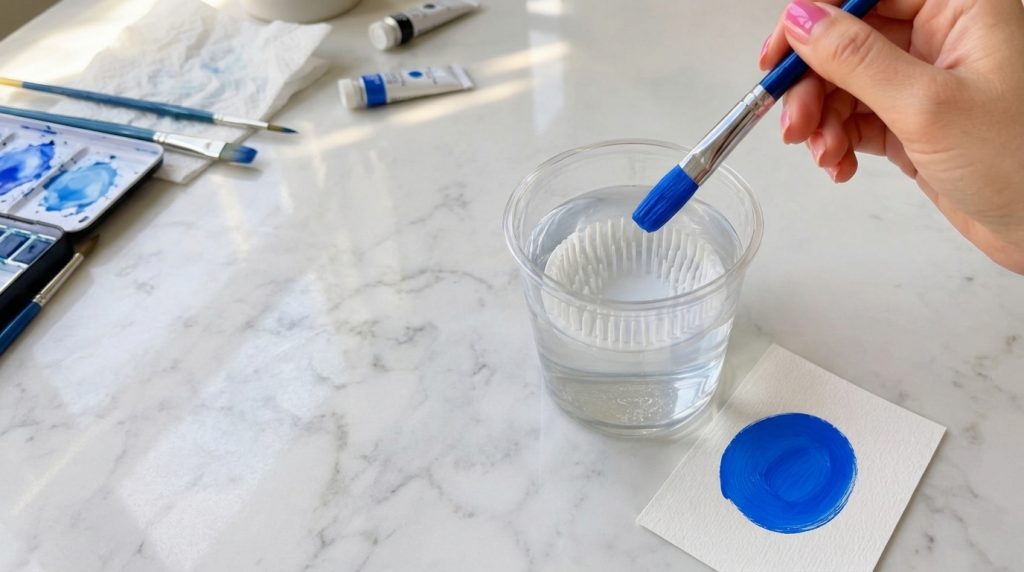
Why Brush Cleanup Takes So Long
Most painting sessions leave brushes loaded with pigment near the ferrule, where paint hides and slowly dries. Rinsing under a tap often spreads water and paint across the sink or counter, and it is easy to miss the base of the bristles. Over time, stubborn paint can stiffen brushes and shorten their life.
A contained rinse cup changes the routine. Water stays in one place, so you can swirl brushes gently, press them against a textured surface, and see the clean water settle as you work.
What a Rinse Cup Does Well
- Keeps water contained so the table and floor stay drier.
- Gives you a set spot for each brush, which makes the cleanup routine quicker.
- Helps separate paint from the water so you can refresh it when it becomes cloudy.
- Makes cleanup feel manageable, which is helpful when children are painting alongside you.
Tips for Using a Rinse Cup at Home
- Fill the cup about two-thirds full with lukewarm water before starting so you have room to swirl.
- Use the textured insert, if your cup has one, to press out paint from the bristles without bending them.
- Dab each brush on a paper towel after rinsing to remove extra moisture before storing.
- Change the water once it looks heavily tinted, rather than trying to clean brushes in murky water.
- Lay brushes flat or bristle-side up to dry so the bristles keep their shape.
Making Painting Nights Easier for Families
Kids paint night is a lovely way to spend time together, but the cleanup often falls on adults. A rinse cup gives younger painters a clear, simple step they can follow, such as dipping and swirling their brush before putting it down. Keeping supplies within easy reach also helps everyone feel involved without creating a bigger mess.
Final Thoughts
A brush rinse cup is a small tool with a big impact on how painting sessions end. By keeping water contained and giving brushes a dedicated cleaning spot, it turns a frustrating chore into a quick, tidy step. If you are planning your next craft evening, consider adding one to your table and see how much smoother cleanup feels.