Green chickpeas and green peas often end up side by side on the plate, and it is easy to assume they offer nearly identical nutrition. Both are vibrant green legumes that bring plant-based protein and dietary fiber to meals. Yet when you look closer at their fat and protein profiles, the two tell a different story.
This guide breaks down how green chickpeas and green peas compare, what those small differences may mean for your meals, and how to decide which one fits your cooking style.
What Green Chickpeas and Green Peas Have in Common
Both legumes are valued as sources of plant protein and dietary fiber, which makes them useful additions to vegetarian and plant-forward meals. They can be enjoyed in salads, soups, grain bowls, and side dishes, and both fit well into a balanced diet.
- Plant-based protein for meals that feature fewer animal products
- Dietary fiber that contributes to digestive wellness
- Fresh, naturally green color that makes plates more colorful
Where the Nutrition Differs
The differences between these two legumes are subtle, but they are worth knowing if you are paying attention to specific nutrients.
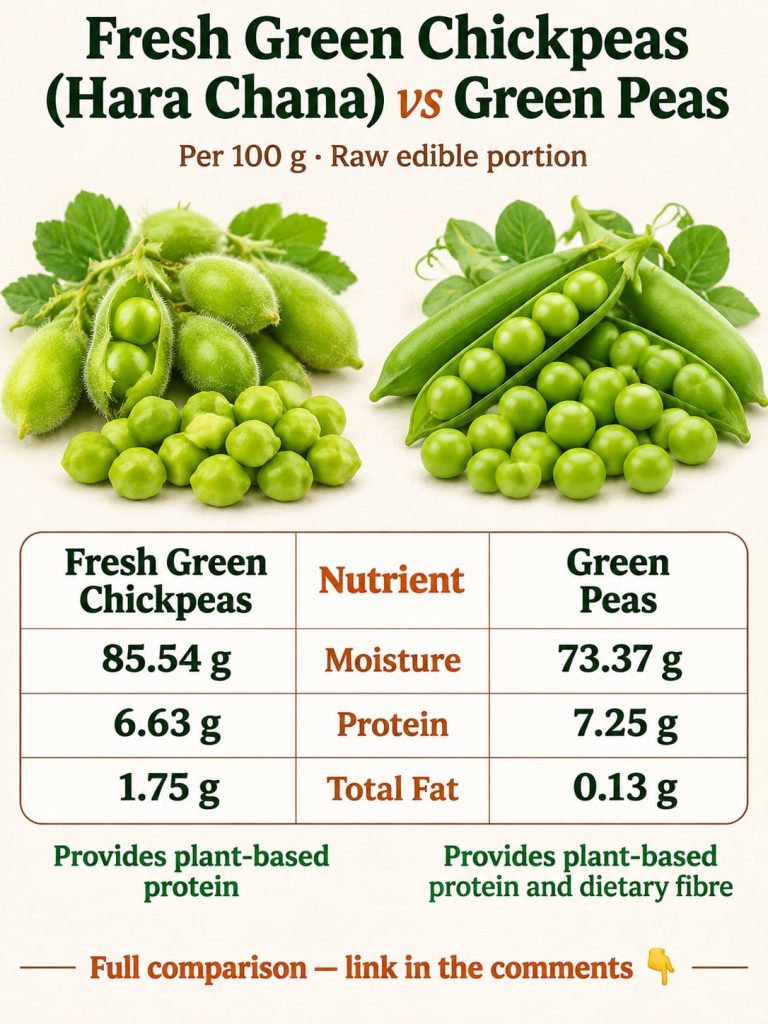
Fats: Green Chickpeas Lead
Fresh green chickpeas contain slightly more healthy fats than green peas. Dietary fats play a role in how the body absorbs certain nutrients, so including a range of fat sources across the day can be part of a balanced approach to eating.
Protein: Green Peas Edge Ahead
Green peas provide a bit more protein per 100 grams. For people who want to increase their protein intake through plant foods, green peas can be a practical choice, especially when paired with grains, nuts, or seeds.
How to Choose Between Them in Your Kitchen
Neither legume is clearly better for everyone. The right pick often depends on what you are cooking and what you want from the dish.
- Choose green chickpeas when you want a slightly richer, creamier texture and a little more fat in the meal.
- Choose green peas when you are focusing on protein per serving or want a sweeter, lighter flavor.
- Combine both when you want variety across the week, which can also help you enjoy a wider range of nutrients.
Simple Ways to Use Both Legumes
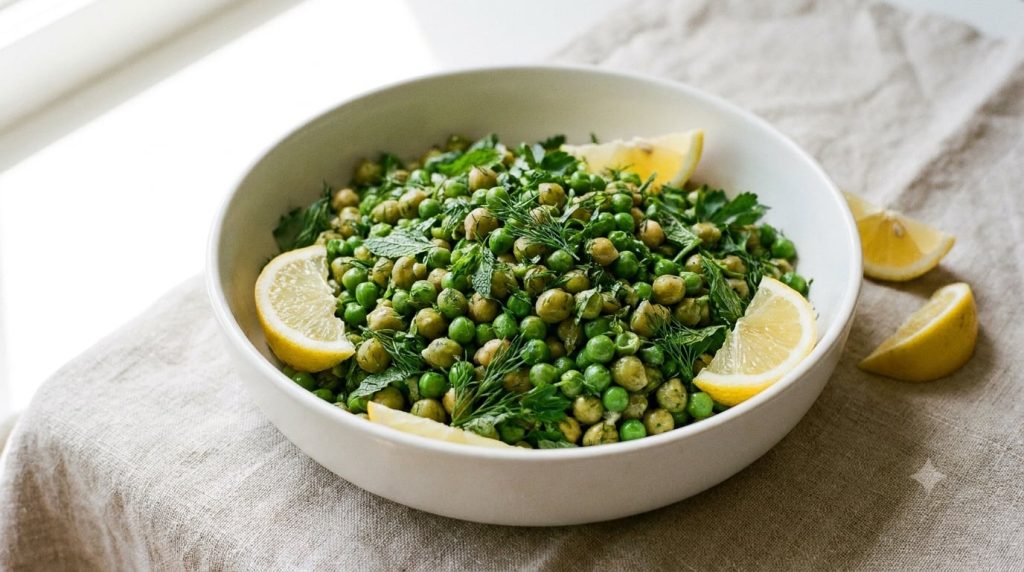
Both green chickpeas and green peas work well in simple, everyday dishes. Toss them into a fresh green salad with lemon juice and olive oil, stir them into a warm grain bowl, or add them to a light vegetable soup. Lightly blanching fresh legumes until just tender can help keep their color bright.
Final Thoughts
Green chickpeas and green peas are both nutritious, green legumes that bring plant protein and fiber to the table. Green chickpeas offer slightly more healthy fats, while green peas provide a little more protein per 100 grams. Understanding these differences can help you choose the right legume for each meal, or enjoy them both as part of a varied, balanced diet.
This article is for general educational purposes and is not medical advice. If you have specific dietary needs or health conditions, consider speaking with a qualified healthcare professional or registered dietitian.