Water spots, soap residue, and splashes around the sink can make even a clean kitchen look tired. If you find yourself scrubbing the same tiles and faucet area every few days, you are not alone. This guide explains why water marks build up, what simple habits help, and how a protective wall sheet approach may make daily cleanup easier.
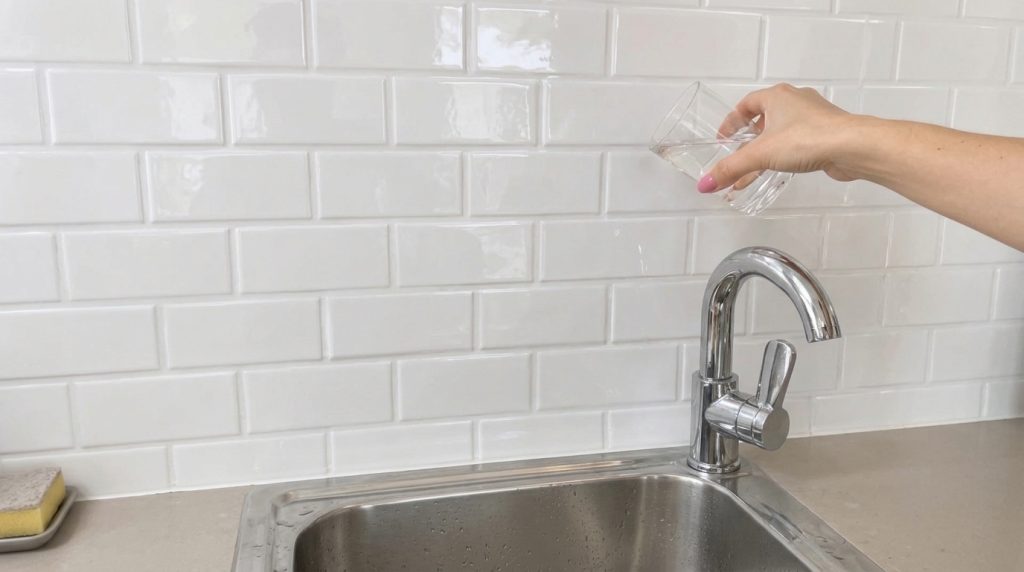
Why Water Spots Build Up Around the Sink
Hard water contains minerals such as calcium and magnesium. When water splashes onto tile, grout, or stainless steel and then dries, those minerals stay behind as a faint film or chalky ring. Soap scum and food particles can mix with the minerals, which makes the marks harder to remove over time.
Areas near the faucet tend to collect the most residue because water lands there repeatedly. The grout lines between tiles can also hold moisture and show stains more quickly than smooth surfaces.
Simple Daily Habits That Reduce Cleanup Time
- Wipe the faucet and backsplash with a soft microfiber cloth after the final rinse of the day.
- Keep a small squeegee or dry towel near the sink so water does not have time to dry into spots.
- Rinse the sink basin after washing dishes to remove soap film before it hardens.
- Check the area weekly for early film so you can clean it before it becomes a stubborn mark.
Gentle Cleaning Methods That Work Well
For everyday spots, warm water and a drop of mild dish soap are often enough. Apply the solution with a soft cloth, wipe in one direction, and dry the surface completely. For mineral deposits, a mixture of equal parts white vinegar and water can help, but test it on a small hidden area first, especially on natural stone or sensitive finishes. Avoid abrasive pads on polished stainless steel, since they can leave fine scratches that trap more dirt.
Can a Protective Wall Sheet Help?
The product behind this idea is described as a simple wall sheet that creates a protective barrier, so water tends to bead up and roll off rather than settling into spots. A surface that sheds water may reduce how often you need to scrub, and it may make quick wipe-downs more effective. Results can vary depending on your water quality, tile type, and how often the area gets wet, so it is wise to read the product instructions and manage your expectations.
Whether you use a protective sheet or stick with routine wiping, the main goal is the same: remove water and residue before they dry. Small habits done consistently usually make a bigger difference than occasional deep cleaning.
Final Thoughts
A spotless sink area does not have to mean hours of scrubbing. By understanding why water marks form, adopting a few quick daily habits, and choosing gentle cleaning methods, you can keep your kitchen looking fresh with less effort. Have you tried a protective barrier or another cleaning hack in your kitchen? Share your favorite tip in the comments and help other readers save time on cleanup!