Some herbs look too simple to be useful.
Sida rhombifolia L., often called arrowleaf sida, is one of those small wild plants people may walk past without noticing. It has soft green leaves, tiny pale flowers, and upright stems that do not look dramatic at all. Yet in traditional medicine, this plant has been used for many everyday complaints, including cough, cold, fever, inflammation, stomach discomfort, and general weakness. Reviews on the plant describe its long ethnomedicinal use and note that tribal and traditional communities have used it in extracts, powders, and pastes for common ailments.
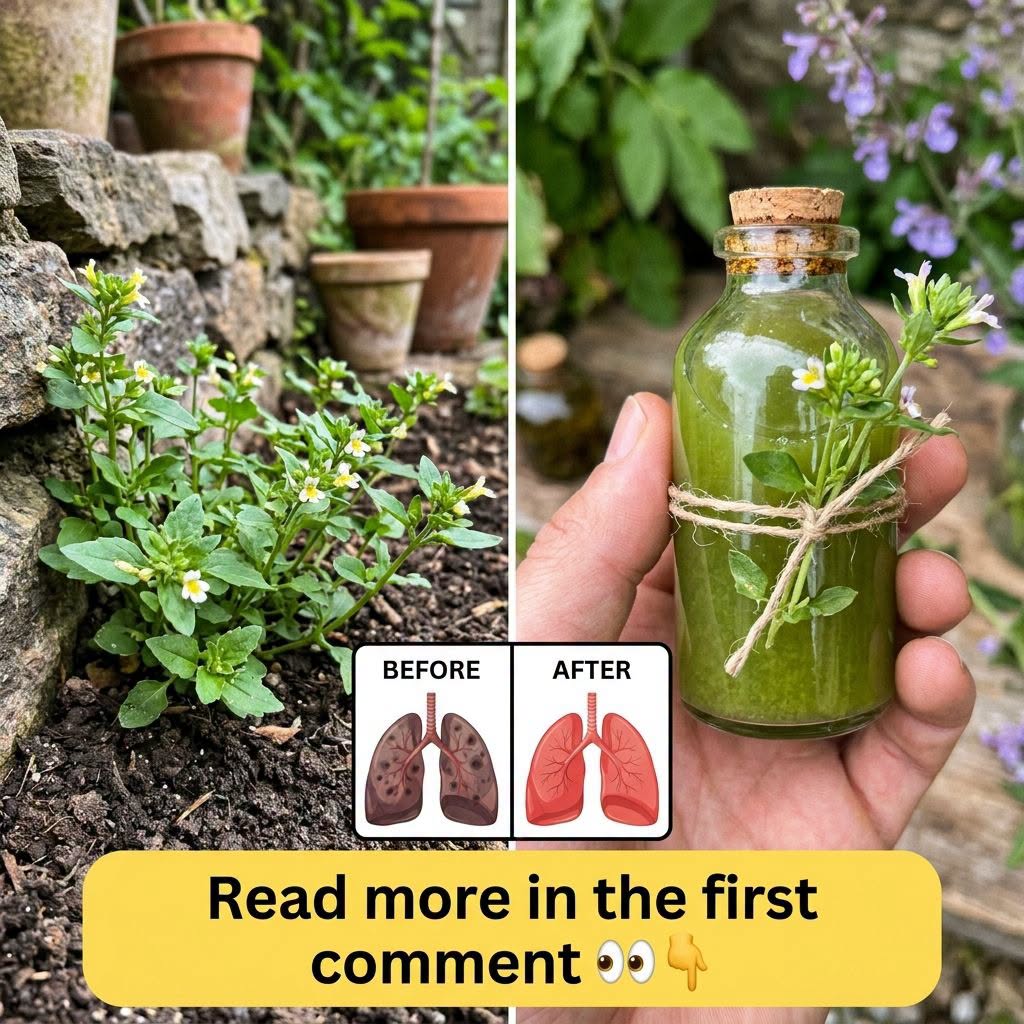
The image suggests a green herbal extract linked with “before and after” lung support. That claim needs a calmer explanation. Sida rhombifolia tea is not a lung cleanser or a cure for respiratory disease. A better way to describe it is as a traditional respiratory-support herb that people use when they want a warm, simple drink during mild cough, seasonal discomfort, or body fatigue.
What Sida rhombifolia Is Traditionally Used For
In folk medicine, Sida rhombifolia L. has been used in several ways depending on the region.
People traditionally connect it with:
- Mild cough and cold support.
- Feverish discomfort.
- Inflammation-related body aches.
- Digestive complaints.
- General tonic-style use.
A recent review describes Sida rhombifolia as a traditional herb with reported phytochemicals and pharmacological activity in in vitro and in vivo studies. Another broader review of the Sida genus notes antioxidant, anti-inflammatory, analgesic, and sedative properties in preclinical research, mostly linked to compounds such as alkaloids, flavonoids, and coumarins.
That makes the herb interesting, but it does not make it a proven treatment. Most of the science is still early.
Ingredients
For a simple traditional-style Sida rhombifolia tea, use:
- 1 small handful fresh Sida rhombifolia leaves and tender stems
- or 1 to 2 teaspoons dried herb
- 2 cups clean water
Use only correctly identified plant material. Avoid plants growing near roadsides, sprayed areas, or polluted soil.
How to Prepare Sida rhombifolia Tea
Step 1: Wash the herb well
Rinse the fresh leaves and tender stems carefully to remove dust, soil, and insects.
Step 2: Add to water
Place the herb in a small pot with 2 cups of water.
Step 3: Simmer gently
Bring it to a light boil, then lower the heat. Let it simmer for about 8 to 10 minutes.
Step 4: Let it rest
Turn off the heat and cover the pot for another 5 minutes.
Step 5: Strain and drink warm
Strain the tea into a cup. Drink it warm in small amounts.
The taste is usually mild, green, and slightly earthy. It is more of a functional herbal drink than a sweet comfort tea.
How to Use It
This tea is usually used for short periods, not as an all-day drink.
Many people prefer it:
- In the morning when the body feels heavy.
- In the evening when the throat feels dry.
- During mild seasonal discomfort.
- After rest, warm food, and enough fluids.
For realistic expectations, the first thing you may notice is simple. The warm drink may feel soothing on the throat, and the body may feel a little more settled. It should not be expected to clear the lungs, treat asthma, cure infection, or replace medicine.
Why It May Feel Helpful
The traditional logic is easy to understand.
Warm herbal tea can soothe a dry throat and encourage better hydration. The plant itself contains several groups of bioactive compounds, including alkaloids, phenolics, and flavonoids, which are being studied for possible anti-inflammatory and related effects. A 2025 study on Sida rhombifolia reported the presence of compounds such as alkaloids, phenolics, and flavonoids during phytochemical evaluation.
Still, the key word is possible. A plant can show interesting activity in lab studies and still need much more human research before strong health claims can be made.
Who Might Like This Remedy Most
This traditional tea may appeal to people who enjoy simple herbal routines and want something gentle during mild seasonal discomfort.
It may be most suitable for people who:
- Prefer warm plant-based drinks.
- Want a traditional cough-and-cold style herb.
- Like mild, earthy teas.
- Understand that herbs support routines, not miracle results.
It fits best alongside rest, fluids, light meals, and avoiding smoke or dust.
Safety Notes
Do not use Sida rhombifolia as a replacement for medical care.
Be extra careful if you are pregnant, breastfeeding, taking medication, have high blood pressure, heart issues, diabetes, kidney disease, or chronic respiratory illness. TRAMIL’s safety guidance for medicinal plants reminds users that some plant parts can cause side effects or interact with drugs, so people should consult a qualified health professional before using plant remedies medicinally. (Tramil)
Seek medical care if you have:
- Shortness of breath.
- Chest pain.
- Wheezing.
- High fever.
- Cough lasting more than a few days.
- Blood in mucus.
- Severe throat swelling.
Those are not situations for herbal tea alone.
Final Takeaway
Sida rhombifolia L. tea is a traditional herbal remedy people have used for mild cough, cold, inflammation, and general wellness support. It has a real ethnomedicinal background and early scientific interest, especially because of its phytochemicals.
But the safest way to write about it is honestly: this is a traditional support herb, not a lung-cleansing cure. Used carefully, it may offer a warm, soothing ritual during mild discomfort. Used carelessly, or with exaggerated expectations, it can easily be misunderstood.
Related Source Science
Modern reviews describe Sida rhombifolia L. as a traditional medicinal herb with reported use for cough, cold, fever, inflammation, stomach concerns, and other common ailments. Research has identified bioactive compounds such as alkaloids, flavonoids, phenolics, and coumarins, while broader Sida studies report preclinical antioxidant and anti-inflammatory potential. Strong human clinical evidence is still limited, so its best role is as a traditional supportive herb with realistic safety notes.