Fall cleanup has a way of turning into a weekend-long chore. Rakes, leaf bags, and a mountain of brown debris at the curb can make the season feel like a race to the finish line. But what if the most helpful thing you could do for your garden this autumn was to do a little less?
Many gardeners are discovering that a partial cleanup can be better for the soil, the plants, and the wildlife that quietly lives among them. Leaving some leaves in your beds and keeping dead stems standing through winter gives fireflies, native bees, butterflies, and moths a safer place to rest, overwinter, and emerge in spring. This guide walks you through how to do it well, where the limits are, and how to adjust the approach for your climate.
The Core Principle: Work With the Garden’s Natural Cycle
In nature, leaves fall on the ground and slowly break down, returning nutrients to the soil. Forest floors and meadows rarely get raked, yet they stay healthy. A garden bed works in a similar way. Fallen leaves act as a natural mulch, slowing evaporation, moderating soil temperature, and feeding soil organisms as they decompose.
The key word is balance. A thin layer of leaves is helpful. A thick, soggy mat that smothers the lawn or crowns of perennials can cause rot and trap moisture. Your goal is a cleanup that is partial, not absent.
Which Wildlife Benefits Most
Fireflies
Firefly larvae live in the soil and leaf litter for much of their life, where they feed on snails, slugs, and worms. Heavy raking, bagging, and constant tidying remove the cover they depend on. Leaving leaf litter in quieter corners of the yard, especially under trees and along the edges of beds, supports the larval stage.
Bumblebee Queens
Many bumblebee queens overwinter alone in the ground or in sheltered spots such as leaf litter, grass tussocks, and loose soil at the base of plants. Stems and leaves left in place can provide the insulation and cover they need. Wait until temperatures are consistently warm in spring before doing a deeper cleanup, since queens may still be emerging.
Butterflies and Moths
Some butterflies overwinter as adults under bark, in leaf debris, or in sheltered spots. Many moths spend the winter as eggs, caterpillars, or pupae in soil and plant material. Hollow or pithy stems, such as those of goldenrod, sunflower, and coneflower, often host overwintering insects, so leaving them standing gives these animals a place to hide.
Step-by-Step: How to Do a Partial Fall Cleanup
Step 1: Remove the Problem Debris First
Pull any diseased leaves, such as those with black spot on roses or powdery mildew on phlox, and bag them. Remove weeds that have gone to seed. These materials can spread problems into next season.
Step 2: Rake Leaves Into Beds in a Thin Layer
Rake leaves from lawns and paths onto perennial beds, shrub borders, and the base of trees. Aim for a layer about 1 to 2 inches deep. If you can still see the soil and the crowns of your plants, you are in a good range. Shred leaves with a mower first if they are thick, since shredded leaves break down faster and mat less.
Step 3: Leave Stems Standing Through Winter
Cut back perennials in spring, usually once the danger of hard freezes has passed and new growth is visible at the base. Leave stems of coneflower, black-eyed Susan, sedum, and ornamental grasses standing. They add winter structure, catch snow and frost, and provide hiding places for insects. Cut only what is broken, diseased, or leaning badly enough to rot.
Step 4: Protect Crowns and Tender Plants
Do not pile leaves directly on top of crowns of shrubs or tender perennials, since that can trap moisture and invite rot. Pull leaves back slightly around the base of plants that are marginal for your zone. In areas with heavy snow, a light covering is usually fine, but waterlogged leaves should be lifted off.
Common Mistakes and How to Avoid Them
- Leaving a thick mat of leaves. Layers deeper than a few inches can smother lawns and hold too much moisture. Shred them or spread them thinly.
- Ignoring diseased foliage. Leaves infected with fungal disease should be removed rather than left to overwinter in the bed.
- Cutting stems too early. Cutting everything in fall removes shelter that insects need. Wait until spring when temperatures are reliably above freezing and you can see new growth.
- Forgetting about the lawn. A little leaf cover is fine, but a heavy layer on turf can cause patches to yellow and die. Mow leaves to chop them finely.
- Assuming every insect is sheltered the same way. Different species use different winter strategies, so a mix of leaf litter, hollow stems, and undisturbed corners works better than one approach alone.
Adjusting for Your Climate
Leaf and stem management depends on where you live. In cold northern areas, roughly USDA zones 3 to 5, a thicker blanket of leaves can protect perennial roots through deep freezes, but make sure it does not stay wet against crowns. In temperate zones 6 to 8, the most common issue is soggy, matted leaves through winter, so shredding and thin layers matter more. In warmer zones 9 to 11, leaves break down quickly and some insects stay active longer, so focus on keeping debris from becoming a moisture trap rather than on deep protection.
USDA zones describe winter cold tolerance, not rainfall, humidity, or local microclimates. A shady, damp yard may need lighter leaf coverage than a sunny, dry one. Your local university extension office can offer guidance on native insects and plants in your area.
Make It Easier Each Year
You do not need to abandon tidy gardening to support wildlife. Start small: choose one bed, leave its stems standing, and rake leaves into it instead of bagging them. Notice what changes over the next spring, including which bees appear first and where new growth emerges. Over time, you may find that a less perfect garden is also a more alive one.
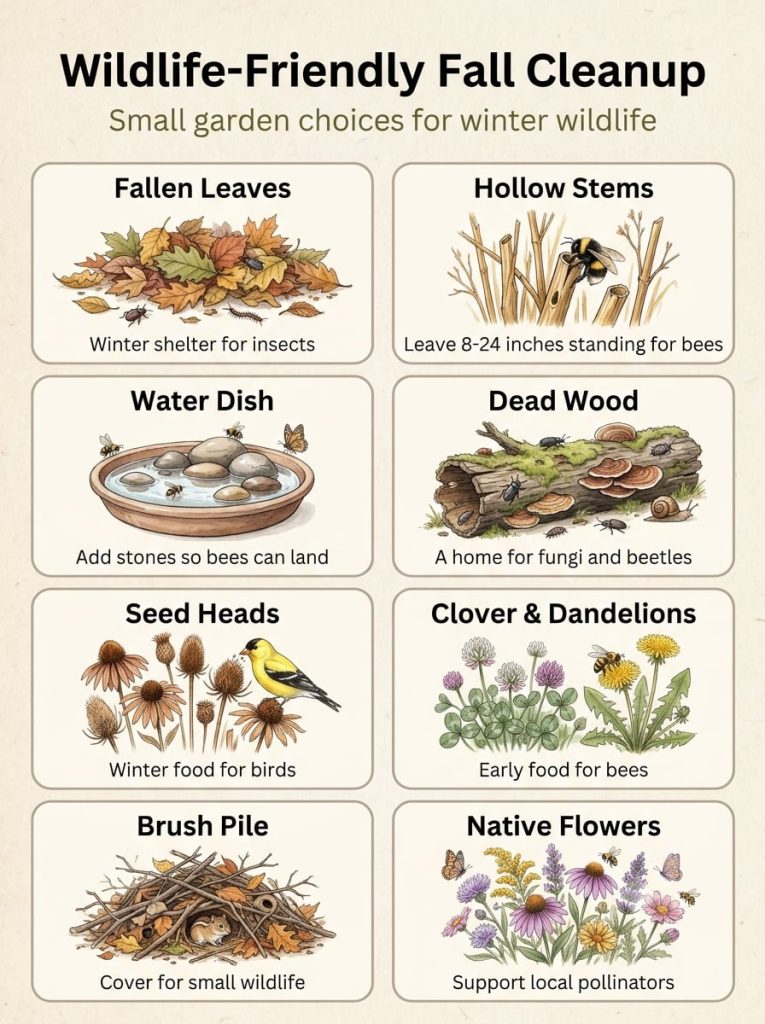
Take the first step this weekend. Leave a few stems standing, rake a thin layer of leaves into one bed, and watch what your garden becomes next spring.