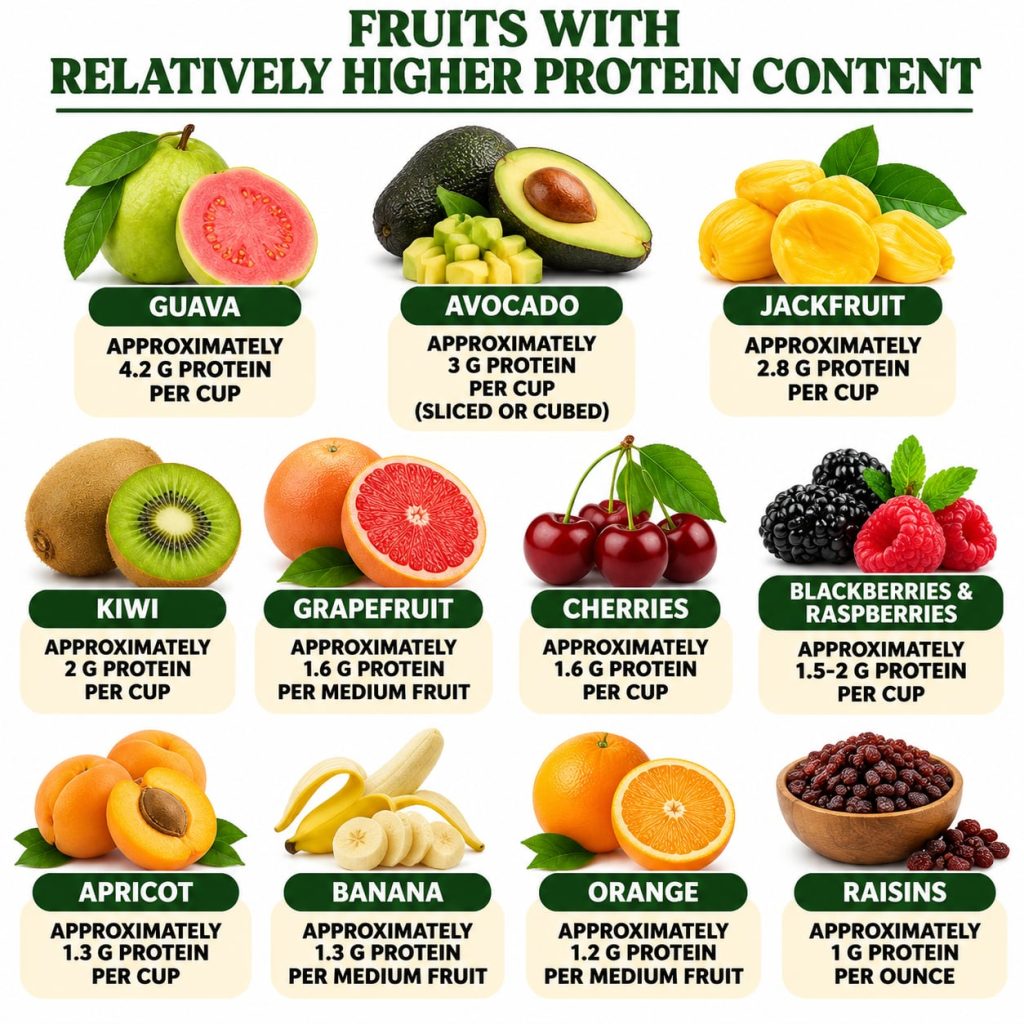
Most people think of meat, eggs, dairy, and legumes first when they plan their protein intake. Fruit rarely makes that list, yet certain everyday fruits can add a useful amount of protein to your day. They are not a replacement for protein-rich foods, but they can be a practical way to round out your meals and snacks.
Why Fruit Can Count Toward Your Protein Goals
Protein is found in small amounts across many whole foods, including some plant foods that people rarely associate with it. Fruit typically contains less protein per serving than beans or nuts, but when you eat several servings over the day, those small amounts add up. The key is to see fruit as one part of a varied eating pattern rather than a single solution.
How to Add Protein-Containing Fruit to Your Routine
The easiest approach is to pair fruit with foods that already provide protein. This makes your meals more filling and more balanced.
- Add fruit to plain Greek yogurt or a protein-rich cottage cheese bowl at breakfast.
- Blend fruit into a smoothie with milk, soy milk, or a spoonful of nut butter.
- Pack fruit alongside a hard-boiled egg or a handful of nuts for an easy snack.
- Include fruit with oatmeal topped with seeds for a more complete morning meal.
Simple Habits That Make the Difference
Consistency matters more than any single food. Keeping fruit washed and visible in the kitchen makes it easier to reach for. Tracking your protein intake for a few days can also show you where fruit fits naturally and where you might need a different protein source to reach your daily target.
Quick Tips for Busy Days
- Keep a bowl of whole fruit on the counter so it is the first thing you see.
- Prepare fruit cups in advance and store them in the fridge.
- Choose a protein source for every meal, then add fruit as a side.
Frequently Asked Questions
Can fruit replace protein foods?
No. Fruit can support your intake, but it usually does not provide enough protein on its own to meet daily needs. Meals should still include eggs, dairy, fish, poultry, legumes, tofu, or other protein-rich foods.
Who should talk to a professional first?
People with kidney conditions, diabetes, food allergies, or specific dietary restrictions should speak with a qualified healthcare professional or registered dietitian before making major changes to their protein intake.
Final Thoughts
Everyday fruit can be a surprisingly helpful part of your nutrition plan. When paired with protein-rich foods and eaten as part of a balanced diet, it can support your goals in a simple, enjoyable way. Small, consistent choices are often what make the biggest difference over time.
Medical disclaimer: This article is for general information only and is not a substitute for professional medical advice. Consult a qualified healthcare professional before changing your diet, especially if you have a health condition.