An orange is one of the easiest fruits to keep on hand, and it brings real nutrition to the table. The trouble is that many of us reach for a glass of juice instead of the fruit itself. A few minutes with a knife and a cutting board can change that habit, and the result is a simple snack that keeps more of what the orange has to offer.
What You Get From One Medium Orange
A medium orange provides about 70 milligrams of vitamin C, which is close to a full day’s need for many adults. It also supplies about 3 grams of fiber, along with smaller amounts of potassium and folate. These numbers are a helpful starting point, though the exact daily values depend on age, sex, and overall diet.
Vitamin C supports normal immune function and helps the body absorb iron from plant foods. Fiber supports regular digestion and helps you feel full for longer after a meal. Potassium plays a role in normal muscle and nerve function, and folate is important for normal cell growth.
Why Juice Leaves Some Benefits Behind
Juice is made by pressing or blending the fruit and then separating the liquid from the pulp. Most of the fiber stays in the pulp, so a glass of juice usually delivers far less fiber than the whole fruit. The liquid also tends to be easier to drink quickly, which can make it simple to take in more sugar than you intended.
Whole fruit is different. The fiber slows down how quickly the natural sugars enter your bloodstream, and the chewing itself helps you notice when you have had enough. That is why many home cooks and nutrition educators encourage eating the fruit in its original form whenever possible.
A Simple Way to Serve Orange Wedges
You do not need special equipment to enjoy oranges this way. Here is an easy method that works in any ordinary kitchen:
-
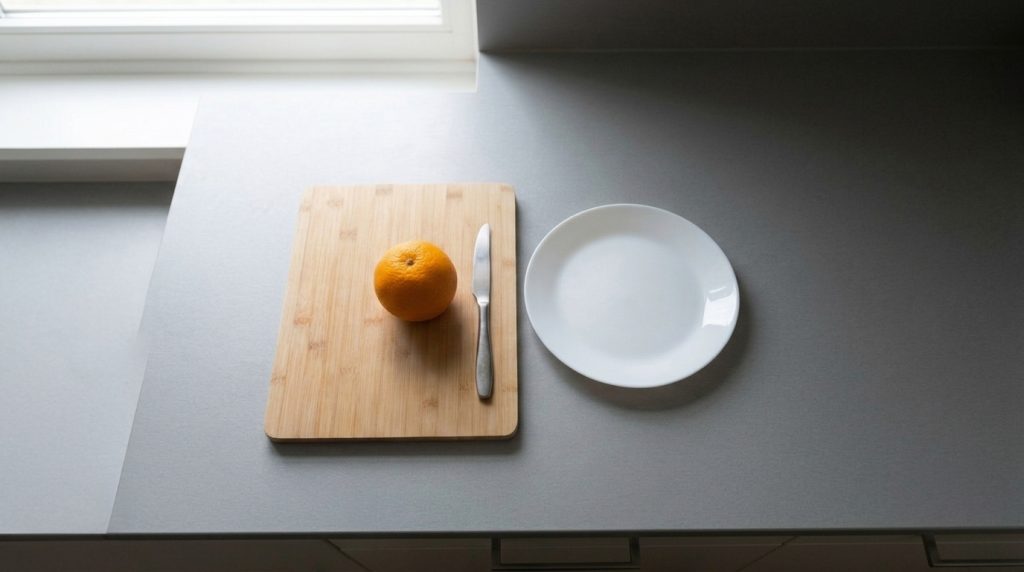
Set the orange on a cutting board and slice it in half through the middle.
-
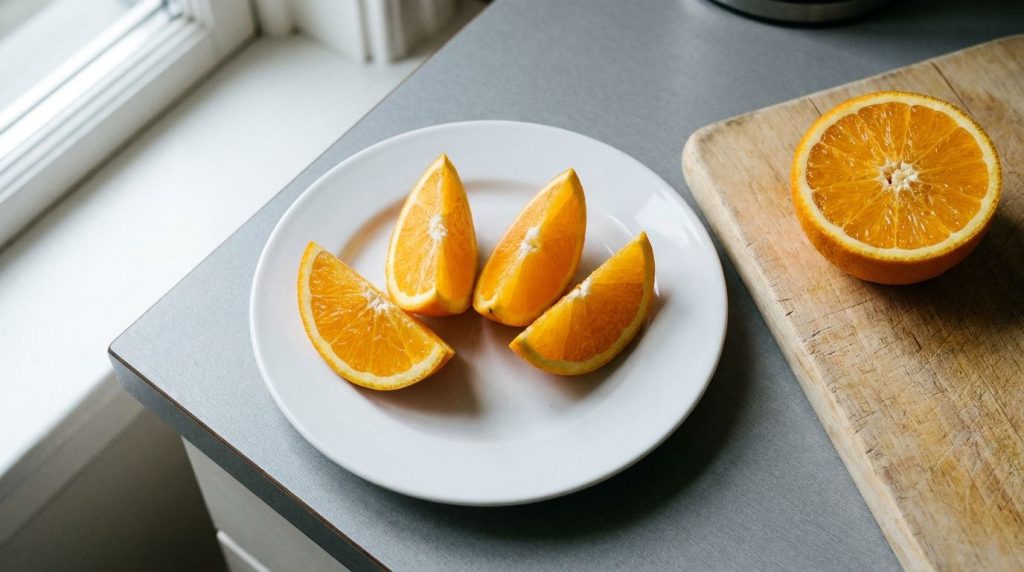
Lay each half flat, cut side up, so the segments are easy to see.
-
Cut one half into three wedges and arrange them on a plate.
-
Save the other half for later, wrapped and refrigerated, or eat it right away.
Tips for Making Oranges Part of Your Routine
Keep a few oranges in a bowl on the counter so they are the first thing you see. Pair wedges with a handful of unsalted nuts or a spoonful of plain yogurt for a snack that feels more filling. Packing wedges in a small container also makes oranges easy to take to the office or school.
Eating the whole fruit is a small habit, but it fits well with a balanced plate. Fruit, vegetables, whole grains, and a source of protein together make meals that are satisfying and easy to plan.
The Bottom Line
One medium orange offers a useful amount of vitamin C and fiber, and eating it in wedges keeps the fiber that juice leaves behind. It is a simple, affordable choice that works with the foods you already buy at the supermarket.