Tiny flies hovering over your houseplants are one of the most common annoyances in indoor gardening. Those little gnats are usually fungus gnats, and they are easier to clear than most people expect once you know what you are dealing with.
What Are Fungus Gnats?
Fungus gnats are small, dark flies that tend to appear around moist potting soil. The adults are mostly a nuisance because they fly up when you water or move a plant. The real problem is the larvae, which live in the top layer of wet soil and feed on organic matter and tender roots. Because both stages matter, the best approach treats the flies you can see and the larvae you cannot.
Why You Need to Tackle Both Stages
If you only catch the adults, the larvae will keep developing and new flies will keep appearing. If you only treat the soil, the adults already flying around will continue to lay eggs in the next few days. A simple plan that handles both stages is faster and more reliable, and it does not require expensive products.
Step One: Use a Yellow Sticky Trap
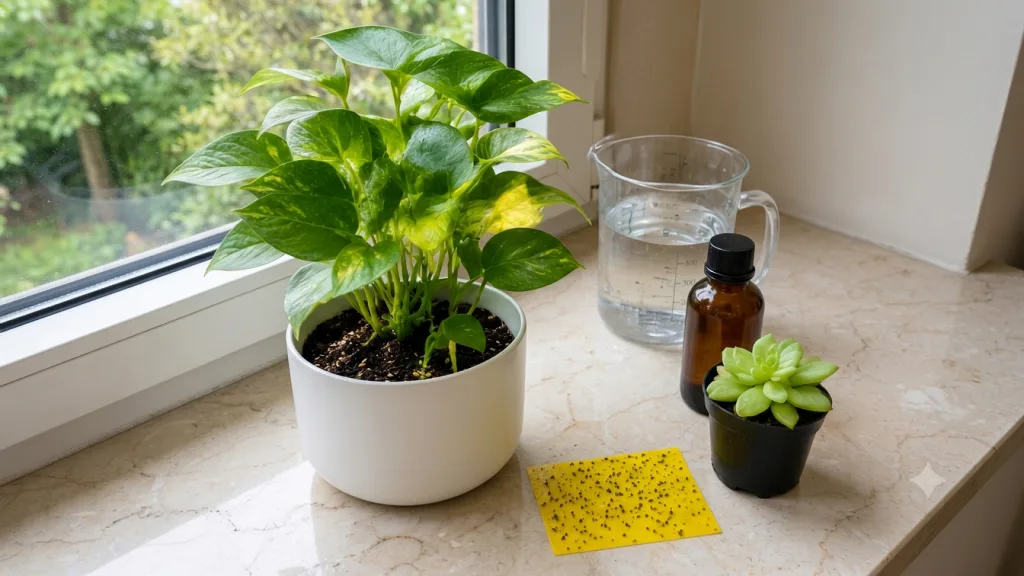
Yellow sticky cards work because fungus gnats are drawn to the color. Place one card on a short stake just above the soil, so the card stands upright near the plant. Check it every few days. When it becomes covered in specks, replace it with a clean card. A used card is a useful way to see how well your plan is working, so keep an eye on how many gnats it catches over time.
Step Two: Treat the Soil With a Hydrogen Peroxide Drench
The larvae live in wet soil, so the second step focuses on the root zone. Mix one part 3 percent hydrogen peroxide with four parts water. For example, you could combine 1 cup of peroxide with 4 cups of water. Pour the mix slowly over the soil around the plant stems until the soil is evenly moistened. The peroxide helps oxygenate the soil and can reduce larvae over time.
Use only this simple mix, and do not combine hydrogen peroxide with other cleaning products. After treating the soil, let the top inch dry out before watering again. Gnat larvae need consistently damp soil to survive, so drying the surface is one of the most effective habits you can build.
Add a Butterwort as a Natural Helper
Butterworts are carnivorous plants with flat rosettes of pale green, sticky leaves. Those leaves catch small insects, including fungus gnats, throughout the day. A butterwort will not replace a sticky card or a soil treatment, but it can be a helpful companion for a plant collection that is dealing with gnats. Place it in a bright spot near your affected plants and give it the light and water conditions it prefers.
Tips to Keep Gnats From Coming Back
- Water only when the top inch of soil feels dry.
- Empty saucers and decorative pots so water does not sit at the base of your plants.
- Choose a potting mix that drains well and avoid overwatering.
- Check new plants before bringing them home, since gnats often arrive in store-bought soil.
Your Simple Plan
Fungus gnats can be frustrating, but a clear plan makes them much easier to manage. Start with yellow sticky cards to catch the adults, treat the soil with a diluted hydrogen peroxide drench, and let the top inch dry between waterings. Add a butterwort if you want an extra natural helper. Have you tried any of these steps yet? Share your results in the comments, and we would love to hear what worked for your plants.