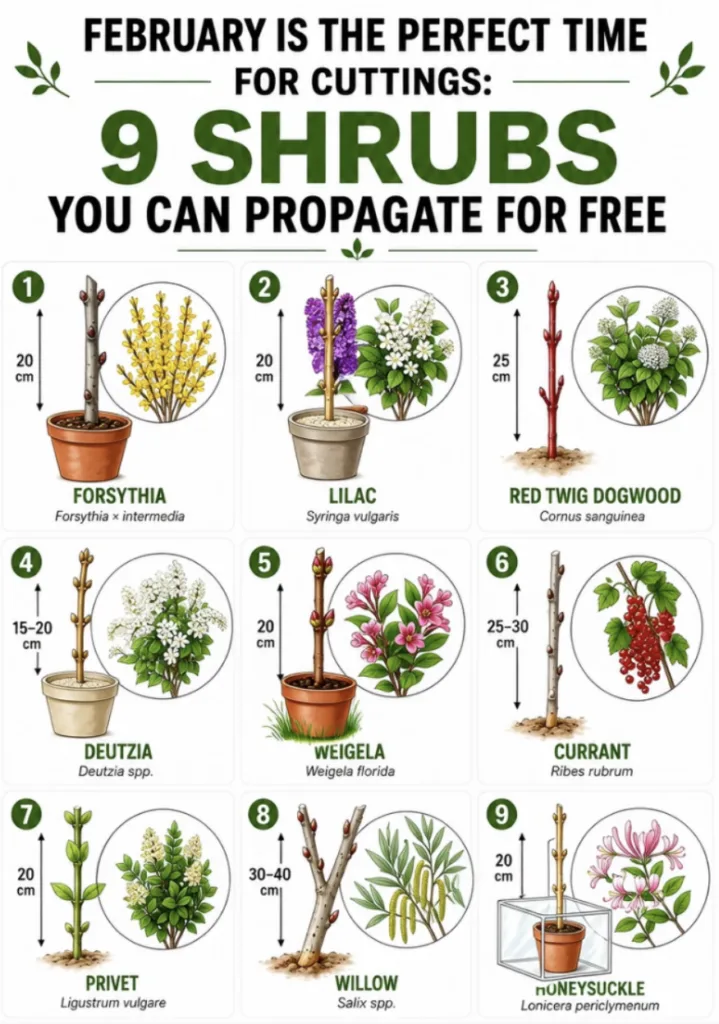
If you’ve ever wanted to expand your garden without spending a fortune, February is one of the best months to start. While many plants are still dormant, hardwood cuttings taken during late winter root more reliably, making this the perfect time to propagate many popular shrubs.
Whether you’re creating a colorful flower border, a wildlife-friendly hedge, or simply sharing plants with friends, these nine shrubs are excellent choices for propagation.
Why February Is Ideal for Hardwood Cuttings
Late winter offers several advantages for propagation:
- Plants are still dormant, reducing stress.
- Stored energy in the stems supports root development.
- Cooler temperatures help prevent excessive moisture loss.
- Cuttings can establish roots before vigorous spring growth begins.
Healthy, disease-free stems taken during this period often produce strong new plants with minimal effort.
How to Take Hardwood Cuttings
Follow these simple steps before choosing your shrub:
Step 1: Select Healthy Stems
Choose vigorous stems from last year’s growth.
Avoid:
- Diseased branches
- Damaged wood
- Very thin shoots
- Soft green growth
Step 2: Cut the Stem
Most hardwood cuttings should be around:
- 20–30 cm (8–12 inches) long
- Pencil thickness if possible
Make:
- A straight cut just below a node at the bottom.
- A slanted cut above the top bud so you know which end faces upward.
Step 3: Prepare the Cutting
Remove:
- Flowers
- Fruit
- Remaining leaves (if present)
Optional:
Dip the base into rooting hormone to improve rooting success.
Step 4: Plant
Insert approximately two-thirds of the cutting into a pot filled with:
- Sand
- Perlite
- Seed-starting mix
- Free-draining compost
Keep the soil lightly moist but never waterlogged.
Step 5: Wait
Most hardwood cuttings root over several months.
By spring or early summer, many will begin producing new leaves and shoots.
1. Forsythia
Scientific name: Forsythia × intermedia
Forsythia is famous for its brilliant yellow flowers that bloom before leaves appear.
Cutting Length
Approximately 20 cm
Growing Tips
- Roots quickly.
- Thrives in full sun.
- Excellent for hedges.
Difficulty:
⭐ Very Easy
2. Lilac
Scientific name: Syringa vulgaris
Lilacs produce fragrant spring flowers loved by gardeners and pollinators.
Cutting Length
Around 20 cm
Best Conditions
- Full sun
- Well-drained soil
- Moderate moisture
Lilacs take longer to root but reward patience with beautiful blooms.
Difficulty:
⭐⭐ Moderate
3. Red Twig Dogwood
Scientific name: Cornus sanguinea
This shrub is prized for its striking red stems that brighten winter landscapes.
Cutting Length
Approximately 25 cm
Why Grow It?
- Winter color
- Wildlife habitat
- Fast-growing
Difficulty:
⭐ Easy
4. Deutzia
Scientific name: Deutzia spp.
Deutzia produces masses of delicate white flowers during late spring.
Cutting Length
15–20 cm
Benefits
- Compact growth
- Great for borders
- Low maintenance
Difficulty:
⭐ Easy
5. Weigela
Scientific name: Weigela florida
Weigela is known for its trumpet-shaped pink flowers that attract hummingbirds and bees.
Cutting Length
Around 20 cm
Growing Conditions
- Full sun
- Average garden soil
- Regular watering during establishment
Difficulty:
⭐ Easy
6. Currant
Scientific name: Ribes rubrum
Red currants are productive fruiting shrubs ideal for edible gardens.
Cutting Length
25–30 cm
Advantages
- Produces edible berries
- Easy to propagate
- Cold hardy
Difficulty:
⭐ Very Easy
7. Privet
Scientific name: Ligustrum vulgare
Privet is widely used for formal hedges because it grows quickly and tolerates pruning.
Cutting Length
Around 20 cm
Best Uses
- Privacy screens
- Garden boundaries
- Windbreaks
Difficulty:
⭐ Very Easy
8. Willow
Scientific name: Salix spp.
Willows are among the easiest woody plants to propagate.
Cutting Length
30–40 cm
Interesting Fact
Willow stems naturally contain rooting compounds that encourage root development.
Difficulty:
⭐⭐⭐⭐⭐ Extremely Easy
9. Honeysuckle
Scientific name: Lonicera periclymenum
Honeysuckle vines produce wonderfully fragrant flowers that attract bees, butterflies, and hummingbirds.
Cutting Length
Around 20 cm
Growing Tips
- Provide support for climbing varieties.
- Plant in full sun or partial shade.
- Keep evenly moist during rooting.
Difficulty:
⭐⭐ Easy
Tips for Better Rooting Success
To maximize your success:
- Use clean, sharp pruning shears.
- Label each cutting.
- Keep soil slightly moist.
- Avoid direct hot afternoon sun.
- Protect pots from severe freezing if temperatures drop well below freezing.
Patience is key—many hardwood cuttings remain dormant before suddenly producing new shoots in spring.
Common Mistakes to Avoid
Many beginners lose cuttings because they:
- Plant them upside down.
- Let the soil dry out completely.
- Use overly rich potting soil.
- Take cuttings from weak or diseased plants.
- Overwater, causing rot.
Avoiding these mistakes greatly improves rooting success.
Final Thoughts
Propagating shrubs from hardwood cuttings is one of the easiest and most rewarding gardening projects. With just a few healthy stems and a little patience, you can grow beautiful flowering shrubs, edible fruit bushes, and attractive hedges at virtually no cost.
Whether you choose bright Forsythia, fragrant Lilac, colorful Red Twig Dogwood, productive Currant, or incredibly easy Willow, February offers the perfect opportunity to multiply your favorite plants before the growing season begins.
Start now, and by next year, your garden could be filled with healthy new shrubs grown entirely from cuttings you propagated yourself. 🌿