Our gut health is foundational to our overall well-being, influencing everything from our mood and energy levels to our immune system. Yet, many of us struggle with common digestive discomforts like constipation, bloating, and inflammation. These aren’t just minor annoyances; they can significantly impact our quality of life and signal deeper imbalances within our digestive system.
The good news? Your plate holds incredible power! What you choose to eat daily can be your strongest ally in transforming gut health. By focusing on specific nutrient-rich foods, you can actively reduce these common issues, foster a thriving gut microbiome, and experience a profound shift towards better health and vitality.
Understanding Your Gut’s Challenges
Before diving into the foods, it’s helpful to understand what contributes to these common gut issues:
- Constipation: Often linked to a lack of fiber, dehydration, or slow gut motility. It means infrequent bowel movements or difficulty passing stool.
- Bloating: A feeling of fullness, tightness, or swelling in the abdomen, often caused by gas production from certain foods, poor digestion, or an imbalance in gut bacteria.
- Inflammation: Chronic inflammation in the gut lining can be triggered by dietary choices, stress, food sensitivities, or an imbalanced microbiome, potentially leading to discomfort and more serious conditions over time.
Let’s explore how strategic food choices can address each of these challenges and nurture a healthier gut.
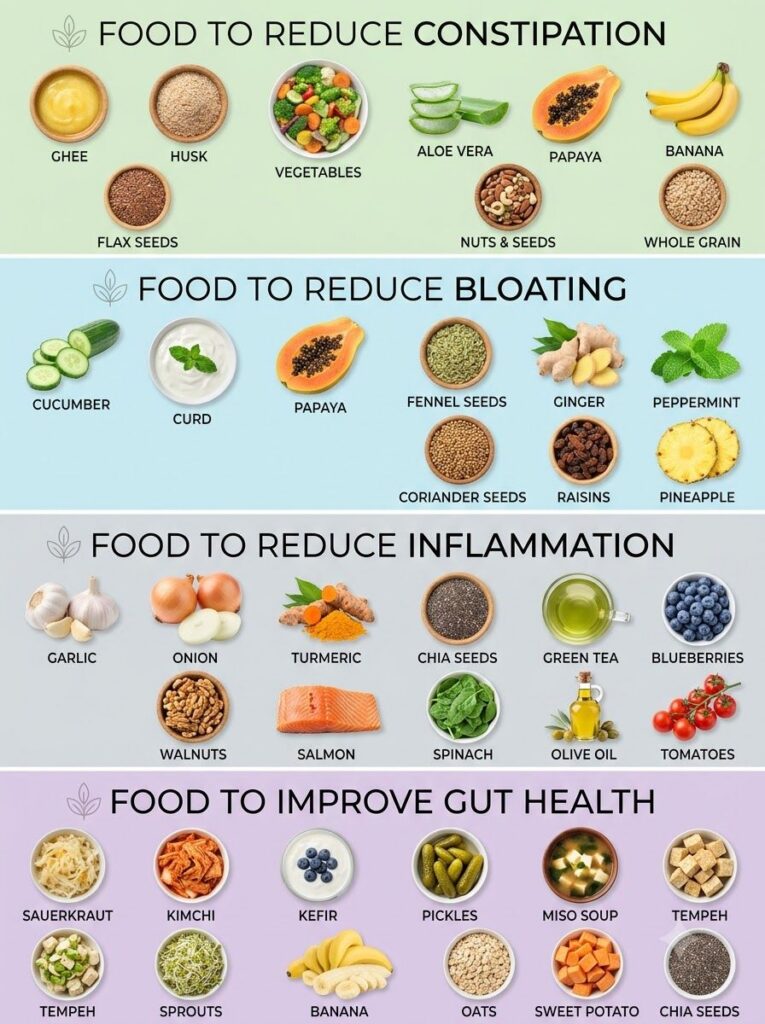
Foods to Reduce Constipation
Fiber is the hero when it comes to combating constipation. It adds bulk to stool, making it easier to pass, and helps regulate bowel movements. There are two main types of fiber:
- Soluble fiber: Dissolves in water, forming a gel-like substance that softens stool. Found in oats, apples, pears, and psyllium.
- Insoluble fiber: Adds bulk to stool and helps food pass more quickly through the digestive tract. Found in whole grains, vegetables, and fruit skins.
Key Foods for Constipation Relief:
- Pears and Kiwis: Rich in fiber and water content. Kiwis contain an enzyme called actinidin, which aids digestion.
- Flaxseeds: An excellent source of soluble and insoluble fiber, helping to bulk up stool and promote regularity. Add ground flaxseeds to smoothies, yogurt, or oatmeal.
- Oats: A fantastic source of soluble fiber (beta-glucan), which can help improve stool consistency.
- Prunes: Well-known for their natural laxative effect due to their high fiber and sorbitol content.
Foods to Reduce Bloating
Bloating often signals gas production or poor digestion. Certain foods and herbs can help calm the digestive system, reduce gas, and alleviate discomfort.
Key Foods for Bloating Relief:
- Ginger: A powerful anti-inflammatory and anti-spasmodic herb that can help relax the muscles of the digestive tract and reduce gas. Enjoy it as tea or add to meals.
- Peppermint: Known for its ability to relax intestinal muscles, which can help ease spasms and trapped gas. Peppermint tea is particularly effective.
- Fennel: Both fennel seeds and the bulb can help relax digestive muscles and reduce gas. Chew on a few fennel seeds after a meal or add sliced fennel to salads.
- Bananas: Rich in potassium, which helps counteract sodium and reduce water retention, a common contributor to bloating. They also provide prebiotics.
- Papaya: Contains papain, an enzyme that aids in protein digestion, potentially reducing gas and bloating.
Foods to Reduce Inflammation
Chronic inflammation in the gut can lead to various health issues. Incorporating anti-inflammatory foods can help soothe your gut lining and support overall healing.
Key Anti-Inflammatory Foods:
- Turmeric: Contains curcumin, a potent anti-inflammatory compound. Best absorbed with black pepper.
- Leafy Greens (Spinach, Kale): Packed with antioxidants, vitamins, and minerals that combat inflammation and support gut healing.
- Berries (Blueberries, Raspberries): High in antioxidants and phytonutrients that help reduce oxidative stress and inflammation in the gut.
- Fatty Fish (Salmon, Mackerel – while not explicitly in the infographic, these are excellent for inflammation and good to mention for comprehensive advice): Rich in Omega-3 fatty acids, powerful anti-inflammatory agents that support gut barrier integrity.
Foods to Improve Overall Gut Health
A truly healthy gut relies on a diverse and balanced microbiome – the trillions of bacteria living in your digestive tract. Probiotic and prebiotic foods are crucial for fostering this balance.
Key Foods for a Thriving Microbiome:
- Fermented Foods (Yogurt, Kimchi, Sauerkraut, Kefir): Excellent sources of beneficial probiotics, which introduce healthy bacteria to your gut. Choose plain, unsweetened varieties where possible.
- Garlic and Onions: Act as prebiotics, providing food for the beneficial bacteria in your gut. They help these good bacteria flourish.
- Asparagus: Another fantastic source of prebiotic fiber, supporting a healthy gut environment.
- Whole Grains (Brown Rice, Quinoa, Whole Oats): Provide complex carbohydrates and fiber that feed beneficial gut bacteria and support overall digestive function.
Putting It All Together: A Holistic Approach
Healing your gut is a journey, not a sprint. Incorporating these foods consistently into your diet is key. Remember these additional tips:
- Stay Hydrated: Water is essential for healthy digestion and fiber function.
- Chew Thoroughly: Digestion begins in the mouth. Chewing well can significantly reduce the burden on your digestive system.
- Listen to Your Body: Pay attention to how different foods make you feel and adjust your diet accordingly.
- Reduce Processed Foods: These often contain ingredients that can disrupt gut health and promote inflammation.
Empower your gut health journey by making conscious food choices. By embracing these gut-friendly foods, you’re not just alleviating discomfort; you’re building a foundation for long-term health, vitality, and a truly better self.