Tossing and turning, only to be interrupted by a sudden urge to visit the bathroom? You’re not alone. Nighttime bathroom trips can significantly disrupt your sleep quality, leaving you feeling groggy and unrefreshed the next day. While staying hydrated throughout the day is crucial for overall health, the timing and type of your evening fluid intake can make a big difference.
The good news is, you don’t have to choose between hydration and uninterrupted sleep. Certain hydrating foods can help you maintain fluid balance and deliver essential nutrients without causing those frequent nocturnal awakenings. Let’s explore 9 amazing foods that can help you unlock better, more consistent sleep!
Why Evening Hydration Matters for Sleep
Our bodies need water to function optimally, but drinking too much liquid close to bedtime can stimulate your kidneys, leading to increased urine production and those dreaded nighttime bathroom breaks (a condition sometimes referred to as nocturia). The key is to get your hydration from sources that release water slowly, coupled with beneficial nutrients that support overall bodily functions, including sleep.
The foods we’re about to explore are rich in water, but they also come packed with electrolytes, fiber, and other compounds that support fluid balance and relaxation, making them ideal choices for your evening diet.
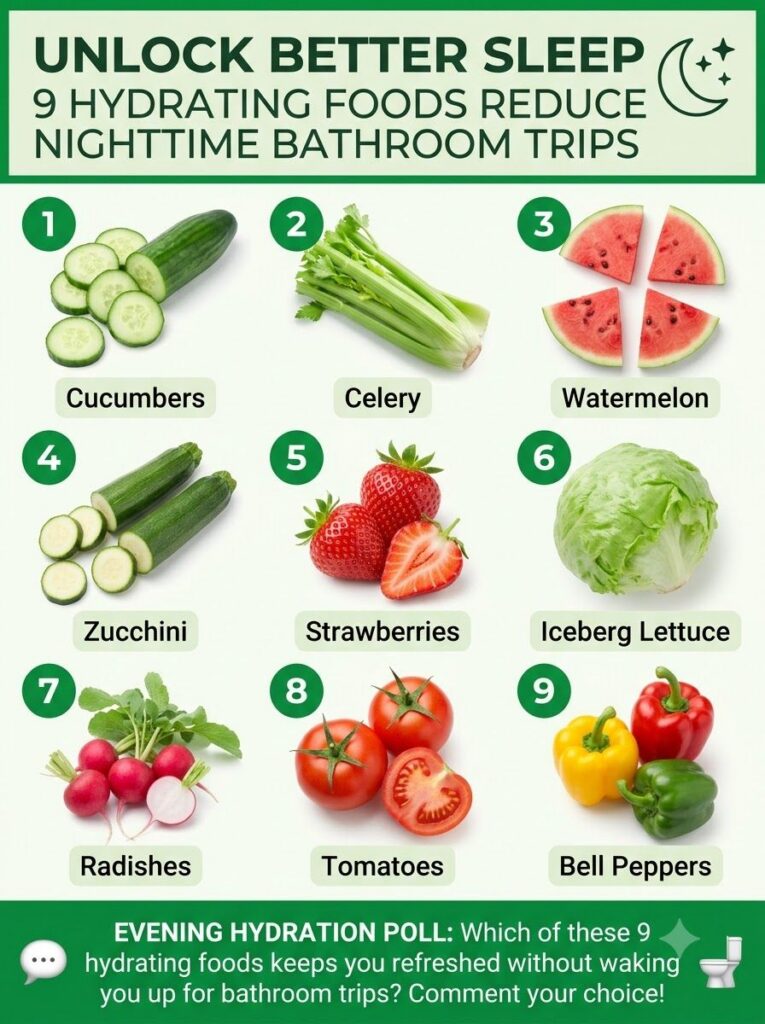
9 Hydrating Foods to Help You Sleep Soundly
1. Cucumber
Known for its refreshing crunch, cucumber is over 95% water. It’s also low in calories and provides small amounts of electrolytes like potassium, which are crucial for maintaining fluid balance in the body. Enjoying a few slices in your late afternoon snack can contribute to gentle hydration.
2. Watermelon
As its name suggests, watermelon is incredibly hydrating, consisting of about 92% water. It also contains electrolytes like potassium and magnesium. While delicious, due to its very high water volume, it’s best consumed in moderation a few hours before bed to avoid overdoing it.
3. Celery
Another water-rich vegetable, celery is about 95% water and contains essential electrolytes. Its natural fiber content also aids digestion, promoting overall comfort which can contribute to better sleep. Try it with a light, healthy dip in the early evening.
4. Lettuce
Especially varieties like romaine and iceberg, lettuce boasts a very high water content. Beyond hydration, some types of lettuce, particularly red romaine, contain compounds called lactucarium, which have mild sedative properties that can promote relaxation and aid in sleep.
5. Strawberries
These sweet berries are approximately 91% water and are packed with Vitamin C and antioxidants. They offer a delightful way to stay hydrated while also providing immune support. A small bowl of strawberries can be a perfect light evening treat.
6. Peaches
Juicy and delicious, peaches are about 89% water. They also provide vitamins A and C, and a good amount of fiber. Their natural sweetness can satisfy cravings without being too heavy, contributing to gentle hydration and nutrient intake.
7. Bell Peppers
All colors of bell peppers are hydrating, with green bell peppers being about 92% water. They are also an excellent source of Vitamin C and antioxidants. Adding them to a salad or a light stir-fry for dinner can boost your hydration and nutrient intake.
8. Spinach
This leafy green powerhouse is about 91% water and is rich in magnesium, a mineral known for its muscle-relaxing and sleep-promoting properties. Spinach also contains potassium, which is vital for maintaining fluid balance. A small serving of cooked spinach can be a great addition to your evening meal.
9. Zucchini
Zucchini is another fantastic hydrating vegetable, composed of about 95% water. It’s versatile, low in calories, and provides essential electrolytes and fiber. Enjoy it steamed, grilled, or added to a light soup for a hydrating and satisfying evening dish.
Practical Tips for Incorporating These Foods
- Timing is Key: Aim to consume these hydrating foods as part of your dinner or as a late afternoon snack, giving your body time to process the fluids before you settle down for the night.
- Balanced Meals: Integrate these foods into balanced meals that include lean protein and complex carbohydrates to support satiety and stable blood sugar, which also contributes to better sleep.
- Listen to Your Body: Pay attention to how your body responds to different foods and adjust your intake accordingly.
Beyond Hydrating Foods: Other Sleep-Enhancing Habits
While these foods can certainly help, a holistic approach to sleep hygiene is always best. Remember to:
- Create a consistent sleep schedule.
- Ensure your bedroom is dark, quiet, and cool.
- Limit caffeine and alcohol, especially in the evening.
- Engage in relaxing activities before bed, like reading or a warm bath.
Embrace Better Sleep
By thoughtfully choosing your evening foods, you can support your body’s hydration needs while minimizing disruptions to your precious sleep. Incorporating these 9 hydrating and nutrient-rich foods into your routine is a simple yet effective step towards achieving more restful nights and waking up feeling truly refreshed. Sweet dreams!