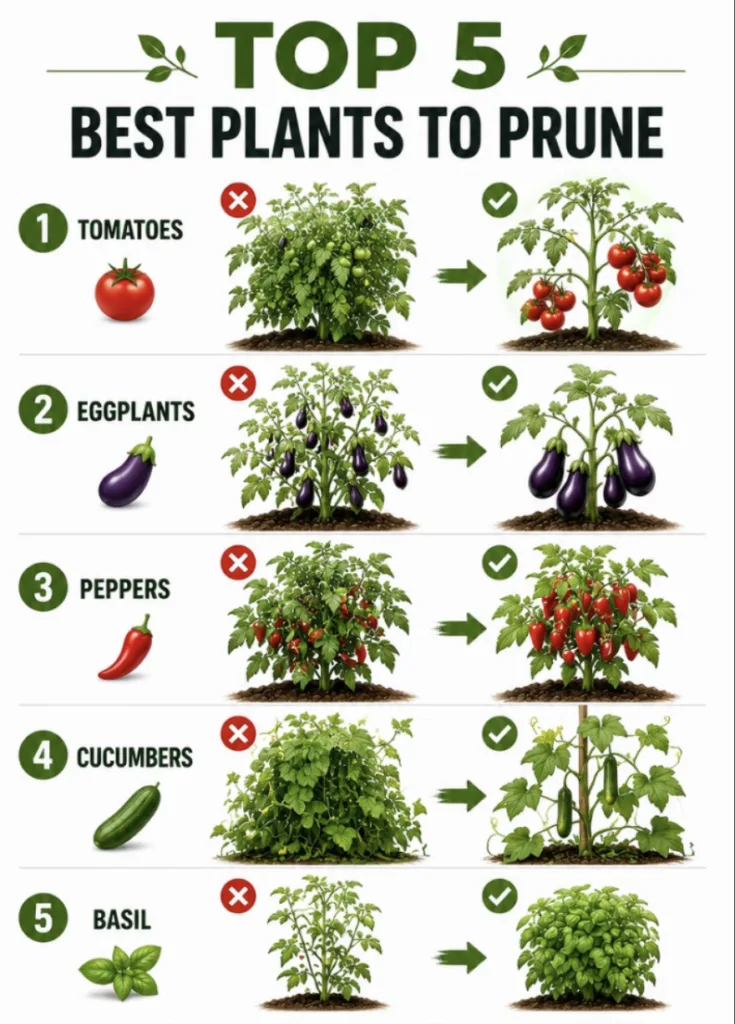
Pruning is one of the simplest ways to help garden plants grow stronger, stay healthier, and produce a better harvest. However, each plant needs a slightly different pruning method. Cutting too much—or cutting in the wrong place—can slow growth instead of improving it.
This guide explains how to prune five popular plants: tomatoes, eggplants, peppers, cucumbers, and basil.
1. How to Prune Tomatoes
Tomato plants often produce small shoots called suckers. These grow between the main stem and a side branch.
For indeterminate tomatoes, removing some suckers can improve airflow and make the plant easier to manage.
What to remove
Remove:
- Suckers growing low on the plant
- Leaves touching the soil
- Yellow, damaged, or diseased leaves
- Excess growth that blocks airflow
Use your fingers to pinch off small suckers. For thicker stems, use clean pruning shears.
What to avoid
Do not remove too many healthy leaves at once. Tomato leaves help protect the fruit from strong sunlight and produce energy for the plant.
Expected result
Proper pruning can create:
- Better airflow
- Easier harvesting
- Lower disease risk
- Larger, healthier tomatoes
Determinate tomato varieties usually need less pruning because they grow to a fixed size and produce most of their fruit within a shorter period.
2. How to Prune Eggplants
Eggplants can become crowded when too many branches grow from the main stem. A more open structure allows sunlight and air to reach the fruit.
What to remove
Remove:
- Weak shoots near the base
- Branches growing inward
- Yellow or damaged leaves
- Small shoots below the first strong fork
Keep around three to four strong main stems.
What to avoid
Do not remove too many leaves during hot weather. The fruit needs some shade to avoid sun damage.
Expected result
A properly pruned eggplant may produce:
- Larger fruit
- Stronger branches
- Better airflow
- Easier harvesting
Support heavy branches with stakes or a cage so they do not break under the weight of the fruit.
3. How to Prune Pepper Plants
Pepper plants do not always require heavy pruning. Light pruning can still help remove unhealthy growth and improve the plant’s shape.
What to remove
Remove:
- Damaged or diseased leaves
- Shoots growing close to the soil
- Weak inward-facing branches
- Leaves that block airflow in a very dense plant
Some gardeners pinch the growing tip of a young pepper plant to encourage branching. This may work in long growing seasons, but it can delay fruit production in shorter seasons.
What to avoid
Avoid heavy pruning when the plant is flowering or carrying many peppers. Removing too much foliage can reduce photosynthesis and expose fruit to sunscald.
Expected result
Careful pruning can support:
- Stronger plant structure
- Improved airflow
- Easier pest inspection
- Better access during harvest
4. How to Prune Cucumbers
Cucumber plants can quickly become tangled, especially when grown on a trellis. Removing selected side shoots can keep the vines manageable.
What to remove
Remove:
- Yellow or diseased leaves
- Leaves touching wet soil
- Weak side shoots near the base
- Excess growth that creates a dense, tangled canopy
For trellised cucumbers, train one main vine upward and selectively remove extra shoots near the bottom.
What to avoid
Do not remove every side shoot. Many cucumber flowers and fruits develop on lateral growth, depending on the variety.
Avoid cutting the main growing tip unless the vine has reached the top of its support.
Expected result
Proper cucumber pruning can provide:
- Better airflow
- Cleaner fruit
- Easier harvesting
- Less crowded vines
Always handle cucumber vines gently because their stems can break easily.
5. How to Prune Basil
Basil responds extremely well to regular pruning. Cutting it correctly encourages the plant to grow wider instead of becoming tall and thin.
Where to cut
Find a pair of healthy leaves on the stem. Cut or pinch the stem just above that leaf node.
Two new branches will usually grow from the node below the cut.
What to remove
Remove:
- The top growing tips
- Flower buds as soon as they appear
- Damaged or yellow leaves
- Long, weak stems
What to avoid
Do not remove only the largest bottom leaves. This can leave the plant tall and sparse.
Avoid cutting more than about one-third of the plant at one time.
Expected result
Regular basil pruning encourages:
- Bushier growth
- More side branches
- More leaves to harvest
- Delayed flowering
Harvest basil frequently to keep it productive throughout the growing season.
Essential Pruning Tips
Use clean, sharp tools to create smooth cuts and reduce the risk of spreading disease. Prune when the leaves are dry, preferably in the morning, and remove diseased material from the garden instead of adding it to a home compost pile.
Start slowly. It is safer to remove a small amount, observe the plant’s response, and prune again later than to cut too much at once.
Final Thoughts
The best pruning method depends on the plant, variety, climate, and growing conditions. Tomatoes benefit from selective sucker removal, eggplants from keeping a few strong stems, peppers from light shaping, cucumbers from controlled vine management, and basil from frequent pinching above leaf nodes.
When done correctly, pruning creates healthier plants, improves airflow, and makes harvesting much easier.