Beyond Digestion: The Incredible Health Benefits of High-Fiber Foods
When you think of fiber, the first thing that often comes to mind is digestive health. While it’s true that fiber plays a crucial role in keeping things running smoothly, its benefits extend far beyond just your gut. Incorporating high-fiber foods into your daily diet can have a profound impact on your overall wellness, from managing your weight and stabilizing energy levels to supporting a thriving gut microbiome.
Many people don’t get enough fiber in their daily diet. The recommended daily intake is about 25 grams for women and 38 grams for men, but most people consume significantly less. Let’s explore why fiber is so important and how you can easily boost your intake.
What is Fiber and Why is it Important?
Dietary fiber is a type of carbohydrate that your body cannot digest. Unlike other carbohydrates that are broken down into sugar molecules, fiber passes through the body relatively intact. There are two main types of fiber, each offering unique health benefits:
- Soluble Fiber: This type of fiber dissolves in water to form a gel-like material. It is commonly associated with helping to lower blood cholesterol and glucose levels. You can find soluble fiber in oats, peas, beans, apples, citrus fruits, carrots, and barley.
- Insoluble Fiber: This type of fiber does not dissolve in water. It adds bulk to your stool and helps food pass more quickly through your stomach and intestines. Whole-wheat flour, wheat bran, nuts, beans, and vegetables like cauliflower, green beans, and potatoes are good sources of insoluble fiber.
Key Benefits of a Fiber-Rich Diet
Beyond promoting regular bowel movements, a diet rich in fiber is associated with a wealth of health advantages.
Digestive Health
Fiber is essential for maintaining a healthy digestive system. Insoluble fiber adds bulk to stool, which can help prevent constipation and promote regularity. Soluble fiber, on the other hand, can help to soften stool, making it easier to pass and potentially easing symptoms of certain digestive conditions.
Gut Microbiome Support
Your gut is home to trillions of bacteria, collectively known as the gut microbiome, which play a vital role in your health. Fiber, particularly soluble fiber, acts as a prebiotic, feeding the beneficial bacteria in your gut. A healthy gut microbiome is associated with improved immunity, mood regulation, and nutrient absorption.
Satiety and Weight Management
Foods high in fiber tend to be more filling than low-fiber foods. This is because fiber adds bulk to your meals and can slow down the emptying of your stomach, helping you feel fuller for longer. This increased satiety can naturally lead to consuming fewer calories, which may support healthy weight management goals.
Blood Sugar Regulation and Energy
Soluble fiber can help slow down the absorption of sugar into your bloodstream, which can help regulate blood sugar levels. This can prevent rapid spikes and crashes in blood glucose, leading to more stable energy levels throughout the day and potentially reducing the risk of type 2 diabetes.
Top High-Fiber Foods to Include in Your Diet
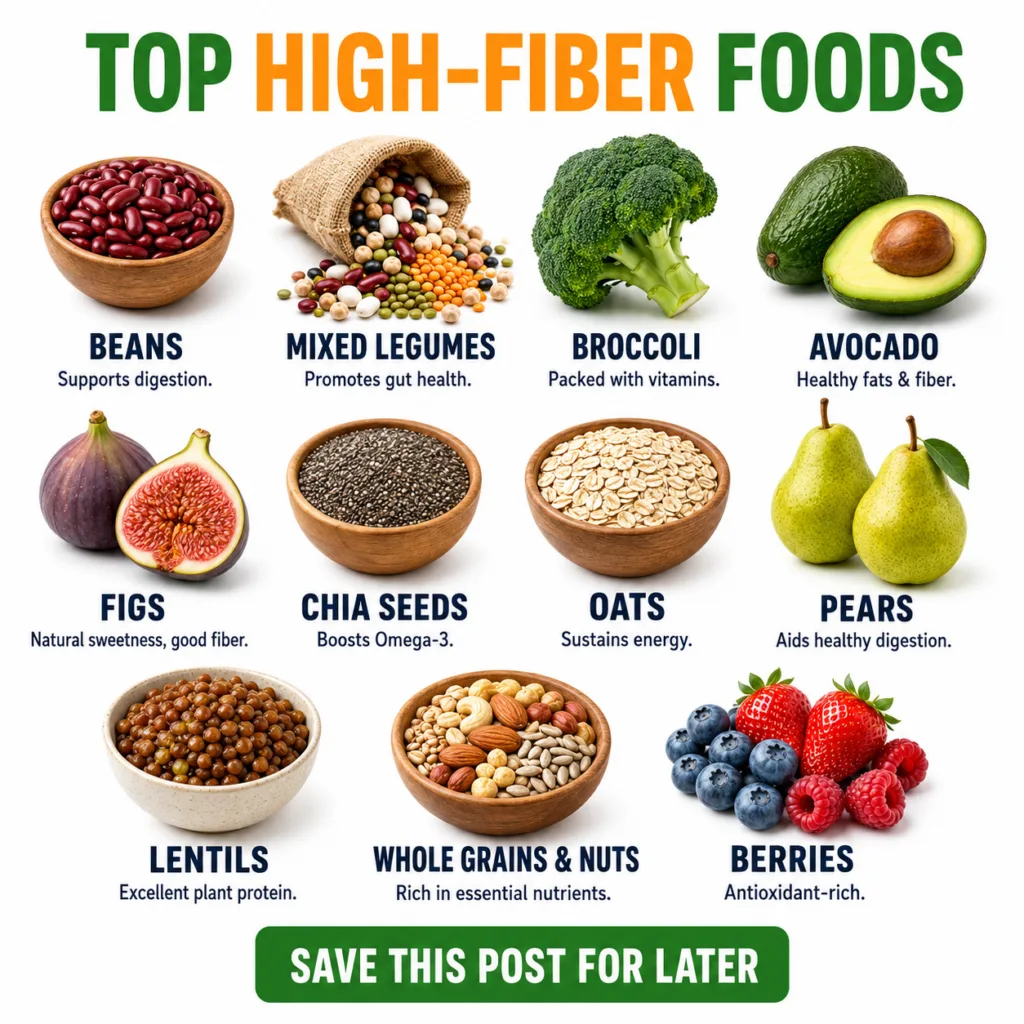
Ready to boost your fiber intake? Here are some delicious and nutritious high-fiber foods that you can easily incorporate into your meals:
Legumes
- Beans: Black beans, kidney beans, and navy beans are packed with both soluble and insoluble fiber, making them excellent choices.
- Lentils: A versatile source of fiber, protein, and essential minerals, perfect for soups, stews, or salads.
- Mixed Legumes: A combination of different beans and lentils offers a diverse range of nutrients and fiber.
Whole Grains
- Oats: A fantastic source of soluble fiber (beta-glucan), oats are perfect for breakfast porridge or baked goods.
- Whole Grains & Nuts: Incorporate whole-wheat bread, brown rice, quinoa, and a handful of almonds, walnuts, or pecans for an added fiber boost.
Fruits
- Berries: Raspberries, blackberries, and strawberries are not only delicious but also rich in fiber and antioxidants.
- Pears: Enjoy a juicy pear with its skin on for maximum fiber content.
- Figs: These sweet fruits are surprisingly high in fiber and can be a great addition to salads or desserts.
- Avocado: While often thought of as a healthy fat source, avocado also provides a good amount of fiber.
Vegetables
- Broccoli: A cruciferous powerhouse, broccoli offers fiber along with a host of vitamins and minerals.
- Other Green Veggies: Spinach, kale, and Brussels sprouts are also excellent sources.
Seeds
- Chia Seeds: These tiny seeds are incredibly rich in soluble fiber, which can absorb water and form a gel, aiding digestion and promoting fullness.
Easy Ways to Boost Your Fiber Intake
Integrating more fiber into your diet doesn’t have to be complicated. Here are some simple tips:
- Start Your Day with Fiber: Opt for oatmeal, whole-grain cereal, or add berries and chia seeds to your yogurt.
- Snack Smart: Choose fruits, vegetables, nuts, or air-popped popcorn over processed snacks.
- “Whole” Up Your Grains: Swap white bread and pasta for whole-wheat versions.
- Legumes for the Win: Add beans or lentils to soups, salads, chilis, or even dips.
- Don’t Peel Your Produce: The skin of many fruits and vegetables contains a good amount of fiber, so eat it when possible (e.g., apples, pears, potatoes).
Embracing a diet rich in high-fiber foods is a simple yet powerful step towards better health. From supporting your digestion and gut health to helping manage weight and stabilize energy, the benefits are truly remarkable. Make fiber your friend, and your body will thank you!
Disclaimer: This article is for informational purposes only and is not intended to be a substitute for professional medical advice, diagnosis, or treatment. Always seek the advice of your physician or other qualified health provider with any questions you may have regarding a medical condition.