When you think of sugar, you probably picture candy, soda, or desserts. But what if we told you that hidden sugar is lurking in many of your everyday foods, often in surprising amounts? Many seemingly innocent items on your grocery list contain more added sugar than you might expect, turning your healthy intentions into a silent sugar rush.
Understanding where these hidden sugars hide is the first step toward making more informed choices for your well-being. From savory sauces to convenient breakfast options and even ‘healthy’ snacks, the sweet deception can be found almost everywhere. In this article, we’ll unmask the surprising sugar content in common foods and empower you with the knowledge to navigate the grocery aisles more wisely.
Get ready to uncover the truth behind what you’re eating and learn how to reduce your intake of these stealthy sweeteners, leading to a healthier, more vibrant you.
The Sweet Deception: Why Hidden Sugar Matters
Too much sugar can harm your health. It’s not just about cavities; excessive sugar intake is linked to a range of health issues, including weight gain, increased risk of type 2 diabetes, heart disease, and inflammation. The challenge lies in the fact that sugar isn’t always obvious. Food manufacturers often add sugar to enhance flavor, act as a preservative, or improve texture, making it difficult for consumers to track their intake.
Being aware of these hidden sources is crucial for managing your overall sugar consumption and supporting your long-term health. It’s about empowering yourself with knowledge to make conscious decisions about what goes into your body.
Unmasking the Culprits: Surprising Sugar Content in Common Foods
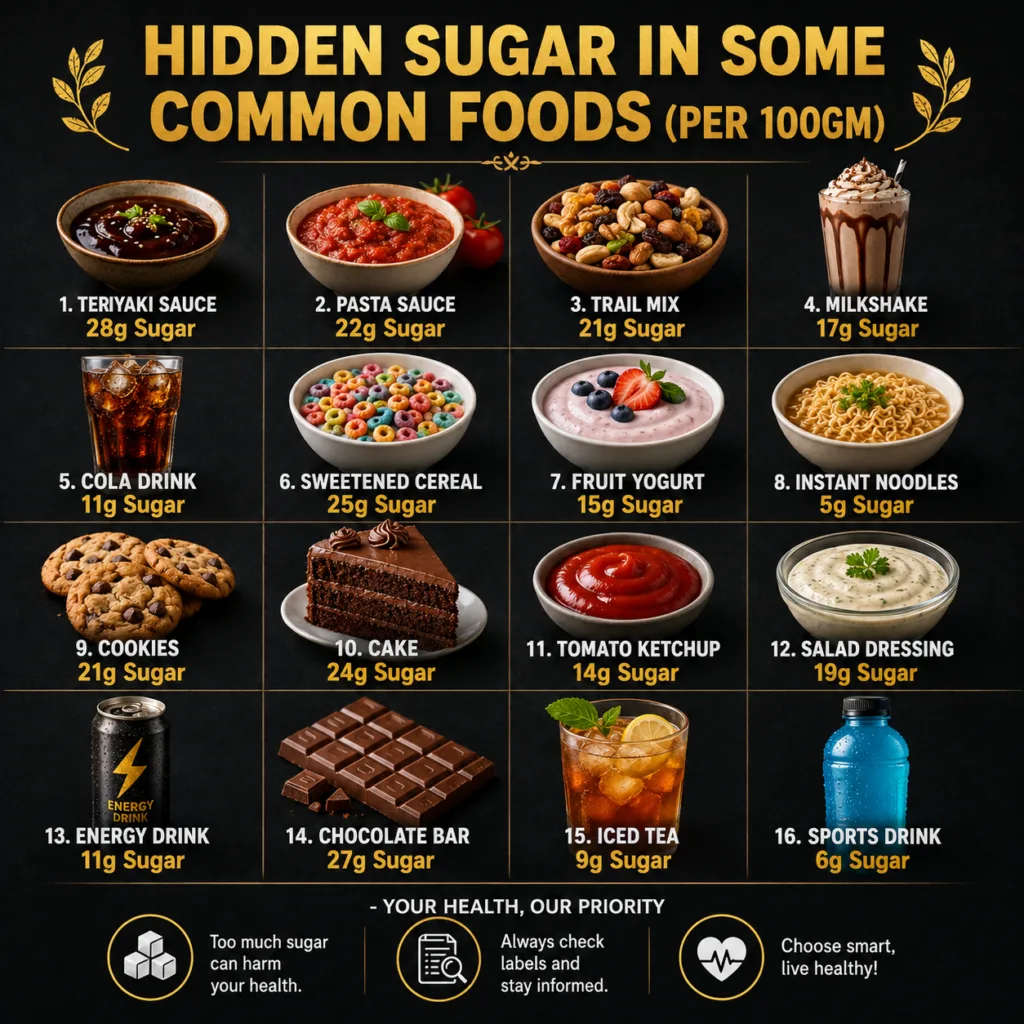
Let’s dive into some common foods and reveal their surprising sugar content per 100 grams, as highlighted in our infographic. You might be shocked by what you find.
Condiments & Sauces: The Savory Sweeteners
- Teriyaki Sauce (22g): Often used in marinades and stir-fries, this savory sauce packs a significant sugar punch. That’s more than five teaspoons of sugar in just 100 grams!
- Ketchup (21.7g): A staple condiment, ketchup is a surprising source of sugar. Many brands add high fructose corn syrup or other sugars to balance the acidity of tomatoes.
- Baked Beans (18.2g): A comforting side dish, baked beans often contain a sweet sauce that contributes to a high sugar count.
- Pasta Sauce (8.5g): While seemingly healthy, many jarred pasta sauces include added sugars to reduce acidity and enhance flavor.
- Salad Dressing (5g): Even creamy or vinaigrette dressings can have hidden sugars, designed to make your greens more palatable.
Breakfast & Snacks: Sweet Starts and Stealthy Treats
- Instant Coffee (Mix) (17.5g): For those who enjoy a quick coffee fix, instant coffee mixes often come pre-sweetened with a considerable amount of sugar.
- Peanut Butter (16.5g): While a good source of protein and healthy fats, many popular peanut butter brands contain added sugars and oils. Opt for natural varieties with just peanuts and salt.
- Granola (14.5g): Marketed as a healthy breakfast, many granolas are high in added sugars to bind ingredients and create clusters. Always check the label for sugar content and consider homemade granola recipes.
- Fruit Yogurt (13g): Don’t let the ‘fruit’ fool you; most flavored fruit yogurts are loaded with added sugars, often exceeding the benefits of the fruit itself. Plain yogurt with fresh fruit is a much better option.
- Protein Bar (10.5g): Designed for a quick energy boost or post-workout recovery, many protein bars are essentially candy bars in disguise, with high sugar content to improve taste.
- Oatmeal (Instant) (7.4g): Convenient instant oatmeal packets often contain added sugars and artificial flavors, making them less healthy than traditional rolled oats.
- Trail Mix (7g): While nuts and seeds are healthy, many commercial trail mixes include candied fruits, chocolate, or yogurt-covered pieces that significantly increase the sugar count.
- Bread (White) (5.5g): Even common white bread contains added sugars to aid in yeast activation, browning, and improving shelf life.
Beverages: Drinking Your Sugar
- Iced Tea (11g): A refreshing drink, but many bottled iced teas are heavily sweetened, turning them into sugary beverages.
- Cola (10.6g): It’s widely known that sodas are high in sugar, but this serves as a potent reminder of just how much you might be consuming.
- Energy Drink (10g): While providing a jolt of energy, these drinks are also notorious for their high sugar content, which can lead to a crash later.
Beyond the Obvious: Understanding Sugar’s Impact on Health
The health consequences of excessive sugar consumption extend far beyond what most people realize. Regular intake of high amounts of added sugar may contribute to chronic health conditions, including increased risk of obesity, insulin resistance, type 2 diabetes, and non-alcoholic fatty liver disease. It can also impact your mood and energy levels, leading to sugar crashes and cravings.
Understanding these broader impacts reinforces the importance of monitoring and reducing your hidden sugar intake for overall wellness.
Your Guide to Smarter Choices: How to Spot Hidden Sugar
Always check labels and stay informed. Food manufacturers use over 50 different names for added sugar, making it tricky to identify. Look for ingredients like:
- High-fructose corn syrup
- Maltose, dextrose, sucrose, glucose
- Molasses
- Corn syrup solids
- Fruit juice concentrate
- Cane sugar, beet sugar, brown sugar
Pay attention to the ‘Sugars’ line on the nutrition facts panel, and remember to look at the ‘Added Sugars’ (if available) section as well. Aim for products with minimal or no added sugars. A quick rule of thumb: if sugar or one of its many aliases is among the first three ingredients, the product likely contains a significant amount.
Making Healthier Swaps for a Sweet Life
Choosing smart and living healthy involves making conscious choices daily. Here are some practical tips:
- Opt for Unsweetened: Choose unsweetened versions of yogurt, coffee, tea, and plant-based milks. You can always add a touch of natural sweetness with fresh fruit, a sprinkle of cinnamon, or a tiny amount of honey or maple syrup.
- Read Ingredient Lists: Become a label detective! Prioritize whole, unprocessed foods that don’t even have an ingredient list.
- Cook at Home: Preparing meals at home gives you complete control over the ingredients, including the amount of sugar. You can create healthy meal prep ideas that align with your low-sugar goals.
- Rethink Beverages: Water, unsweetened tea, or sparkling water with a squeeze of lemon or lime are excellent alternatives to sugary drinks.
- Prioritize Whole Foods: Build your diet around fresh fruits, vegetables, lean proteins, and whole grains. These foods are naturally lower in sugar and rich in essential nutrients.