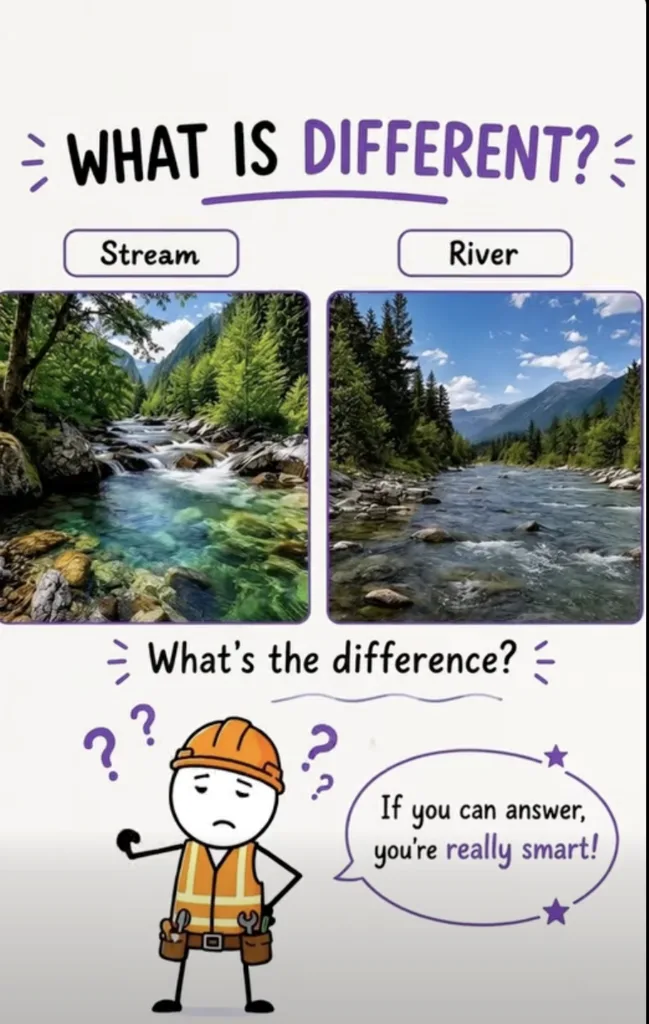
If you’re learning English, you’ve probably seen both stream and river used to describe flowing water. They may look similar, but they aren’t exactly the same.
What is a Stream?
A stream is a small, narrow natural flow of water.
Streams are usually:
- Smaller than rivers
- Shallower
- Narrower
- Often found in forests or mountains
Examples:
- We crossed a small stream while hiking.
- The children played beside the stream.
What is a River?
A river is a large natural flow of water that usually empties into a lake, sea, or another river.
Rivers are generally:
- Wider
- Deeper
- Longer
- Able to carry much more water than a stream
Examples:
- The Amazon is the largest river in the world by volume.
- Many cities were built along a river.
Stream vs. River
StreamRiverSmall and narrowLarge and wideUsually shallowUsually deeperCarries less waterCarries much more waterOften flows into a riverOften flows into the sea or another river
Easy Way to Remember
Think of it like this:
💧 Stream → Small
🌊 River → Large
A stream can become a river as it grows by collecting water from other streams.
Common Mistake
Many English learners call every natural waterway a river.
That’s not always correct.
If it’s small and narrow, stream is usually the better word.
Quick Quiz
Which sentence sounds more natural?
A. We sat beside a small river in the forest.
B. We sat beside a small stream in the forest.
👉 Most native speakers would choose B because a small natural waterway is typically called a stream.
Final Tip
Remember:
- Stream = small natural water flow
- River = large natural water flow
Learning these small vocabulary differences will help your English sound much more natural.