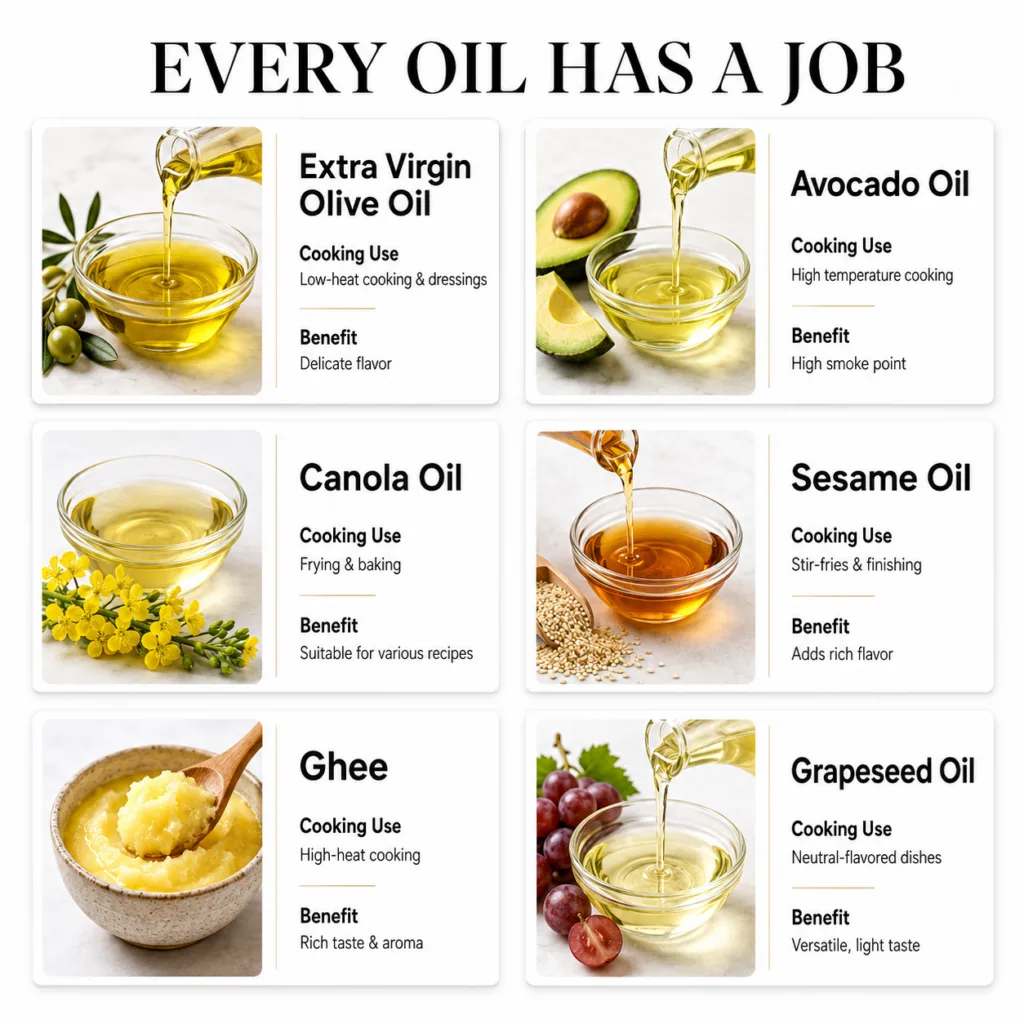
Understanding the distinct role of each cooking oil can truly transform your dishes and support your well-being. From searing at high temperatures to dressing a fresh salad, the right cooking oil can elevate flavors, optimize nutrient absorption, and contribute to healthier outcomes. Yet, with so many options available, knowing which oil to reach for can be a culinary challenge.
This guide will demystify the world of cooking oils, revealing the unique purpose and benefits of six popular choices. By understanding their smoke points, fat profiles, and flavor characteristics, you’ll be empowered to choose the perfect cooking oil for every recipe, enhancing both taste and health.
Extra Virgin Olive Oil: The Heart-Healthy Finisher
Extra Virgin Olive Oil (EVOO) is a staple in Mediterranean cuisine, celebrated for its robust flavor and impressive health benefits. It’s minimally processed, meaning it retains more of its natural nutrients and antioxidants.
Cooking Uses for EVOO
- Sautéing: Ideal for low to medium-heat sautéing, adding depth to vegetables and meats.
- Salad Dressing: Its fruity, peppery notes make it a perfect base for vinaigrettes.
- Dipping Bread: A classic simple appetizer, often with a pinch of salt and pepper.
- Finishing Dishes: Drizzle over cooked pasta, grilled fish, or soups just before serving to enhance flavor.
Key Benefits of Extra Virgin Olive Oil
- Rich in Antioxidants: Contains polyphenols that may help protect cells from damage.
- Monounsaturated Fats: Primarily oleic acid, which is commonly associated with supporting heart health.
- Heart-Healthy: Regular consumption as part of a balanced diet may help maintain healthy cholesterol levels.
Avocado Oil: Your High-Heat Culinary Companion
For cooking methods that require high temperatures, avocado oil stands out. Its mild flavor and impressive heat tolerance make it incredibly versatile in the kitchen.
Cooking Uses for Avocado Oil
- High-Heat Cooking: Excellent for searing meats and high-temperature roasting due to its very high smoke point.
- Roasting: Coats vegetables beautifully, promoting even browning and crispness.
- Grilling: A great choice for marinades and brushing onto foods before grilling to prevent sticking and add flavor.
- Stir-Frying: Its neutral taste won’t overpower the delicate flavors of Asian-inspired dishes.
- Baking: Can be used as a healthy fat substitute in many baking recipes.
Key Benefits of Avocado Oil
- High Smoke Point: Can withstand temperatures up to 520°F (270°C), making it safe for various cooking methods without breaking down.
- Rich in Monounsaturated Fats: Similar to olive oil, it contains beneficial monounsaturated fatty acids.
- Vitamin E: A good source of vitamin E, an antioxidant that supports skin health and immune function.
Canola Oil: The Versatile, Heart-Conscious Choice
Canola oil is a widely available and neutral-tasting oil, often chosen for its versatility and favorable fat profile. It’s derived from the rapeseed plant.
Cooking Uses for Canola Oil
- Baking: Its mild flavor and light texture make it suitable for cakes, muffins, and other baked goods.
- Sautéing: A good all-purpose oil for everyday sautéing tasks.
- Stir-Frying: Works well in stir-fries where a neutral oil is desired.
- Frying: Its neutral flavor makes it a good option for deep frying, as it won’t impart unwanted tastes to food.
Key Benefits of Canola Oil
- Low in Saturated Fat: Contains one of the lowest levels of saturated fat among common cooking oils.
- High in Omega-3 and Omega-6 Fatty Acids: Provides a balance of these essential fatty acids, which are crucial for overall health.
- Neutral Flavor: Won’t interfere with the taste of your ingredients, making it ideal for a wide range of recipes.
Sesame Oil: Aromatic Essence for Flavor
Sesame oil is primarily used for its distinctive nutty aroma and flavor, rather than for high-heat cooking. It’s a powerhouse for adding character to Asian dishes.
Cooking Uses for Sesame Oil
- Finishing Dishes: A few drops can transform the flavor of a finished stir-fry, soup, or noodle dish.
- Stir-Fries: Added towards the end of cooking to preserve its delicate flavor.
- Marinades: A key ingredient in many Asian-inspired marinades for meats and vegetables.
- Dressings: Contributes a rich, nutty depth to salad dressings.
Key Benefits of Sesame Oil
- Rich, Nutty Flavor: Offers a unique taste profile that is indispensable in many cuisines.
- Antioxidants: Contains sesamol and sesamin, which are antioxidants.
- Anti-Inflammatory Properties: Traditionally used for its potential anti-inflammatory effects.
Ghee: Clarified Butter with Ancient Roots
Ghee, a type of clarified butter, is highly prized in Indian cuisine and increasingly popular in other culinary traditions. It’s made by simmering butter to remove water and milk solids, leaving behind pure butterfat.
Cooking Uses for Ghee
- Sautéing: Its rich, buttery flavor and high smoke point make it excellent for sautéing.
- Roasting: Adds a delicious, nutty flavor to roasted vegetables and meats.
- Frying: A superb choice for shallow or deep frying due to its stability at high temperatures.
- Spreading: Can be used as a dairy-free alternative to butter on toast or baked goods.
Key Benefits of Ghee
- High Smoke Point: Its clarified nature gives it a higher smoke point than regular butter, making it suitable for high-heat cooking.
- Rich in Fat-Soluble Vitamins (A, D, E, K): Contains these essential vitamins, which are important for various bodily functions.
- Lactose-Free: The milk solids are removed during clarification, making it a suitable option for individuals sensitive to lactose.
Grapeseed Oil: Light and Luminous for Everyday Use
Grapeseed oil is a byproduct of winemaking, known for its light texture and neutral flavor. It’s a versatile choice for a variety of culinary applications.
Cooking Uses for Grapeseed Oil
- Sautéing: Its light body and neutral flavor make it great for everyday sautéing.
- Baking: Can be used as a flavorless fat in baked goods where you don’t want a strong oil taste.
- Salad Dressings: Its mildness allows other flavors in dressings to shine.
- Marinades: A good base for marinades due to its ability to carry other flavors without overwhelming them.
Key Benefits of Grapeseed Oil
- High Smoke Point: Offers a relatively high smoke point, suitable for various cooking methods.
- Rich in Omega-6 Fatty Acids: Contains linoleic acid, an essential omega-6 fatty acid.
- Vitamin E: A source of vitamin E, which acts as an antioxidant in the body.
Choosing Your Go-To Cooking Oils
Selecting the right cooking oil can significantly impact the success of your dishes and your overall health. Consider the cooking method, desired flavor profile, and nutritional benefits when making your choice.
- For high-heat cooking like searing or roasting, reach for Avocado Oil or Ghee.
- For everyday sautéing and baking, Canola Oil or Grapeseed Oil are excellent, neutral options.
- For vibrant salad dressings and finishing touches, Extra Virgin Olive Oil delivers heart-healthy goodness.
- To infuse dishes with rich, nutty flavor, a dash of Sesame Oil is unparalleled.
Experiment with these oils to discover how each can enhance your culinary creations and contribute to a healthier kitchen. Always store oils in a cool, dark place to maintain their freshness and prolong their shelf life.