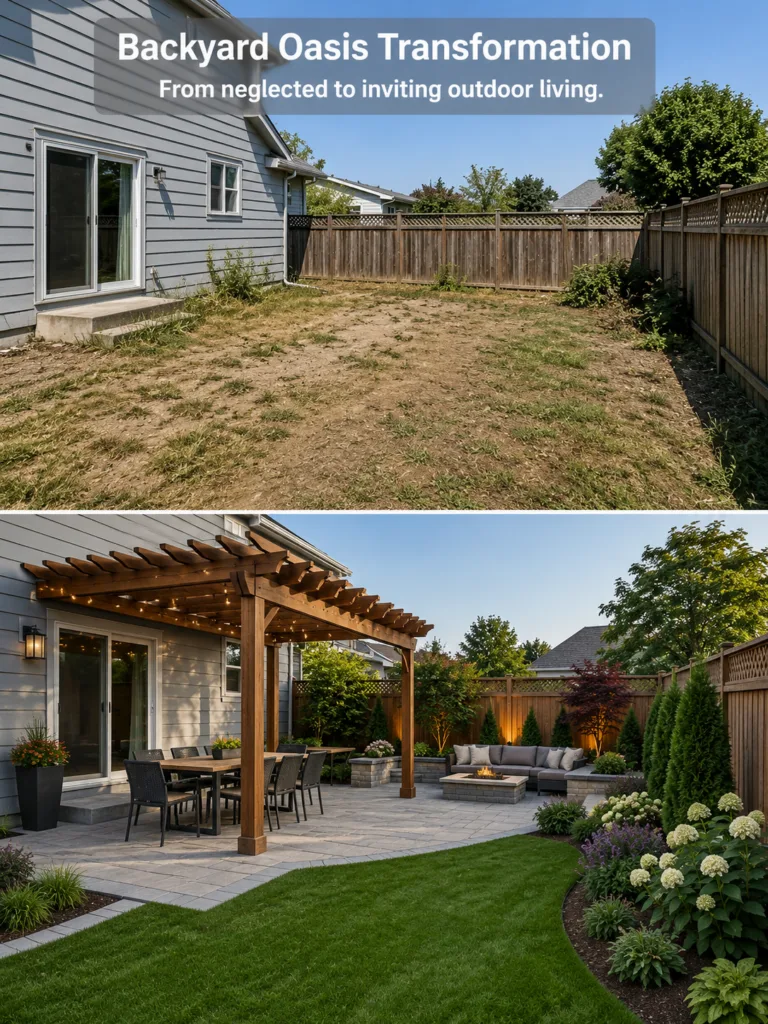
Do you look out at your backyard and see an underutilized space, perhaps a patch of neglected lawn or an uninspired patio? Many of us dream of a garden that feels like a natural extension of our home – a place to relax, entertain, and connect with nature. The good news is, transforming that unused area into a beautiful, functional outdoor living room is entirely achievable with a bit of planning and vision. Imagine al fresco dining under twinkling lights, cozy evenings by a fire pit, or simply lounging amidst lush greenery.
This guide will walk you through the essential steps and practical considerations for turning your backyard into the inviting outdoor oasis you’ve always wanted. We’ll explore how to define distinct zones, choose the right materials, select appropriate plants, and add those crucial finishing touches that elevate a space from ordinary to extraordinary. Get ready to unlock your backyard’s full potential and create memories in your personalized outdoor sanctuary.
The Vision: Planning Your Outdoor Room
Before moving any dirt, take time to envision how you want to use your outdoor space. Think about your lifestyle: Do you entertain frequently? Do you need a quiet retreat? A play area for kids? A space for container gardening? Sketching out ideas, even roughly, helps you visualize potential layouts and define distinct ‘zones’ within your backyard. Consider these key elements:
- Functionality: Will it be primarily for dining, lounging, cooking, or a combination?
- Flow: How will people move through the space? Ensure clear pathways.
- Sunlight and Shade: Observe how sunlight hits different areas throughout the day and year. This will inform placement of dining areas, pergolas, and plants.
- Privacy: Are there areas where you need more seclusion from neighbors?
- Budget: Establish a realistic budget from the outset to guide material choices and project scope.
Laying the Foundation: Hardscaping for Durability and Style
The hardscaping — patios, pathways, and retaining walls — forms the backbone of your outdoor living space. Choosing the right materials is crucial for both aesthetics and longevity.
Patio and Pavers
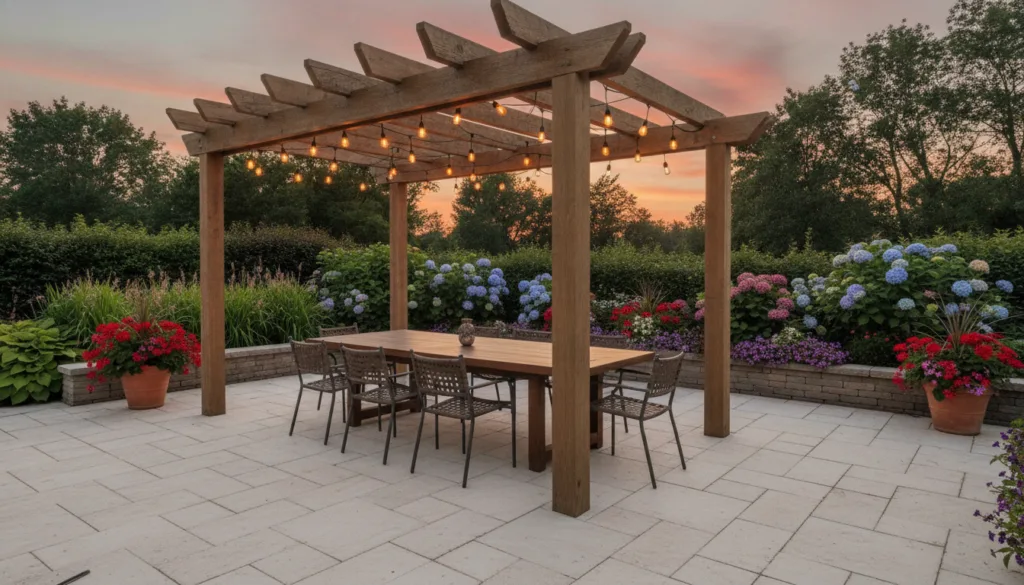
Light-toned pavers, as seen in many modern designs, can make a space feel larger and cooler. Options include:
- Concrete Pavers: Versatile in color, size, and texture, and generally durable. Ensure proper sub-base preparation for stability and drainage.
- Natural Stone: Flagstone, slate, or bluestone offer timeless beauty but can be a higher investment.
- Brick: Classic and charming, offering a traditional feel.
Regardless of your choice, ensure excellent drainage. Patios should be installed with a slight slope (typically 1/8 to 1/4 inch per foot) away from your home to prevent water pooling. Consider permeable pavers to reduce stormwater runoff and replenish groundwater.
Defining Zones: Dining and Lounge Areas
Creating separate, yet cohesive, zones allows your outdoor space to serve multiple purposes. Think of these as outdoor rooms.
The Dining Al Fresco Experience
A dedicated dining area transforms mealtimes. Position it conveniently close to the kitchen if possible. A dark, modern dining set provides a sleek contrast against lighter pavers and green foliage.
- Pergola: A wooden pergola adds architectural interest and defines the dining space. It provides dappled shade, making it more comfortable during sunny days. Vines trained over the pergola can offer additional shade and beauty.
- Lighting: String lights draped across the pergola create a magical ambiance for evening meals. Ensure they are rated for outdoor use.
Cozy Lounge and Fire Pit
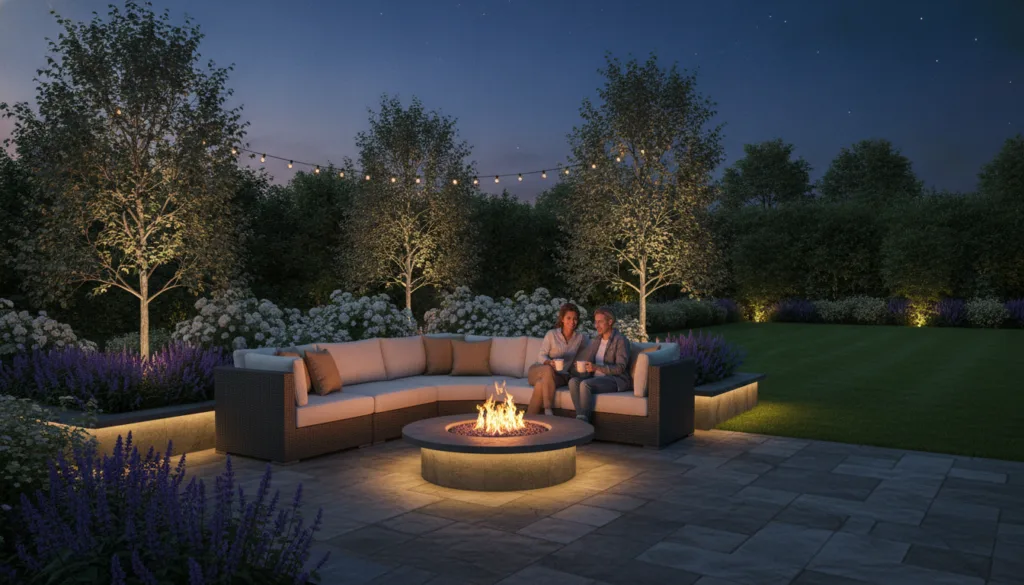
A lounge area with comfortable seating and a fire pit invites relaxation and social gatherings, especially as temperatures drop.
- L-shaped Sofa: Maximize seating with an L-shaped outdoor sofa, providing ample space for guests. Choose cushions with weather-resistant fabrics.
- Built-in Fire Pit: A built-in fire pit offers a permanent, safe, and stylish focal point. Ensure it’s placed a safe distance from structures and flammable materials. Consider gas-powered fire pits for convenience or wood-burning for traditional crackle and aroma.
- Safety First: Always have a spark screen for wood-burning pits and keep a water source or extinguisher nearby.
Embracing Greenery: Lush Landscaping
Landscaping softens hard lines, provides privacy, and connects your outdoor living space to nature. A mix of ornamental trees, flowering shrubs, and a vibrant lawn creates depth and visual interest.
Plant Selection and Placement
Consider the mature size of plants when positioning them. Overplanting can lead to overcrowding and poor air circulation, inviting pests and diseases. Choose plants that thrive in your local climate and soil conditions.
- Ornamental Trees: Provide height, shade, and year-round interest. For example, a Japanese maple (Acer palmatum) offers beautiful foliage color, while a serviceberry (Amelanchier spp.) provides spring flowers and edible berries.
- Flowering Shrubs: Add bursts of color and texture. Hydrangeas, azaleas, rhododendrons, or spireas are popular choices, offering diverse bloom times and forms.
- Groundcovers and Perennials: Fill in gaps, suppress weeds, and add continuous color. Think hostas for shade or coneflowers for sun.
- Lush Green Grass: A well-maintained lawn provides a soft, inviting carpet. Choose a turfgrass variety suited to your USDA zone and sunlight levels. Cool-season grasses like fescue or bluegrass thrive in northern climates (Zones 3-7), while warm-season grasses like Zoysia or Bermuda are best for southern regions (Zones 7-10).
Soil, Water, and Sunlight Considerations
- Soil Health: Most plants prefer well-draining soil rich in organic matter. Amend heavy clay or sandy soils with compost before planting.
- Watering: Install an efficient irrigation system for consistent watering, especially during establishment. Consider drip irrigation for beds and sprinklers for lawns. Learn to test soil moisture with your finger before watering to prevent over or underwatering.
- USDA Zones: Always select plants hardy to your specific USDA hardiness zone to ensure they can survive winter temperatures. Remember, zones only measure winter cold tolerance, not summer heat or humidity.
The Finishing Touches: Ambiance and Accent Lighting
Thoughtful lighting not only enhances safety but also creates a captivating atmosphere after dusk.
- String Lights: Beyond the pergola, string lights can define pathways or borders.
- Accent Lighting: Uplighting on trees or shrubs highlights their form and creates dramatic shadows. Path lights illuminate walkways safely.
- Integrated Lighting: Consider low-voltage LED lighting integrated into steps, benches, or retaining walls for a sophisticated look.
Common Mistakes to Avoid
Even with the best intentions, some pitfalls can hinder your backyard transformation:
- Ignoring Drainage: Poor drainage can lead to soggy patios, plant root rot, and even foundation issues. Always plan for proper water runoff.
- Underestimating Plant Growth: That small shrub can become a monster. Research mature sizes and space plants accordingly for optimal health and aesthetics.
- Rushing the Design: A well-thought-out plan saves time, money, and headaches in the long run. Don’t skip the planning phase.
- Forgetting Maintenance: Every garden requires ongoing care. Choose plants appropriate for your commitment level and design for ease of maintenance.
- Lack of Lighting: An unlit backyard feels unsafe and unused after dark. Plan for functional and aesthetic lighting from the start.
Conclusion: Your Backyard Awaits Its Transformation
Transforming a neglected backyard into a beautiful outdoor living space is a rewarding journey that adds significant value to your home and quality of life. By carefully planning your layout, selecting durable hardscaping, creating defined zones for dining and lounging, and incorporating lush, climate-appropriate landscaping, you can craft a space that is both stunning and highly functional. Don’t forget the magic of lighting to bring your oasis to life after sunset. With these practical gardening tips and a bit of inspiration, you’re now better prepared to turn your backyard dreams into a vibrant reality. Step outside and start envisioning your own private paradise!