Are you hitting the gym consistently, putting in the effort, but still not seeing the bicep gains you’re aiming for? Or worse, are you experiencing aches and pains during your arm workouts? The truth is, you might be making a common bicep training mistake that’s sabotaging your progress and increasing your risk of injury.
Many people fall into the trap of sacrificing form for heavier weights or faster reps, especially when it comes to bicep curls. While it might feel like you’re working harder, swinging your arms and using momentum takes the tension away from your biceps, making the exercise far less effective. But don’t worry, we’re here to help you turn things around! Let’s dive into the common pitfalls and the proven strategies to build bigger, stronger, and safer biceps.
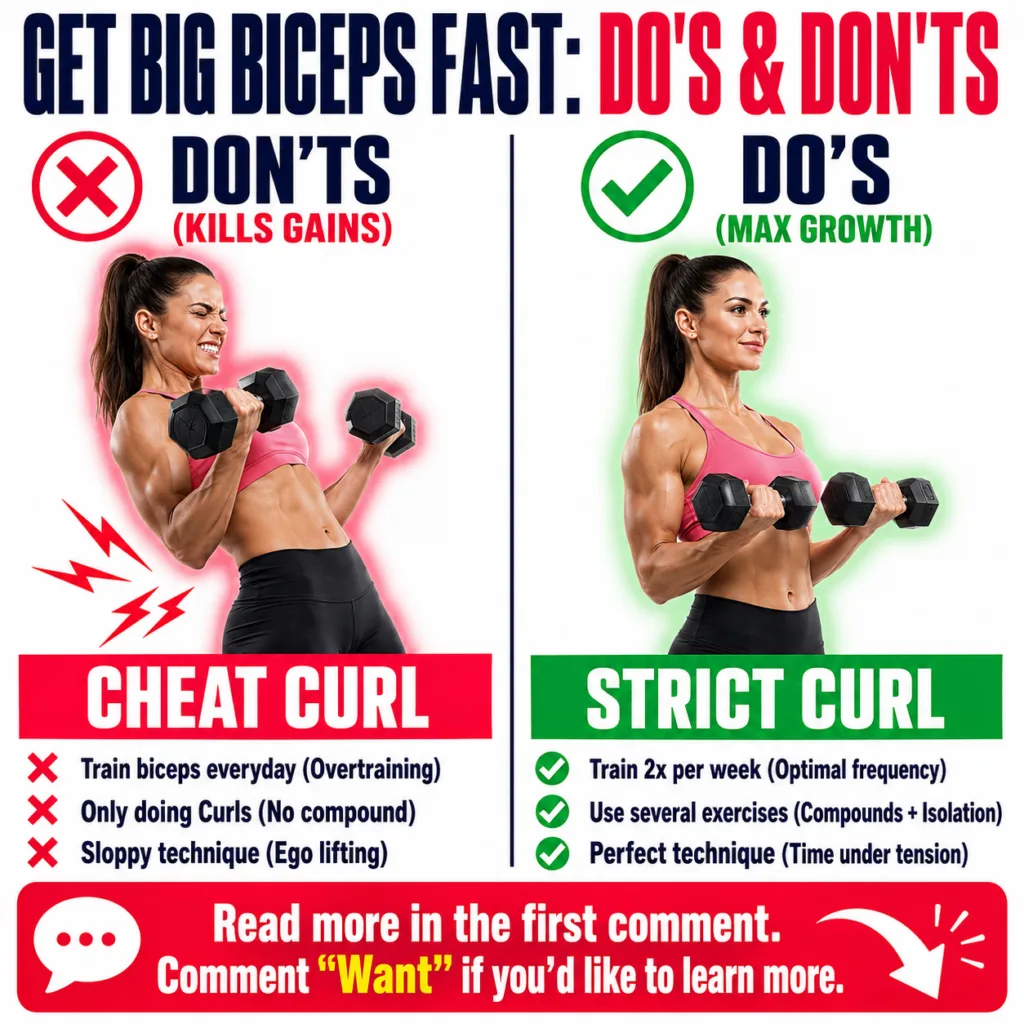
The Bicep Training Pitfalls: What NOT to Do
Before we build, we must first understand what to avoid. These common mistakes can hinder your progress and even lead to setbacks.
The “Cheat Curl” Trap
This is arguably the most common bicep mistake. You see it all the time: lifters swinging their entire body to hoist the weight up, using their back and shoulders more than their actual biceps. While it allows you to lift heavier, it severely diminishes the bicep’s role in the movement. The goal of a bicep curl is to isolate and contract the bicep muscle, not to perform a full-body heave.
Sloppy Technique & Its Dangers
Beyond just swinging, sloppy technique includes not fully extending at the bottom or not squeezing at the top. This means you’re missing out on the full range of motion and the crucial “time under tension” that stimulates muscle growth. More importantly, poor form can put undue stress on your joints, leading to wrist, elbow, or even lower back injuries.
Overtraining Your Biceps
The belief that more is always better often leads to overtraining. Your biceps are relatively small muscles and are also involved in many pulling exercises (like rows and pull-ups). If you hit them too hard, too often, without adequate recovery, you can impede growth and increase your risk of injury and burnout.
Neglecting Compound Movements
While bicep curls are essential, relying solely on isolation exercises can limit overall arm and back development. Compound movements, which involve multiple joints and muscle groups, play a crucial role in building foundational strength and muscle mass that supports bicep growth.
Elevate Your Bicep Game: The “DO’S” for Maximum Growth
Now that we know what to avoid, let’s focus on the strategies that will actually get you those impressive biceps.
Embrace the Strict Curl: Perfect Form is Key
This is where the magic happens. Focus on slow, controlled movements. Imagine your biceps are the only muscles working. Here’s how:
- Starting Position: Stand tall, core braced, shoulders back and down. Hold the dumbbells with your palms facing forward.
- Controlled Ascent: Slowly curl the weights upwards, squeezing your biceps hard at the top of the movement. Your elbows should stay tucked close to your body, acting as a hinge. Avoid any momentum from your hips or back.
- Squeeze and Hold: At the peak of the contraction, hold for a brief second to maximize the mind-muscle connection.
- Slow Descent: Lower the weights slowly and deliberately, fully extending your arms at the bottom. This eccentric (lowering) phase is crucial for muscle breakdown and growth.
Focusing on “time under tension” rather than just lifting the heaviest weight will yield far better results.

Smart Training Frequency: Train 2x Per Week
For optimal muscle growth, hitting your biceps twice a week with adequate rest in between is often recommended. This allows for sufficient stimulus for growth without overtraining, giving your muscles time to repair and rebuild.
The Power of Diverse Exercises: Compounds + Isolation
Don’t just do endless bicep curls! A well-rounded approach includes both:
- Compound Exercises: Incorporate movements like pull-ups, chin-ups (which heavily engage biceps), and various rowing exercises into your back workouts. These build overall upper body strength and contribute to bicep development.
- Isolation Exercises: Complement your compound lifts with targeted bicep exercises such as hammer curls, concentration curls, incline dumbbell curls, and, of course, strict standing bicep curls. Varying your grip and angle can target different parts of the bicep head.
Beyond the Gym: Fueling Your Bicep Growth
Remember, muscle growth doesn’t happen in the gym alone. Proper nutrition, especially sufficient protein intake, is vital for muscle repair and synthesis. Pair your smart training with a balanced diet rich in lean proteins, complex carbohydrates, and healthy fats, and ensure you’re getting enough sleep for optimal recovery.
Conclusion
Building strong, well-defined biceps isn’t about lifting the heaviest weight or swinging your way through reps. It’s about precision, control, and consistency. By focusing on perfect technique, incorporating a mix of compound and isolation exercises, and giving your muscles the recovery they need, you’ll not only prevent injury but also unlock your true potential for bicep growth. Stop swinging, start squeezing, and watch your arms transform!