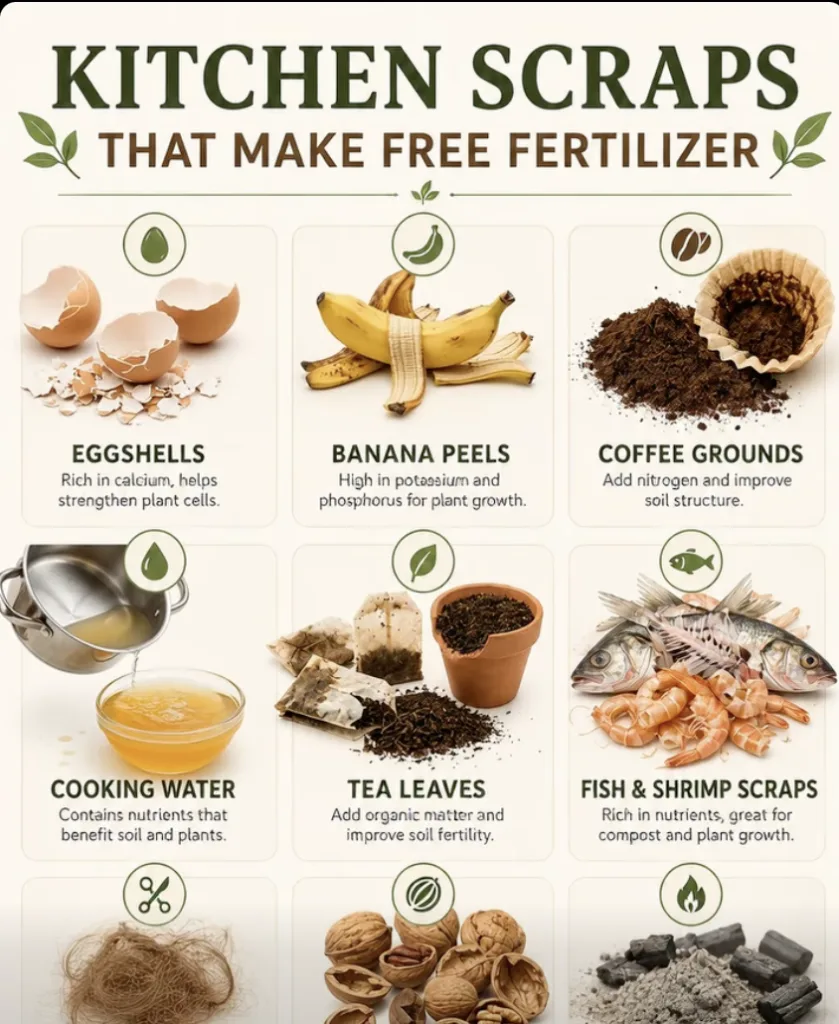
If you love gardening, you may already have some of the best soil-building materials sitting right in your kitchen. Instead of throwing everyday scraps into the trash, many of them can be composted or carefully reused to support healthier soil and thriving plants.
From banana peels and eggshells to coffee grounds and cooking water, kitchen waste can be a simple and inexpensive addition to a more sustainable gardening routine.
Here are nine common kitchen scraps worth saving—and how to use them wisely.
1. Eggshells
Eggshells are primarily made of calcium carbonate. When finely crushed and incorporated into soil or compost, they slowly break down and contribute calcium.
How to use them: Rinse the shells, allow them to dry, and crush or grind them into small pieces before adding them to your compost pile or soil.
Because eggshells decompose slowly, think of them as a long-term soil amendment rather than an instant fertilizer.
2. Banana Peels
Banana peels contain potassium along with smaller amounts of other plant nutrients. Rather than placing whole peels directly around plants, composting them is usually the easiest way to return those nutrients to your garden.
How to use them: Chop banana peels into smaller pieces and add them to your compost. Smaller pieces generally break down more quickly.
Once the compost is mature, mix it into garden beds or use it around established plants.
3. Coffee Grounds
Used coffee grounds are a popular addition to compost because they contain nitrogen and organic matter.
How to use them: Mix used grounds with other compost ingredients such as dry leaves, cardboard, plant trimmings, and other kitchen scraps.
Avoid creating a thick layer of coffee grounds directly on top of the soil. Mixing them with other organic materials provides a better balance.
4. Cooking Water
Water used for boiling or steaming vegetables can contain small amounts of nutrients released during cooking.
Instead of pouring it down the drain, you may be able to reuse it for your plants.
How to use it: Allow the water to cool completely before watering plants with it.
Only use unsalted cooking water. Water containing salt, oil, sauces, or seasonings should not be poured onto garden soil.
5. Tea Leaves
Used tea leaves can contribute organic material to a compost pile.
How to use them: Open the tea bag and add the leaves to your compost.
Before composting the entire bag, check what it is made from. Some tea bags contain plastic fibers and may not be suitable for home composting.
Loose-leaf tea is especially easy to compost.
6. Fish and Shrimp Scraps
Fish scraps, shrimp shells, and other seafood waste contain nutrients, but they need more careful handling than plant-based kitchen scraps.
Adding them directly to a garden can create strong odors and attract animals or pests.
How to use them: If your composting system is designed to handle food scraps safely, seafood waste can be processed there. Otherwise, consider methods such as bokashi rather than simply burying scraps next to plants.
For many home gardeners, this is one kitchen waste category that requires extra care.
7. Hair Clippings
Human hair contains keratin and nitrogen and will eventually decompose.
Small quantities can be incorporated into compost rather than sent to the trash.
How to use them: Break hair apart and mix it thoroughly with other compost ingredients instead of adding it in large clumps.
Hair breaks down relatively slowly, so patience is important.
8. Nut Shells
Many untreated nut shells can be used as a carbon-rich material in compost.
Because shells are tough, however, they can take a long time to decompose.
How to use them: Crush shells into smaller pieces before composting whenever possible.
One important exception is black walnut material, which requires special consideration because walnut trees contain juglone, a compound that can affect sensitive plants.
9. Wood Ash
Clean wood ash contains minerals including calcium and potassium and can affect soil pH.
That also means it should be used carefully.
How to use it: Only use small amounts of ash from clean, untreated wood. Never use ash from painted or treated lumber, charcoal briquettes, or materials containing chemicals.
Wood ash can raise soil pH, so it may not be appropriate for acidic soils or acid-loving plants. A soil test is useful before applying significant amounts.
Composting Is Often the Best Approach
Although kitchen scraps contain useful materials, that doesn’t mean every scrap should be placed directly around your plants.
Composting is often the safest and most practical solution.
A healthy compost pile combines nitrogen-rich materials—such as vegetable scraps and coffee grounds—with carbon-rich materials such as dried leaves, shredded cardboard, and other dry plant matter.
Over time, microorganisms transform these materials into dark, crumbly compost that can improve soil structure and support healthy plant growth.
A Few Things to Avoid
Natural doesn’t automatically mean safe for every plant.
Avoid adding large quantities of any single kitchen scrap to your garden. Never water plants with salty cooking water, and be cautious with materials that can significantly change soil chemistry, especially wood ash.
Food scraps that attract rodents or other animals should also be managed through an appropriate composting system rather than left exposed.
Turn Waste Into a Resource
You don’t necessarily need expensive products to start improving your garden soil.
Something as simple as saving your banana peels for the compost pile, crushing eggshells, reusing unsalted cooking water, or composting your morning coffee grounds can help reduce household waste while returning organic material to the garden.
Start with one or two scraps, learn how they behave in your compost or soil, and gradually build a routine that works for your garden.
🌱 Your next batch of garden goodness might already be sitting in your kitchen.