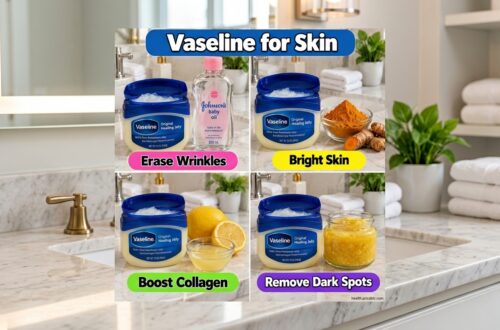
If you enjoy simple at-home beauty recipes, this viral Cocoa + Petroleum Jelly Beauty Balm is certainly eye-catching. The video combines a rich petroleum-jelly base with cocoa powder and a clear liquid to create a glossy chocolate-colored skincare mixture.
The video calls it a “collagen cream” and suggests dramatic age-reversing results. However, a homemade mixture like this does not replace lost collagen or make 70-year-old skin become 30-year-old skin. A more realistic way to think about it is as an occlusive moisturizing balm that may temporarily make dry skin look softer and smoother.
🍫 What’s in This DIY Beauty Balm?
From the video, the recipe appears to center around three components:
- Plain petroleum jelly
- Unsweetened cocoa powder
- A small amount of clear liquid
Because the exact clear liquid isn’t identifiable from the visuals alone, don’t substitute an unknown ingredient. For a safer simplified version, you can make the balm with just petroleum jelly and a very small amount of cosmetic-safe cocoa powder, or skip the cocoa entirely if your skin is sensitive.
🧴 Why Petroleum Jelly?
Petroleum jelly is an occlusive moisturizer.
Instead of adding collagen to your skin, it forms a protective layer that helps reduce moisture loss.
This can make dry skin temporarily appear:
- Softer
- Smoother
- More supple
- Less flaky
- More luminous
That moisturizing effect is probably the most useful part of this viral recipe.
🍫 What About Cocoa Powder?
Cocoa naturally contains polyphenols and other plant compounds, but that doesn’t mean ordinary kitchen cocoa has been proven to rebuild collagen when mixed into petroleum jelly.
In this recipe, cocoa mainly contributes the distinctive chocolate color and texture shown in the video.
Because food ingredients aren’t necessarily formulated or tested for facial use, patch testing is important.
🥣 What You’ll Need
For a small test batch, try:
- 1 tablespoon plain petroleum jelly
- ¼ teaspoon unsweetened cocoa powder
Optional:
- A few drops of a simple fragrance-free facial oil you already tolerate
Avoid adding random liquids simply because they appear clear in a viral video.
Also avoid essential oils, perfume, lemon juice, alcohol, or other potentially irritating ingredients.
🥄 Step 1 – Start With Petroleum Jelly
Place approximately 1 tablespoon of plain petroleum jelly into a clean small bowl.
Using a small batch is preferable because there’s no reason to prepare the huge container shown in the video.
A little petroleum jelly goes a long way on the skin.
🍫 Step 2 – Add a Tiny Amount of Cocoa
Add approximately ¼ teaspoon unsweetened cocoa powder.
Start with less rather than more.
The goal isn’t to create an extremely concentrated chocolate paste.
🌀 Step 3 – Mix Thoroughly
Stir the petroleum jelly and cocoa together.
Continue mixing until the cocoa is distributed as evenly as possible.
The mixture should gradually transform from white petroleum jelly into a smooth chocolate-brown balm similar to the appearance in the video.
💧 Step 4 – Keep the Formula Simple
The video also shows a clear liquid being poured into the mixture.
Unless you know exactly what that ingredient is and whether it’s appropriate for facial use, don’t recreate that part blindly.
Adding water-based liquids to homemade cosmetics can also create preservation and contamination concerns.
For DIY skincare, simpler is often safer.
🧪 Step 5 – Patch Test First
Before putting the mixture on your face, test a tiny amount on a small area of skin.
Watch for:
- Burning
- Redness
- Itching
- Swelling
- Persistent irritation
If your skin reacts, wash the product off and discontinue use.
🌙 Step 6 – How to Apply It
If your patch test is fine, cleanse your skin and apply your normal moisturizer first.
Then use a very thin layer of the balm over particularly dry areas.
Think:
Cleanse → Moisturizer → Thin Occlusive Layer
You don’t need a thick mask.
👁️ Where Should You Avoid It?
Don’t apply the homemade mixture:
- Inside or immediately around the eyes
- On lips unless the ingredients are lip-safe
- Inside the nostrils
- On broken skin
- On active irritation
- On areas where you’ve recently had a reaction
If you have very sensitive or acne-prone skin, plain fragrance-free skincare may be a better option.
✨ What Results Can You Realistically Expect?
If your skin tolerates petroleum jelly, the most realistic effect is improved moisture retention.
Well-moisturized skin often looks temporarily:
Smoother → Plumper → Softer → More Radiant
Fine dehydration lines may also look less noticeable while the skin is well moisturized.
But this isn’t the same thing as rebuilding decades of lost collagen.
❌ Does It Really Make “Age 70 Look 30”?
No.
That’s a viral marketing claim, not a realistic skincare outcome.
Skin aging involves changes in collagen, elastin, pigmentation, facial fat, bone structure, and cumulative environmental exposure.
No petroleum-jelly-and-cocoa recipe can reverse those processes by 40 years.
🧬 Is It Really a “Collagen Cream”?
Not in the scientific sense.
Calling the mixture “collagen cream” doesn’t mean it contains collagen or causes the skin to manufacture large amounts of new collagen.
Petroleum jelly primarily helps by reducing water loss from the skin.
That can improve appearance, but moisturization and collagen remodeling are two different things.
🌿 A Simpler Alternative
If your main goal is softer-looking mature skin, you don’t actually need cocoa.
Try:
Gentle Cleanser → Fragrance-Free Moisturizer → Thin Layer of Plain Petroleum Jelly
This provides the primary occlusive benefit without introducing an extra kitchen ingredient.
☀️ Don’t Forget Sunscreen
If your goal is maintaining younger-looking skin, daily sun protection matters far more than most viral DIY recipes.
A simple routine could be:
Morning: Gentle Cleanser → Moisturizer → Broad-Spectrum SPF 30+
Evening: Gentle Cleanser → Moisturizer → Optional Thin Petroleum Jelly Layer
Consistency usually matters more than complicated homemade formulas.
⚠️ Who Should Be Extra Careful?
Consider skipping DIY facial mixtures if you have:
- Eczema
- Rosacea
- Dermatitis
- Very reactive skin
- Active irritation
- Known ingredient allergies
If you’re treating a skin condition or using prescription skincare, ask a dermatologist before introducing homemade preparations.
💡 Important Storage Tip
Avoid preparing a giant jar.
Once water or other liquids are introduced into a homemade cosmetic, microbial contamination becomes a bigger concern unless the product has a properly designed preservative system.
Making a tiny amount for immediate use is much more sensible than storing a homemade mixture for weeks.
🍫 Final Thoughts
The viral Cocoa + Petroleum Jelly Beauty Balm is an interesting DIY skincare trend, but it’s important to separate the useful part from the exaggerated claim.
The realistic idea is:
Moisturizer + Occlusive Layer → Better Moisture Retention → Softer-Looking Skin
Not:
“Age 70 → Age 30.”
If you want to experiment, keep the recipe simple, patch test first, avoid unidentified ingredients, and use only a thin amount.
Sometimes the least glamorous ingredient in a viral beauty recipe—plain petroleum jelly—is actually doing most of the work.
Would you try this Cocoa Beauty Balm? Comment “COCOA” below and save this guide for later! 🍫✨👇