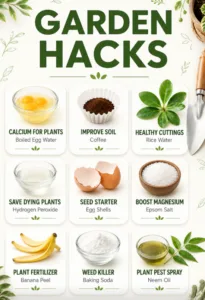
Gardening doesn’t always require expensive fertilizers, sprays, or specialty products. Sometimes, useful garden materials are already sitting in your kitchen or pantry.
From eggshells and coffee grounds to banana peels and neem oil, these simple gardening ideas can help you reuse household items while caring for your plants more thoughtfully.
Here are 9 popular garden hacks, plus a few important tips for using them safely and effectively.
1. Boiled Egg Water for Plants
After boiling eggs, don’t automatically pour the water down the drain.
Once the water has completely cooled, you can use it to water garden plants or houseplants. Small amounts of minerals may remain in the water after boiling.
How to use it:
Allow the water to cool to room temperature, then use it just like normal watering water.
Important: Never pour hot water onto living plants, and avoid using water that contains salt.
2. Coffee Grounds for the Soil
Used coffee grounds can be a useful addition to your compost pile.
They contain organic material and nutrients that can contribute to healthy compost when mixed with other ingredients.
Best way to use them:
Add used coffee grounds to compost along with dry materials such as fallen leaves, cardboard, or shredded paper.
Avoid piling thick layers of coffee grounds directly around plants because they can compact and interfere with water movement.
3. Rice Water for Plants
Unsalted water left over from rinsing or cooking rice is another household leftover gardeners sometimes reuse.
Instead of throwing it away, cooled rice water can occasionally be used for watering plants.
How to use it:
Use plain, unsalted rice water only after it has cooled.
For most plants, regular water should still remain the main source of irrigation.
4. Hydrogen Peroxide for Plant Problems
Hydrogen peroxide is sometimes promoted online as a quick solution for struggling plants, but this hack deserves extra caution.
Concentrated hydrogen peroxide can damage plant roots and beneficial soil organisms if it is used incorrectly.
Rather than treating it as a universal “plant saver,” first determine why your plant is struggling. Problems such as overwatering, poor drainage, pests, disease, or insufficient light usually require different solutions.
When in doubt, improving drainage and adjusting your watering routine is often a safer first step.
5. Eggshells in the Garden
Eggshells contain calcium carbonate, making them a useful material for composting.
Instead of throwing them away, rinse the shells, allow them to dry, crush them, and add them to your compost pile.
Garden tip:
Crushing eggshells into smaller pieces helps them break down more quickly.
Keep in mind that eggshells decompose slowly, so they are not an instant calcium fertilizer.
6. Epsom Salt for Magnesium
Epsom salt contains magnesium sulfate, which can help plants when the soil is actually deficient in magnesium.
However, more magnesium does not automatically mean healthier plants.
Before adding Epsom salt regularly, consider testing your soil. Using unnecessary amounts can create nutrient imbalances.
Best rule:
Treat Epsom salt as a targeted soil amendment rather than an everyday fertilizer.
7. Banana Peels for the Garden
Banana peels contain nutrients, including potassium, and they are excellent compost material.
One of the easiest ways to use them is simply to add them to your compost bin.
As the peels break down alongside other organic materials, they become part of nutrient-rich compost that can later be added to garden soil.
Simple tip:
Cut banana peels into smaller pieces before composting to help speed up decomposition.
8. Baking Soda for Weeds
Baking soda is sometimes suggested as a homemade weed killer because high concentrations of sodium can damage plants.
The problem is that it can also affect surrounding soil and desirable plants.
If you are dealing with weeds between cracks in pavement or paths, manual removal is usually a safer garden-friendly solution.
For garden beds, mulch can be one of the most effective natural ways to reduce weed growth.
9. Neem Oil for Garden Pests
Neem oil is commonly used in gardening products for managing certain insect pests.
When using neem oil, always follow the instructions on the product label carefully.
Helpful tips:
Apply it only when needed, avoid spraying flowers when pollinators are actively visiting, and test a small section of the plant before treating the entire plant.
Using pest-control products responsibly helps protect both your plants and beneficial garden insects.
The Best Garden Hack Is Healthy Soil
While household gardening hacks can be fun and useful, the foundation of a thriving garden is still surprisingly simple:
Healthy soil, appropriate sunlight, good drainage, correct watering, compost, and choosing plants that suit your local conditions will usually make a much bigger difference than any single gardening trick.
The goal isn’t to add everything from your kitchen to your plants. It is to understand what your garden actually needs and reuse household materials when they genuinely make sense.
Final Thoughts
Gardening sustainably can start with small habits.
Save your coffee grounds for compost. Turn banana peels into organic matter. Compost your eggshells. Reuse plain cooking water when appropriate. And before reaching for any homemade treatment, make sure you understand what your plants actually need.
Small changes can reduce household waste while helping you build a healthier, more sustainable garden. 🌿
Which of these garden hacks have you tried? Share your favorite gardening tip in the comments!
#GardeningTips #GardenHacks #NaturalGardening #OrganicGardening #HomeGarden #PlantCare #SustainableGardening #GardenIdeas