Cultivate More Flavor: Your Complete Guide to Building an Herb Spiral Garden
Dreaming of a lush, abundant herb garden but limited by space? Many home gardeners face the challenge of providing diverse growing conditions for their favorite herbs—some thrive in sun-baked, dry soil, while others crave consistent moisture and a touch of shade. Trying to make a single flat garden bed satisfy all these needs can feel like an uphill battle. But what if you could create multiple microclimates in one compact, elegant structure?
Enter the herb spiral: an ingenious gardening solution that maximizes yield in minimal space while catering to the unique preferences of a wide array of aromatic plants. This guide will walk you through the simple principles and practical steps to design, build, and maintain your own thriving herb spiral, transforming your small patch into a culinary powerhouse.
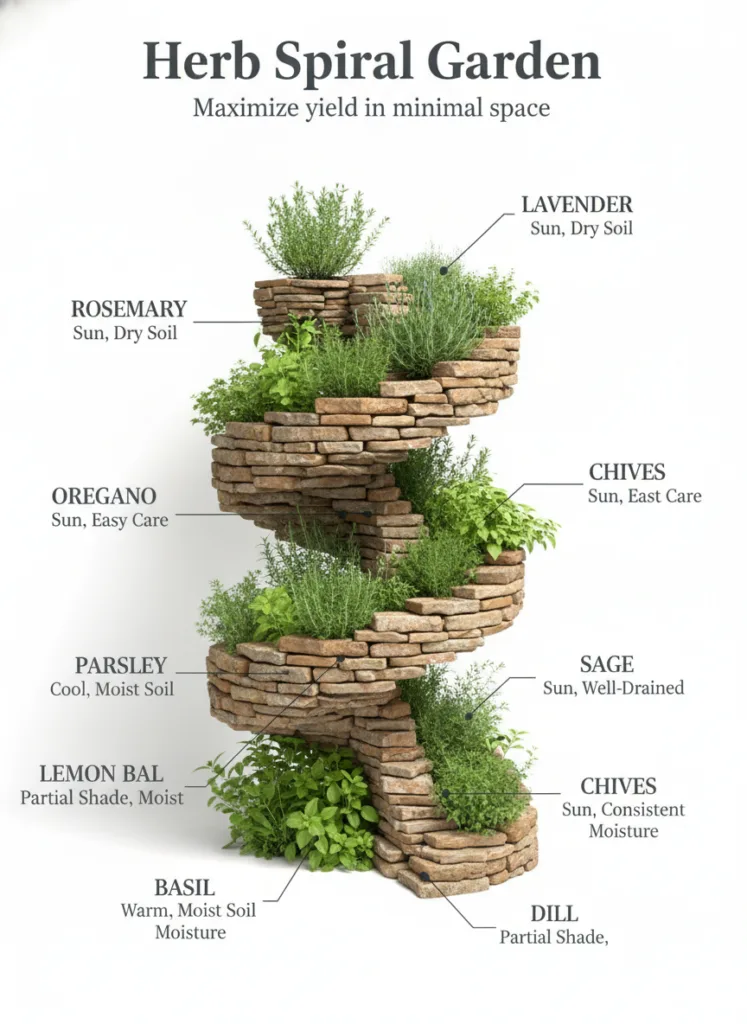
The Genius of the Herb Spiral Garden
An herb spiral is a raised garden bed built in a spiraling, conical shape, typically using stones, bricks, or timber. This unique design creates a gradient of growing conditions, effectively mimicking natural landscapes and offering distinct microclimates ideal for different plants. Here’s how it works:
- Sun Exposure: The top of the spiral faces the most direct sunlight, while the lower sections receive progressively more shade, especially on the north-facing side.
- Drainage: Gravity pulls water downwards, so the soil at the top drains quickly, creating drier conditions. The base retains more moisture.
- Temperature: The stones absorb and radiate heat, keeping the top warmer, especially important for heat-loving Mediterranean herbs. The base stays cooler.
By understanding these natural variations, you can strategically place your herbs, ensuring each one gets the specific sunlight, moisture, and soil conditions it needs to flourish.
Designing Your Microclimates: What to Plant Where
The beauty of the herb spiral lies in its ability to cater to diverse plant needs. We’ll divide the spiral into three general zones, moving from the top (warmest, driest) to the bottom (coolest, moistest).
The Sunny, Dry Top: Mediterranean Lovers
This is the prime real estate for herbs that thrive in full sun and well-draining, even dry, soil—mimicking their native Mediterranean climates. The top of the spiral offers excellent drainage and maximum sun exposure, making it perfect for these heat-seekers.
Rosemary (Salvia rosmarinus)
Hardiness: USDA Zones 7-10 (often grown as an annual or overwintered indoors in colder zones)
Plant type: Evergreen shrub
Exposure: Full sun (at least 6-8 hours)
Height: 2-6 feet
Spread: 2-4 feet
Care Tip: Prune regularly after flowering to maintain a bushy shape and encourage new growth. Avoid heavy pruning into old wood.
Lavender (Lavandula angustifolia)
Hardiness: USDA Zones 5-9
Plant type: Perennial sub-shrub
Exposure: Full sun (at least 6 hours)
Height: 1-3 feet
Spread: 1-3 feet
Care Tip: Plant in alkaline soil if possible, and ensure excellent drainage. Do not overwater, as it is highly susceptible to root rot.
Thyme (Thymus vulgaris)
Hardiness: USDA Zones 5-9
Plant type: Perennial sub-shrub or groundcover
Exposure: Full sun
Height: 6-12 inches
Spread: 12-18 inches
Care Tip: Harvest by snipping off the top few inches of growth. Regular harvesting encourages a bushier plant and prevents it from becoming woody.
Oregano (Origanum vulgare)
Hardiness: USDA Zones 4-10
Plant type: Perennial herb
Exposure: Full sun
Height: 1-2.5 feet
Spread: 1-2 feet
Care Tip: Allow the soil to dry out between waterings. Pinch back flower buds to encourage more leaf production and maintain flavor.
The Cooler, Moist Base: Moisture-Loving, Partial Sun Dwellers
As you move down the spiral to the middle and base, the conditions become progressively cooler and more consistently moist, with some areas receiving partial sun or afternoon shade. This is ideal for herbs that appreciate a richer, more hydrated soil and may struggle in the intense, dry heat of the spiral’s peak.
Dill (Anethum graveolens)
Hardiness: Grown as an annual in all zones
Plant type: Annual herb
Exposure: Full sun to partial sun (at least 4-6 hours)
Height: 2-4 feet
Spread: 1-2 feet
Care Tip: Succession plant every few weeks for a continuous supply of fresh foliage. It prefers not to be transplanted, so direct sow seeds.
Chives (Allium schoenoprasum)
Hardiness: USDA Zones 3-10
Plant type: Perennial herb
Exposure: Full sun to partial sun
Height: 12-18 inches
Spread: 12 inches
Care Tip: Harvest by snipping leaves from the outer edges of the clump, about 1-2 inches above the soil line. Divide clumps every 3-4 years to maintain vigor.
Mint (Mentha spp.)
Hardiness: USDA Zones 3-11 (species dependent)
Plant type: Perennial herb
Exposure: Full sun to partial sun
Height: 1-2 feet
Spread: Spreading indefinitely
Care Tip & Warning: Mint is notoriously vigorous and can quickly take over a garden. In an herb spiral, consider planting it in a bottomless container sunk into the soil or a dedicated container at the base to prevent its roots from spreading uncontrollably.
Basil (Ocimum basilicum)
Hardiness: Grown as an annual in all zones
Plant type: Annual herb
Exposure: Full sun (6-8 hours), but appreciates afternoon shade in very hot climates
Height: 1-2 feet
Spread: 1-1.5 feet
Care Tip: Pinch off the central stem and any flower buds regularly to encourage bushy growth and delay bolting (going to seed), which can diminish leaf flavor.
Parsley (Petroselinum crispum)
Hardiness: Biennial, often grown as an annual in all zones
Plant type: Biennial herb
Exposure: Full sun to partial sun (at least 4-6 hours)
Height: 12-18 inches
Spread: 12 inches
Care Tip: Harvest outer stalks first, cutting them at the base of the plant. Provide consistent moisture, as it can bolt in dry conditions.
Building Your Own Herb Spiral: Step-by-Step Guide
Ready to create your culinary oasis? Building an herb spiral is a rewarding DIY project that doesn’t require advanced skills.
1. Choose the Right Location
Select a spot that receives at least 6-8 hours of direct sunlight, ideally with the highest point of the spiral facing south. This orientation ensures that the top gets maximum sun, while the lower sections receive varied light, including some afternoon shade.
2. Gather Your Materials
You’ll need materials for the wall and for filling the bed:
- Wall Materials: Stones, bricks, concrete blocks, reclaimed timber, or even stacked gabion cages. Dry stacking (without mortar) is common and allows for good drainage.
- Drainage Layer: Gravel or broken pottery for the very bottom.
- Soil: A mix of good quality garden soil, compost, and sand. Adjust the ratio for different zones (more sand for the top, more compost for the bottom).
3. Mark the Base and Lay the Foundation
Outline a circular base, typically 6-8 feet in diameter. Clear any weeds or turf. Start laying your wall material in a spiral shape, gradually increasing the height as you work towards the center. Aim for a height of about 3-4 feet at the center.
4. Create Your Drainage and Fill with Soil
At the very base of the spiral, lay down a layer of gravel or broken terracotta for enhanced drainage. As you build the walls, fill the interior with your customized soil mix. For the top and sunny sides, use a leaner, sandier mix for excellent drainage. For the middle and lower, shadier sections, incorporate more compost to improve moisture retention and nutrient content.
5. Plant Your Herbs
With your spiral built and filled, it’s time for planting! Follow the guidelines above, placing full-sun, dry-loving herbs like rosemary and lavender at the top and sunniest aspects. Position moisture-loving, partial-sun herbs such as parsley and basil towards the base and shadier sides. Remember to give mint its own contained spot if you don’t want it to dominate.
Essential Care Tips for a Thriving Herb Spiral
Maintaining your herb spiral involves targeted care that respects the unique microclimates you’ve created.
Watering Strategy
This is where the spiral really shines! Water the entire structure, allowing the water to filter down. However, monitor each zone. The top will dry out faster, so check soil moisture by sticking your finger about an inch or two into the soil. Water the drier top zones more frequently than the cooler, moister base. Consistent, targeted watering prevents both overwatering at the base and underwatering at the top.
Pruning for Yield and Shape
Regular harvesting is the best form of pruning for most herbs. Pinch back growing tips to encourage bushier plants and prevent premature flowering, which can reduce leaf flavor. For woody herbs like rosemary and lavender, trim after flowering to maintain shape and promote new growth, but avoid cutting into old, non-leafy wood. Remove any dead or yellowing foliage to improve airflow and plant health.
Pest Management
A diverse herb spiral naturally encourages beneficial insects, which can help keep pests in check. Regularly inspect your plants for signs of common pests like aphids or spider mites. If you find them, a strong spray of water can often dislodge them. For more persistent issues, consider insecticidal soap, always testing on a small area first.
Seasonal Considerations and USDA Zones
For perennial herbs, understand their specific USDA hardiness zones. In colder zones (3-6), many herbs like rosemary and lavender that are perennial in warmer zones (7-10) will need winter protection or be grown as annuals. For example, you might grow basil as an annual everywhere, but rosemary can overwinter in a Zone 7 spiral. Mulching the base of hardy perennials in fall can provide extra insulation.
Common Mistakes to Avoid
- Poor Drainage: Ensuring a gravel layer at the bottom and a well-draining soil mix, especially at the top, is crucial to prevent root rot in dry-loving herbs.
- Wrong Plant Placement: Don’t put a moisture-loving plant at the very top or a sun-worshipper in deep shade at the base. Respect the microclimates you’ve created.
- Overcrowding: Give your herbs room to grow. While a spiral maximizes space, mature plants still need adequate airflow to prevent fungal diseases.
- Ignoring Mint’s Spread: As mentioned, mint is an enthusiastic grower. If not contained, it will quickly colonize the entire base of your spiral and potentially beyond.
Adapting to Your Climate and USDA Zones
While the herb spiral principles are universal, how you apply them will depend on your local climate. Gardeners in cooler zones (3-5) might need to ensure their spiral receives maximum sun to warm the soil, and they’ll treat more plants as annuals. In contrast, those in hot, arid zones (9-11) might deliberately orient parts of the spiral to receive more afternoon shade for plants like basil, or increase the organic matter in all soil zones to help with moisture retention.
Always consider your specific frost dates, average summer temperatures, and rainfall patterns. Local university extension services are excellent resources for tailored advice in your region.
Start Your Herb Spiral Journey Today!
Building an herb spiral garden is more than just a space-saving technique; it’s a journey into understanding microclimates and nurturing a diverse ecosystem right in your backyard. Imagine stepping outside to pluck fresh basil for your pesto, fragrant rosemary for your roast, or crisp chives for your eggs, all from one beautifully designed, efficient garden bed. This practical and inspiring gardening method offers a sustainable way to enjoy an abundant harvest of herbs year-round. So, gather your stones, prepare your soil, and embark on the rewarding adventure of creating your very own herb spiral!