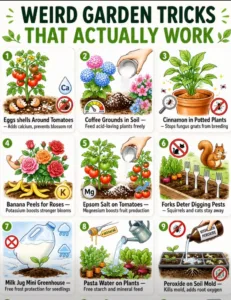
Gardening is full of clever little tricks that use everyday household items. Some can genuinely help your plants, while others work best only in certain situations. Here’s a practical guide to 12 popular garden hacks and how to use them without harming your plants.
1. Eggshells Around Tomato Plants 🍅
Eggshells contain calcium, an important nutrient for healthy plant growth.
How to use:
- Rinse and dry the eggshells.
- Crush them into very small pieces or grind them into powder.
- Mix them into compost or the soil around tomato plants.
Important:
Eggshells break down slowly, so they won’t quickly fix blossom-end rot. Consistent watering is usually more important because irregular moisture can prevent tomatoes from absorbing calcium properly.
2. Coffee Grounds for Acid-Loving Plants ☕
Used coffee grounds contain organic matter and small amounts of nutrients.
How to use:
- Add used coffee grounds to your compost pile.
- Or sprinkle a very thin layer around plants and mix it gently into the soil.
Plants such as hydrangeas, blueberries, and azaleas may benefit from organic matter, but don’t pile thick layers of coffee grounds around their roots.
3. Cinnamon for Potted Plants 🌿
Cinnamon is often used by gardeners around seedlings and houseplants.
How to use:
Sprinkle a very light layer of ground cinnamon over the surface of the potting soil.
It may help discourage some fungal growth, although the best way to prevent fungus gnats is to avoid constantly wet soil and allow the top layer to dry between waterings.
4. Banana Peels for Roses 🌹
Banana peels contain potassium and other minerals.
Easy method:
- Cut banana peels into small pieces.
- Add them to your compost.
- Once decomposed, use the compost around your roses.
Composting them first is better than leaving whole banana peels around plants, where they may attract insects or animals.
5. Epsom Salt for Tomatoes 🧂
Epsom salt contains magnesium and sulfur.
However, more isn’t always better.
Use Epsom salt only when your soil or plants actually need additional magnesium. Adding too much can create nutrient imbalances and may damage plants.
A soil test is the safest way to determine whether your garden needs magnesium.
6. Forks to Discourage Digging Animals 🐿️
Some gardeners place plastic forks upright in garden beds to discourage animals from walking or digging.
If you try this method:
- Use blunt plastic forks rather than sharp metal ones.
- Space them around vulnerable seedlings.
- Make sure they aren’t positioned where people or pets could step on them.
Physical barriers such as garden mesh or netting are usually safer and more reliable.
7. Milk Jug Mini Greenhouse 🌱❄️
An empty plastic milk jug can become a tiny greenhouse for young seedlings.
How to make one:
- Wash an empty translucent milk jug.
- Cut around the middle, leaving one section attached like a hinge.
- Add drainage holes underneath.
- Place soil and seeds inside.
- Close the jug.
- Leave the cap off for ventilation.
The jug helps protect seedlings from wind and mild cold while still allowing sunlight inside.
8. Pasta Water for Plants 💧
Unsalted cooking water can sometimes be reused in the garden.
How to use:
After cooking pasta or vegetables:
- Let the water cool completely.
- Make sure it contains no salt, oil, sauce, or seasoning.
- Dilute it with fresh water if it is very cloudy.
- Use it occasionally to water outdoor plants.
Never pour hot or salty cooking water directly onto plants.
9. Hydrogen Peroxide for Moldy Soil 🪴
Hydrogen peroxide is sometimes promoted as a treatment for mold or root problems.
But frequent use can also harm beneficial soil microorganisms.
A safer first approach is to:
- Improve drainage.
- Reduce overwatering.
- Increase airflow.
- Remove badly affected soil.
For healthy plants, normal water and good growing conditions are usually better than routinely adding peroxide.
10. Newspaper to Block Weeds 📰
Newspaper can create a temporary biodegradable weed barrier.
How to do it:
- Remove existing weeds.
- Lay several sheets of plain newspaper over the soil.
- Wet the newspaper thoroughly.
- Cover it with mulch, compost, bark, or wood chips.
Over time, the paper decomposes while helping suppress new weeds.
Avoid glossy or heavily coated paper.
11. Toilet Paper Roll Cutworm Collar 🌱
Cardboard toilet paper rolls can protect young seedlings from cutworms.
How to use:
- Cut a cardboard roll into short sections.
- Place one section around each seedling.
- Push the bottom slightly into the soil.
- Leave enough space for the stem to grow.
The cardboard forms a simple barrier around tender young plants and will eventually break down naturally.
12. Vinegar for Driveway Weeds 🌼
Household vinegar can burn the leaves of small weeds growing between paving stones.
How to use:
Apply it carefully only to weeds growing in cracks, paths, or driveways.
Avoid spraying vinegar near garden plants because it does not distinguish between weeds and flowers—it can damage any plant it touches.
It may kill the leaves of young weeds without completely killing established roots, so repeat removal may still be necessary.
Final Gardening Tip 🌿
The best garden tricks support the basics rather than replace them.
Healthy plants still depend on:
- Good-quality soil
- Proper watering
- Enough sunlight
- Compost and organic matter
- Good drainage
- Correct nutrients
- Regular observation
Experiment with garden hacks carefully, start small, and pay attention to how your plants respond.
Sometimes the simplest gardening habits are still the most effective. 🌱💚